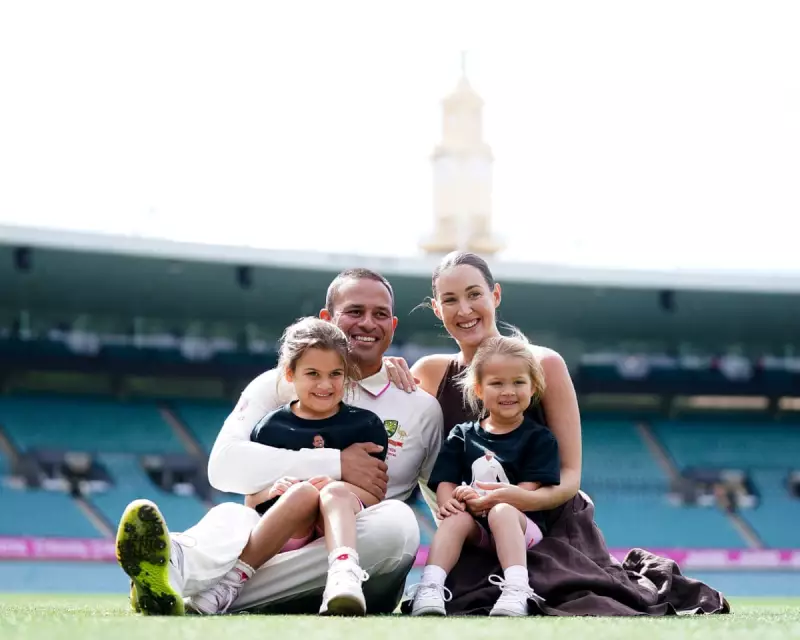
In a poignant and revealing press conference ahead of his final Test match, Australian batsman Usman Khawaja chose not to focus solely on his cricketing achievements. Instead, he delivered a powerful message on the racial stereotypes he has faced throughout his career, marking an extraordinary farewell for the national team's first Muslim player.
A Farewell That Went Beyond Cricket
More than thirty minutes into the session at the Sydney Cricket Ground, after confirming his retirement from Test cricket, Khawaja was asked about the modern role of an opening batter. He answered with technical ease. Moments later, the questioning turned to how Australia could unite following last month's Bondi Beach terrorist attack. Without hesitation, Khawaja gave a lengthy, thoughtful reply, citing the teachings of the Prophet Muhammad and criticising politicians who "try to divide and conquer".
This was no ordinary sporting retirement announcement. For those who have followed Khawaja's path from a Pakistani-born boy in western Sydney to a Test mainstay, his openness during the 50-minute conference was characteristic. He reflected on being a Muslim child "who was told he would never play for the Australian cricket team", and claimed he still faces prejudiced assumptions.

Challenging Deep-Rooted Stereotypes
Khawaja pointed to the start of the recent Ashes series as a prime example. After suffering back spasms in the first Test, his preparation—including playing golf—was heavily scrutinised. "The way everyone came at me about my preparation was quite personal," Khawaja stated. He listed the accusations: "'he's not committed to the team', 'he was only worried about himself', 'he's selfish', 'he doesn't train hard enough', 'he's lazy'."
"These are the same stereotypes – racial stereotypes – I've grown up with my whole life," he asserted. While he did not name specific media figures or former players, he suggested the criticism had an underlying bias familiar from his youth.
This willingness to steer conversations toward societal issues has become a hallmark of Khawaja's later career, though it wasn't always so. When he debuted at the SCG in January 2011, the then 24-year-old was a reluctant trailblazer, downplaying his landmark status as Australia's first Muslim Test cricketer.
From Reluctant Symbol to Vocal Advocate
Over time, his voice grew stronger. In 2017, he wrote publicly about the racism he endured growing up, including being called a "curry-muncher" at school. He noted that the hard-nosed, confident Australian cricketers he admired were "the same type of men who would sledge me about my heritage growing up."
He has spoken openly about the contentment his faith provides and became a prominent voice discussing the plight of Palestinians. Simple slogans on his shoes—"All lives are equal" and "Freedom is a human right"—drew sanctions from the International Cricket Council two years ago. "I put myself out there," Khawaja said on Friday, acknowledging this is why he has been "nailed a lot of the time over the last two years."
Despite the challenges, his message contained hope. He believes cricket in Australia is "a lot better than where we were 15 years ago" and is more inclusive. His impact is undeniable. From the moment he hammered his first Test boundary off Chris Tremlett, he has inspired a generation of young fans, particularly those from immigrant backgrounds who finally saw someone who looked like them representing their country at the highest level.
Khawaja's career has been one of remarkable resilience, with a stirring revival in 2022 cementing him as, for a period, the world's best red-ball opener. As he prepares to finish at the SCG, where it all began, his legacy extends far beyond the cricket field. His is a voice that has challenged stereotypes, advocated for equality, and demonstrated that character and conviction are as powerful as any cover drive.