Atalanta's European High Crushed by Sassuolo Defeat
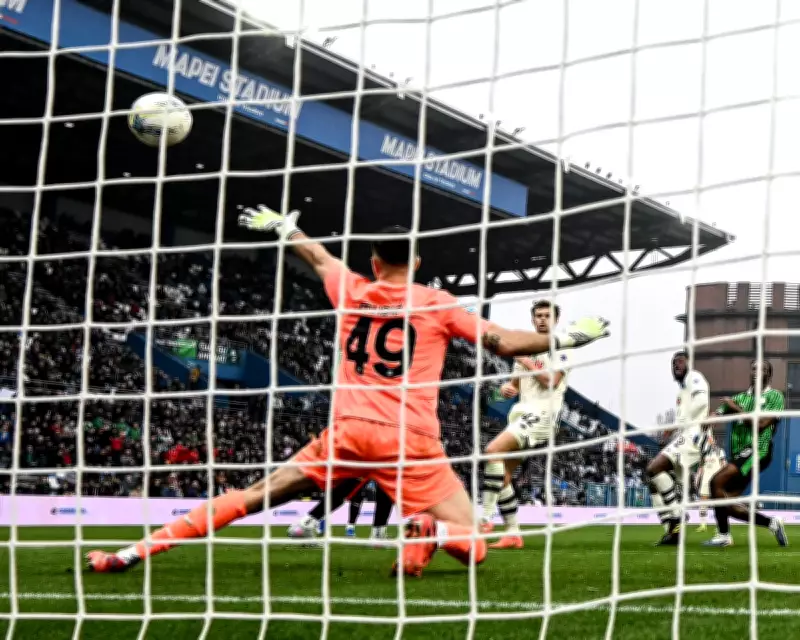
Just days after being hailed as the saviors of Italian football, Atalanta suffered a sobering 2-1 defeat to Sassuolo at Mapei Stadium. The loss came despite Sassuolo playing with ten men for most of the match following Andrea Pinamonti's 16th-minute red card for a dangerous challenge on Berat Djimsiti.
From Champions League Heroes to Serie A Strugglers
Atalanta entered Sunday's match riding an emotional high after their stunning 4-1 victory over Borussia Dortmund on Wednesday, which overturned a two-goal first-leg deficit and secured Serie A's last remaining spot in the Champions League knockout stages. Yet that midweek triumph seemed to drain the energy from Raffaele Palladino's side, who appeared complacent and exhausted against determined opposition.
Sassuolo, under manager Fabio Grosso, displayed remarkable resilience to secure their fifth win in six games. Ismaël Koné opened the scoring by forcing the ball home from a corner, while Kristian Thorstvedt doubled the advantage with a spectacular top-corner finish from the edge of the penalty area.

The irony was palpable as Chumbawumba's "Tubthumping" played through the stadium speakers after Sassuolo's second goal, with its chorus of "I get knocked down, but I get up again" perfectly capturing the home side's spirit. Atalanta did manage to pull one back through Yunus Musah's late strike, but it proved insufficient against Sassuolo's determined defense.
Broader Implications for Serie A's European Aspirations
This defeat leaves Atalanta six points adrift of the top four, making Champions League qualification for next season increasingly challenging for the club that currently represents Italy's last hope in this year's competition. Despite their established European presence since their 2019 Champions League debut, Atalanta now faces an uphill battle to maintain their continental status.
The match highlighted broader issues within Italian football. While Serie A has been represented in two of the last three Champions League finals and two of the last four Europa League finals, financial realities continue to constrain Italian clubs. Inter Milan, Italy's highest-revenue club, failed to crack the top ten in Deloitte's latest Football Money League, while Juventus generates only about one-third of Real Madrid's revenue.
Infrastructure challenges persist, with many clubs playing in stadiums they don't own and youth development systems lagging behind European counterparts. Political infighting has also hampered efforts to strengthen Serie A's international brand.
Simultaneous Drama in Rome's Top-Four Battle
While Atalanta stumbled, Sunday's other marquee match between Roma and Juventus delivered another classic Serie A spectacle. The game ended 3-3 after a dramatic Juventus comeback, with Federico Gatti scoring his second goal in as many games during stoppage time to salvage a point.
Juventus manager Luciano Spalletti praised his team's resilience, awarding them "110 e lode" (the Italian equivalent of first-class honors) for attitude despite playing 120 minutes in midweek. The draw kept Juventus within four points of Roma but saw both teams lose ground in the tight top-four race.
With only five points separating third from seventh place at the weekend's start, the battle for Champions League qualification has become ferocious. Napoli's 2-1 victory over Verona pushed them past Roma into third, while Como's strong form has them challenging for European spots.
The Unromantic Reality of Modern Italian Football
Atalanta's contrasting fortunes within a single week encapsulate the complex state of Serie A. While their Champions League triumph created lasting memories for fans - symbolized by a pre-match banner celebrating Josip Ilicic's iconic 2018 goal against Dortmund - Sunday's defeat reinforced the harsh economic realities facing Italian clubs.
Champions League qualification remains financially essential for Italy's biggest clubs, who depend more heavily on this revenue than their English or Spanish counterparts. This creates a tension between romantic football ideals and economic necessities, with clubs like Atalanta caught between creating magical moments and securing the financial stability needed to sustain them.

Progress continues slowly across Serie A, with Milan and Inter finalizing their San Siro purchase and planning a new stadium before Euro 2032, while Fiorentina's stadium renovation advances despite delays. Young Italian talent continues to emerge, with a 20-year-old leading Inter's attack and Juventus' best player developing through their NextGen system.
Yet as Atalanta discovered on Sunday, even the most magical European nights cannot guarantee domestic success in Italy's fiercely competitive and financially constrained landscape.