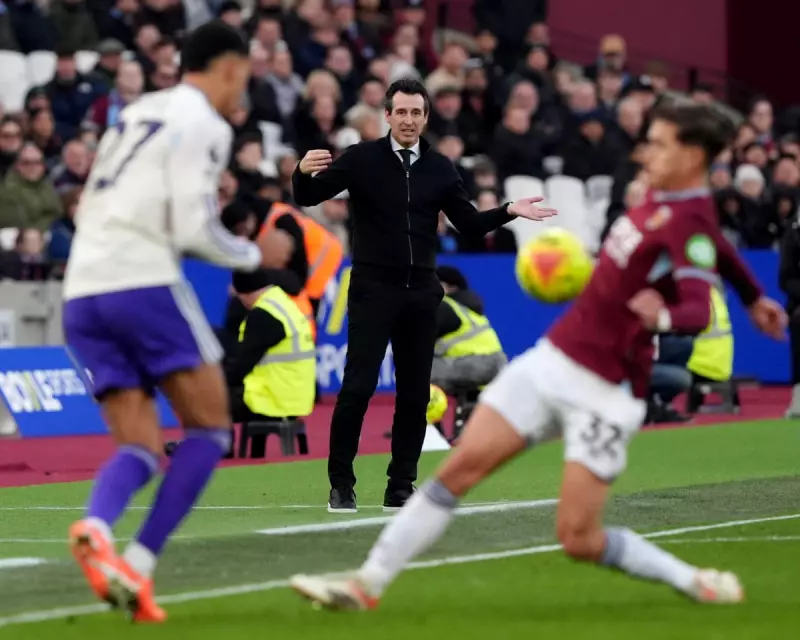
When Unai Emery took charge of Aston Villa in November 2022, the club was languishing in 17th place, fresh from a 3-0 defeat to Fulham and the sacking of Steven Gerrard. The transformation since has been nothing short of extraordinary. Under the Spanish manager, Villa have become one of Europe's most formidable home sides and are now firmly in the conversation for the Premier League title. However, a significant psychological barrier remains: a dismal record against Manchester United, whom they host this Sunday.
The Emery Revolution: From Relegation Fears to European Contenders
Emery's impact at Villa Park has been profound and statistically undeniable. Since his appointment, no team in Europe's top five leagues has won more home matches than Aston Villa. The club has secured finishes of seventh, fourth, and sixth in the Premier League, coupled with a memorable run to the Champions League quarter-finals. This resurgence has been underpinned by strategic investment, with a net spend of approximately £40 million since Emery's arrival and a wage bill that now ranks seventh in the division.
For Emery, the Villa project arrived at an ideal moment. Previously viewed as a talented but unfortunate manager—struggling with the immense pressures at Paris Saint-Germain and the unenviable task of succeeding Arsène Wenger at Arsenal—he found a club with latent potential and owners ready to invest. Villa were poised for growth, and Emery possessed the pragmatic tactical mind to harness it.

The Manchester United Mental Block
Emery's first match in charge symbolised the new dawn: a 3-1 victory over Manchester United, ending a 27-year league winless streak against the Red Devils. Yet, that result remains an anomaly in a deeply one-sided history. Aston Villa have beaten United only three times in their last 53 encounters. This inferiority complex proved costly on the final day of last season. Needing just a point at Old Trafford to secure Champions League football, Villa saw goalkeeper Emi Martínez sent off before conceding two late goals to slump into the Europa League.
That defeat appeared to haunt the team at the start of this campaign, with Villa failing to win any of their first six matches. However, a 1-0 victory over Bologna in late September ignited their season. Since then, they have been in blistering form, winning 15 of 17 games. If the Premier League table began from that Bologna match, Villa would currently sit three points clear at the top.
Pragmatism, Character, and the Question of Credentials
Despite their position, a widespread scepticism persists about Villa's title credentials. Some analysts point to underlying metrics, noting that only Tottenham have outperformed their expected goals (xG) more than Villa this season. Yet, this may reflect Emery's pragmatic, margin-exploiting style rather than a flaw. In an era where direct play and set-pieces are gaining prominence over possession-dominant 'process' football, Villa's effective, character-driven approach is proving highly successful.
That character has been displayed repeatedly, with Villa coming from behind in four of their last five away league games. They have developed a resilience that marks them as true contenders. However, doubts linger because of their poor records against the league's historical giants, Liverpool and Manchester United. It feeds a narrative of Emery and Villa being elite overachievers rather than natural champions.
This Sunday's clash at Villa Park is therefore about more than three points. It is a critical test of mentality. Victory over an inconsistent United side would not only bolster their league position but would also shatter a long-standing psychological hoodoo. For Unai Emery's aspiring Aston Villa to be taken seriously as potential champions, overcoming this specific historical burden is essential. The stage is set for them to prove they have finally evolved from plucky strivers into genuine title challengers.