FIFA's Existential Crisis: Navigating the Political Minefield of Global Football
FIFA, the world governing body of football, finds itself in a profound credibility crisis as it fails to establish a coherent identity. The organization appears torn between presenting football as a pure sporting competition detached from political realities and positioning it as a global force for peace and unity. This fundamental contradiction has never been more apparent than in recent years, where FIFA's actions have consistently undermined its own stated principles.
The Peace Prize Paradox: From Flowers to Bombs
The stark contrast between FIFA's historical peace initiatives and current controversies illustrates this identity crisis. In 1998, during the politically charged Iran vs. United States World Cup match, FIFA celebrated the exchange of white flowers between players as a triumph of "football winning" over politics. Both teams received Fair Play awards, and FIFA basked in the glow of this symbolic peace gesture.
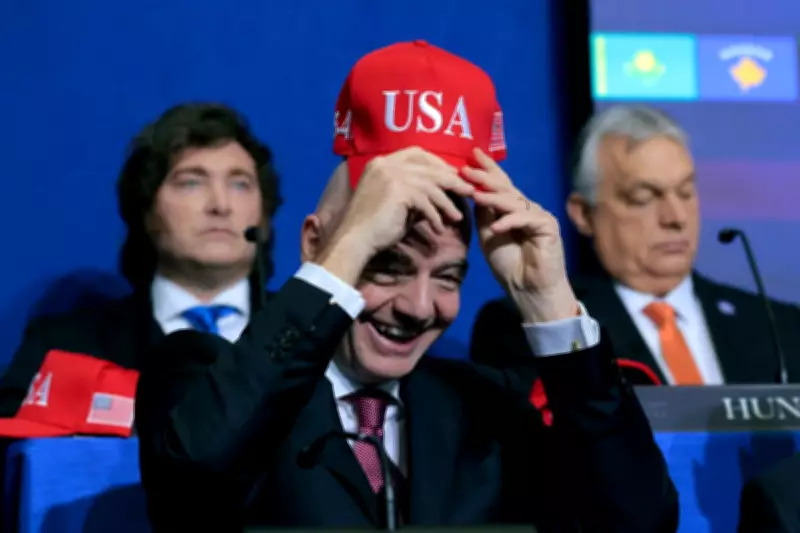
Fast forward to December, when FIFA President Gianni Infantino proudly presented Donald Trump with FIFA's inaugural peace prize. This award represented a strategic charm offensive so transparently political that even seasoned observers were taken aback. The irony became painfully apparent just three months later when the recipient nation, set to host most of this summer's World Cup, initiated military action against Iran—one of the 48 qualified teams scheduled to compete on American soil.

A Hat-Trick of Controversial Hosts
This latest controversy completes what can only be described as a spectacular hat-trick of problematic World Cup hosting decisions. In 2018, Russia hosted the tournament just four years after its annexation of Crimea. The 2022 Qatar World Cup saw uncomfortable questions about human rights quietly dismissed. Now, FIFA finds itself supporting a host nation actively engaged in military conflict with a participating member country.
Infantino, who has repeatedly pleaded for football to remain separate from political battles, now presides over an organization whose credibility has reached an all-time low. The contradiction between rhetoric and reality has become impossible to ignore.
The Apolitical Fantasy: Could FIFA Truly Separate Sport from Politics?
If FIFA genuinely aspires to be apolitical, it would need to commit to this principle completely. This would mean eliminating all moral positioning, banning virtue-signaling initiatives, and removing political slogans from football events. The focus would return exclusively to the game itself: 22 players, one ball, and no political commentary from officials or administrators.
Host selection would become a purely financial or random process, with politicians barred from attendance. National symbols would be removed from stadiums, press conferences would be strictly limited to football matters, and players making political statements would face immediate sanctions. While this approach would require significant security measures to enforce political neutrality, it would at least establish clear boundaries between sport and politics.
The Alternative: Embracing Football's Political Power
Conversely, FIFA could fully embrace its political potential. As the world's most popular sport, football possesses unprecedented global influence that could be leveraged for diplomatic purposes. Nations violating international norms could face tournament bans, while host selection would prioritize human rights records and environmental policies.
Under this model, athletes would have freedom of political expression, journalists could ask challenging questions, and world leaders might use football events as platforms for peace negotiations. While this approach might exclude some nations and potentially reduce competitive quality, it would align FIFA's actions with its professed values of global unity.
The Fundamental Problem: Balancing Competing Imperatives
The real challenge lies in finding an appropriate balance. The notion that "sport and politics don't mix" has always been a fiction. Global sport exists within political contexts and inevitably reflects geopolitical realities. The solution requires acknowledging this complexity rather than simplifying it through symbolic gestures or contradictory actions.

FIFA needs to develop a coherent, transparent approach that separates commercial interests from ethical considerations. Treating the relationship between sport and politics as a nuanced, professional challenge would represent significant progress from the current pattern of inconsistent decision-making and credibility-damaging controversies.
Dumbing down this complex relationship through superficial awards or simplistic solutions demeans everyone involved—from players and fans to the global community that looks to football for both entertainment and inspiration. The time has come for FIFA to define its identity clearly and act accordingly.