

Asian Markets Reel as Iran Conflict Sparks Oil Price Surge
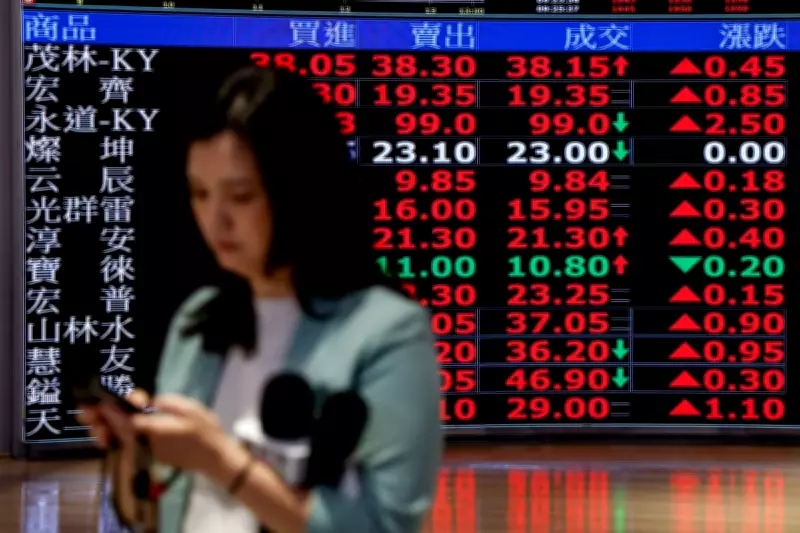
Trading floors across Asia displayed stark red numbers this week as regional markets absorbed the impact of escalating Middle East hostilities. The Taiwan Stock Exchange, along with other major Asian financial centers, recorded significant declines following coordinated missile strikes by the United States and Israel against Iran.
Energy-Dependent Economies Bear Brunt of Oil Shock
Asian markets, many representing nations heavily reliant on imported energy resources, suffered particularly severe battering in the aftermath of the attacks. The global benchmark oil price surged by 17% to exceed US$85 per barrel, creating immediate shockwaves through financial systems across the region.
South Korea's stock market experienced its worst single-day collapse in history, plummeting by 13% during one trading session. The Australian sharemarket, while relatively shielded compared to some neighbors, still registered a substantial 3.8% weekly loss. This contrasted with Wall Street's more muted response, where the S&P 500 index declined by less than 1% heading into Friday's closing session.

Investor Complacency Concerns Economists
Shane Oliver, chief economist at AMP, expressed concern that financial markets might be underestimating the potential duration and severity of the conflict. "Markets are a little bit complacent," Oliver warned, noting the surprisingly mild initial response to what represents a worst-case economic scenario materializing.
"The essential challenge for investors is that it's not clear why Trump decided to launch the war, and therefore what it will take to end it," Oliver explained. This uncertainty has left markets priced for a relatively short conflict lasting two to three weeks, but not accounting for potential months of sustained hostilities.
Strait of Hormuz Closure Creates Global Energy Crisis
The conflict has precipitated what economists long considered a nightmare scenario for global energy markets: the closure of the Strait of Hormuz. This critical maritime passage normally facilitates approximately one-fifth of global oil and gas supplies. Its disruption has immediate implications for energy prices worldwide.
Ray Attrill, head of foreign exchange strategy at National Australia Bank, noted that Australia's position as a major energy exporter through LNG and coal resources has provided some insulation. "With oil prices in the 80s, the underlying assumption is that oil will start travelling through the strait of Hormuz sooner rather than later," Attrill observed.
Stagflationary Pressures Mount
The oil price shock creates stagflationary conditions, where higher fuel costs simultaneously push inflation upward while hampering economic growth. This presents central bankers with difficult policy decisions: whether to raise interest rates to combat inflation or implement monetary easing to support faltering economies.
National Australia Bank economists estimate that Australian inflation could now peak at approximately 4.75% in the year to June, representing a half-percentage point increase from pre-conflict predictions. Should Brent crude prices sustain movement toward US$100 per barrel, inflation could exceed 5%, reaching its highest level since late 2023.
Reserve Bank Governor Expresses Concern
Reserve Bank Governor Michele Bullock acknowledged the risk that climbing petrol prices could entrench expectations of persistent inflation. "We already have elevated inflation, and I think there is a risk that inflation expectations might become a little bit unanchored," Bullock stated during recent remarks.
While central banks typically look past temporary price shocks, Bullock indicated this situation might require different consideration. The combination of pre-existing inflationary pressures and new energy price spikes creates particularly challenging monetary policy conditions.
Derivatives Markets Suggest Short Conflict
Current bets placed in derivatives markets indicate expectations that oil prices will return to the US$60-70 range within approximately one month. However, economists warn that prolonged disruption could see prices reach US$90-100 per barrel, triggering more severe market reactions.

Brett Solomon, senior portfolio manager in QIC's fixed income team, cautioned that investors accustomed to brief geopolitical flare-ups might be unprepared for extended conflict. "What is different this time is that this could be longer lasting, and that could be a really big difference," Solomon noted.
Global Economic Outlook Remains Uncertain
Kerry Craig, global market strategist at JP Morgan, acknowledged that most investors maintain a base case expecting relatively short conflict duration. "The outlook for the global economy is fairly decent," Craig stated, while recognizing that sustained high oil prices could fundamentally alter economic projections.
The Australian dollar's resilience above 70 US cents reflects current market assumptions about conflict duration. However, economists warn that prolonged hostilities could trigger significant currency depreciation alongside broader market declines.
As the Trump administration considers deploying America's strategic oil reserve to alleviate price pressures, global markets remain in a holding pattern. Investors, central bankers, and political leaders worldwide continue monitoring oil price movements as key indicators of potential economic disruption from the Middle East conflict.





