The Origins of International Football Retirement Announcements
During a lively pub discussion, the topic of footballers formally retiring from international duty emerged, sparking curiosity about when this practice began. While many assume it's a modern phenomenon, historical records reveal it dates back to at least the 1950s, with several iconic players setting precedents.
Roger Milla's Celebrated Unretirement
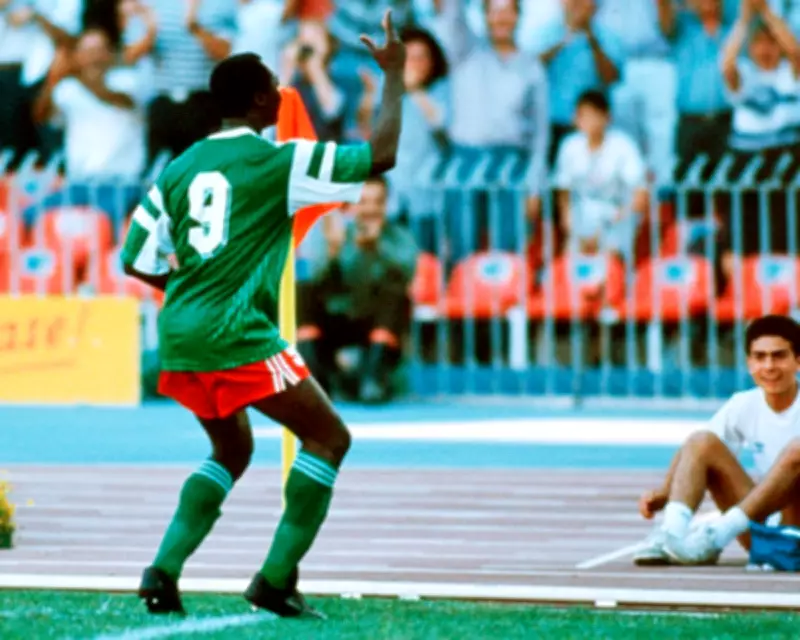
Roger Milla, the Cameroonian legend famous for his goal celebrations at Italia 90, arguably popularized international retirement announcements. After Cameroon's victory in the 1988 Africa Cup of Nations, Milla formally retired from international football during a jubilee event. However, at the request of President Paul Biya, he famously unretired to play in the 1990 World Cup, where his performances captivated global audiences.
European Pioneers of Retirement Declarations
Italy's legendary goalkeeper Dino Zoff announced his international retirement in 1983 at age 41, following a 1-0 loss to Romania during Euro 84 qualification. Zoff acknowledged, "That goal was a sort of sentence for me. It's by far the best to recognize the way things are going." He played one final match, a 2-0 defeat in Sweden, before concluding his career with 112 caps.

West German stars Paul Breitner and Gerd Müller retired after the 1982 and 1974 World Cups respectively, while England's Gary Lineker made his announcement after Euro 92. However, English players had earlier precedents: Jack and Bobby Charlton informed manager Alf Ramsey of their retirement intentions after the 1970 World Cup, Roger Hunt did so in 1968 after fan abuse, and Jimmy Greaves retired at just 28 after being overlooked at Euro 68.
The Earliest Recorded Retirement
Newspaper archives reveal Fritz Walter, who captained West Germany to their stunning 1954 World Cup victory, announced his international retirement in September 1954 at age 34, declaring, "I want to go out while I am at the top." However, he returned two months later, playing for four more years until his final cap in the 1958 World Cup semifinal.
Remarkable Promotions Through Football Pyramids
Wrexham's potential fourth consecutive promotion this season raises questions about rapid ascents through football divisions. While no English team has achieved three straight promotions to reach the top flight, Swansea (1977-81) and Wimbledon (1982-86) managed three promotions in four years.
Further down the pyramid, Shaw Lane achieved four consecutive promotions from the 12th to eighth tiers (2011-15), as did Truro City from the 11th to seventh tiers (2005-09). Chester FC, formed in 2010, jumped four divisions in three seasons through championship wins.
Internationally, Parma returned to Serie A after three straight promotions following 2015 bankruptcy, while Olympique Akbou achieved five consecutive promotions to reach Algeria's top flight between 2018-2024. The record belongs to Czech club Tatran Jakubcovice, with seven consecutive championship promotions from 1999-2000 to 2005-06.
Bizarre Football Moments and Records
Watford's Steve Palmer nearly wore all 14 squad numbers in 1997-98 before squad numbers became mandatory. Manager Graham Taylor helped by starting Palmer in goal against Bournemouth, then immediately swapping him with regular keeper Alec Chamberlain after kickoff.
At the 2004 Olympics, Tunisia's Mohamed Jedidi took a penalty six times against Serbia & Montenegro due to repeated encroachment violations. After scoring three times only to have them retaken, having one saved, and facing further retakes, he finally converted legally on the sixth attempt in Tunisia's 3-2 victory.
Football's history continues to produce remarkable stories, from early retirement announcements to unprecedented promotions and unusual match incidents that challenge conventional records and expectations.