The Unlikely Journey of England's Overlooked Tactical Genius
George Raynor's football management career began with rejection after rejection in his native England. An ambitious young coach brimming with innovative ideas found himself repeatedly ignored by English clubs, his applications disappearing into administrative voids due to his modest playing career in lower leagues. The breakthrough finally arrived in 1946 when Sweden offered him the national team manager position—a footballing outpost that would become the stage for one of international football's most remarkable coaching stories.
A Revolutionary in an Amateur Landscape
When Raynor arrived in Sweden, he encountered a football culture fundamentally different from England's professional system. Swedish football maintained a staunch amateur philosophy that extended to their national team, with Raynor working under a selection committee led by former Sweden winger Putte Kock. Despite this unconventional structure—similar to what England manager Walter Winterbottom navigated until 1963—Raynor's impact was immediate and profound.
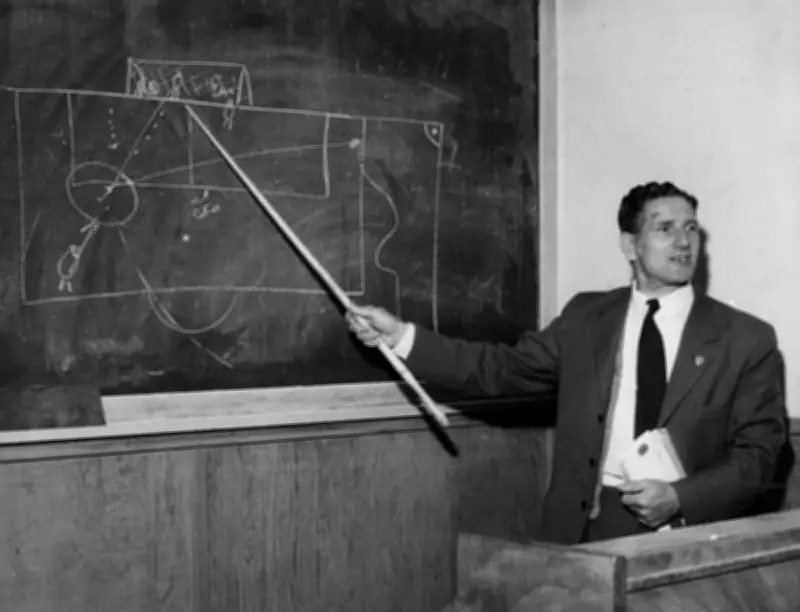
Remarkably, Raynor's only previous coaching experience consisted of serving as a physical training instructor in Iraq during World War II and a brief stint with Aldershot reserves. Yet he was a dedicated student of the game, learning through independent study rather than traditional apprenticeship. His potential was recognized by FA secretary Stanley Rous, who personally recommended Raynor for the Sweden position.

Building a Golden Legacy
Raynor quickly implemented his self-developed coaching principles, transforming Sweden into a competitive force against established football nations. His first major statement came in November 1947 when Sweden pushed England to their limits in a 4-2 friendly defeat at Wembley. The following year, Raynor returned to his homeland in triumph, leading Sweden to Olympic gold at the 1948 London Games.
This historic victory was built around a solid midfield foundation that unleashed the legendary attacking trio of Gunnar Gren, Gunnar Nordahl, and Nils Liedholm—collectively known as Gre-No-Li. These future Serie A stars propelled Sweden to Olympic glory, though their subsequent professional moves abroad made them ineligible for national team selection under Sweden's strict amateur rules.
World Cup Breakthroughs and Tactical Innovation
Despite being hampered by player availability restrictions, Raynor continued achieving remarkable results. He guided Sweden to the 1950 World Cup in Brazil, where they finished third overall after navigating a challenging group stage. Two years later, Sweden claimed Olympic bronze, only falling to Ferenc Puskas's legendary Hungary team in the semifinals.
Raynor's encounter with Hungary's "Magical Magyars" proved transformative. He meticulously analyzed their revolutionary playing style and developed counter-tactics that earned Sweden a 2-2 draw in Budapest in 1953. Ten days before Hungary's famous 6-3 victory over England at Wembley, Raynor reportedly met with England manager Walter Winterbottom in a Vienna café to share his insights on containing the Hungarian threat—advice that Winterbottom unfortunately failed to implement effectively.
The 1958 World Cup Final and Ultimate Recognition
After a three-year hiatus during which he managed Juventus, Lazio, and Coventry City, Raynor returned to Sweden in 1957 as the nation prepared to host the 1958 World Cup. With Sweden relaxing their amateur-only selection policy, Raynor molded a formidable squad that defeated defending champions West Germany, the Soviet Union, and Hungary en route to the final.
In the championship match, Sweden faced a Brazil side featuring the emerging talents of Garrincha and 17-year-old Pelé. Despite taking an early lead through Nils Liedholm, Sweden ultimately fell 5-2 to the brilliant Brazilians. Nevertheless, Raynor had become the first English manager to reach a World Cup final—an achievement that remains unmatched by any non-native manager in tournament history.

The Bitter Homecoming and Historical Legacy
Following his World Cup success, Raynor hoped his extraordinary international record would finally earn him recognition in England. Instead, the only offer came from non-league Skegness Town, where financial constraints forced his departure in 1960. After another brief stint in Sweden and a final season managing Fourth Division Doncaster Rovers in the late 1960s, Raynor slipped into retirement.
While revered in Sweden—where he received royal recognition and was inducted into the Swedish Football Hall of Fame in 2006—Raynor remained largely forgotten in his homeland. His sustained international success rivals only Alf Ramsey among English managers, yet his achievements occurred during an era when British football often ignored progressive European coaching methods.
George Raynor's story represents both footballing brilliance and historical oversight—a tactical pioneer whose World Cup final appearance and Olympic gold medal should have established him as an English coaching legend, but whose innovations were ultimately undervalued by the football establishment of his time.