Inter Milan's 1960s Doping Scandal: The 'Small Hospital' That Fueled Football Glory
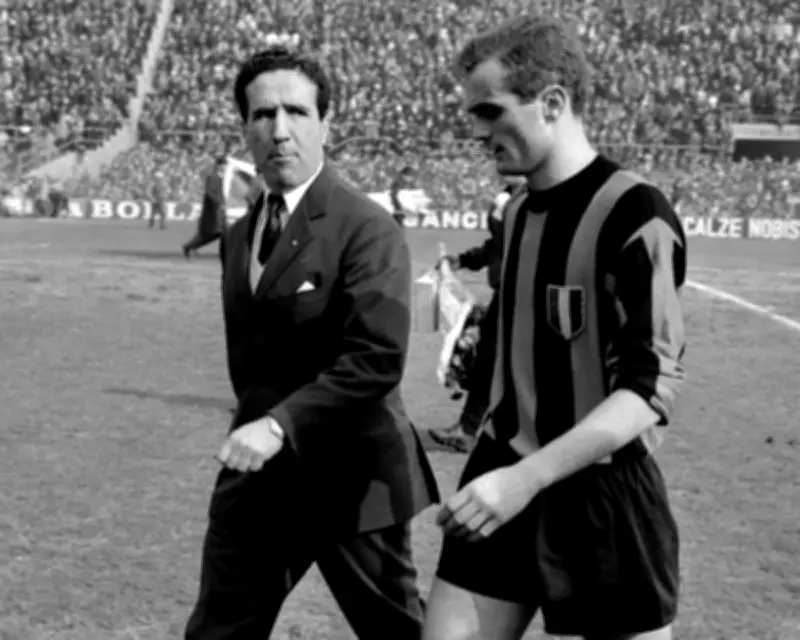
In the early 1960s, Inter Milan's training facilities resembled what one observer called "a small hospital" due to the staggering quantity of pharmaceutical drugs circulating among players. This shocking revelation comes from Richard Fitzpatrick's new book, which exposes the systematic doping program orchestrated by legendary coach Helenio Herrera, known throughout football as "HH."
Youth Players as Guinea Pigs
Ferruccio Mazzola, who was part of Inter's youth academy at the time and brother of star player Sandro Mazzola, described how Herrera used young prospects as "guinea pigs" for drug experiments. In his confessional memoir, Mazzola detailed terrifying side effects from the white tablets distributed by the coach.
"I can describe the effects of those white tablets," Mazzola wrote. "I couldn't sleep after taking HH's pills. The hallucinations left me like a fish thrown up on the bank of a river. I was shaking all over. I looked like an epileptic. I was scared. Also, the effect lasted for days and was followed by a sudden, tremendous tiredness."

Many players attempted to avoid ingesting the substances by hiding pills under their tongues and spitting them out later, but Herrera proved difficult to deceive. The coach would dissolve the tablets in coffee and personally supervise consumption before matches.
The Amphetamine Culture
First-team player Egidio Morbello confirmed Herrera actively encouraged players to use amphetamines and sugar mixtures. For young athletes hoping to advance their careers, refusing the coach's directives could prove professionally fatal.
Former youth-team player Pierluigi Gambogi recalled: "They were like bombs. They gave you a real kick. We knocked them back. We wanted to get noticed – to get into the big leagues."
The brutal side effects became tragically apparent with Marcello Giusti, Gambogi's best friend and a center-forward. After taking one of the white pills before a 1962 reserve game against Como, Giusti experienced a severe reaction, climbing dressing room walls and drooling from the mouth like a rabid dog. Teammates initially thought he was joking until his distress became unmistakably genuine.
Systematic Evasion of Doping Controls
When the Italian Football Federation introduced doping controls for the 1961-62 season, Inter and other Serie A clubs developed elaborate methods to circumvent testing. Midfielder Franco Zaglio acknowledged: "There were a thousand ways to get away with it."
European competitions presented even fewer obstacles, with no doping controls in place during crucial matches. Zaglio noted: "Things changed in the international cups because you know when a game is worth three million in prize money, anyone can decide to take a risk."
Teams employed sophisticated deception tactics, including substituting "clean" urine samples from bench players for those undergoing testing. Former Genoa and Milan striker Carlo Petrini described in his autobiography how clubs concealed vials of uncontaminated urine inside specially modified bathrobes with hidden spouts.
The Legal Battle and Changing Perspectives
Ferruccio Mazzola's 2004 whistleblowing memoir detailing Herrera's doping practices sparked a bitter feud with his brother Sandro and prompted Inter Milan to sue for libel in 2005. The club claimed Mazzola's allegations represented "desecration" of their glorious achievements.
The sensational court case saw surviving members of Herrera's "Grande Inter" squad testify about the coach's pharmaceutical concoctions, including altered coffee, sugar mixed with mysterious powders, and vitamins that weren't actually vitamins. In 2008, the judge ruled against Inter, finding the club couldn't disprove Mazzola's claims and ordering them to cover legal costs.
Mazzola defended his motives: "If I wanted to hurt Inter in the book, I would have talked about match-fixing and the referees who were bribed, especially in the cups."

Sandro Mazzola's perspective has evolved since initially rejecting his brother's allegations nearly two decades ago. He revealed how he personally avoided ingesting the substances: "I would put the tablet under my tongue, faking it. As soon as he went out of sight, I would put the tablet inside one of my boots."
After having the tablets analyzed by a massage therapist named Ferrario, Mazzola learned they contained Simpamina, an amphetamine product with dangerous side effects. "Thank God, you didn't take them," Ferrario told him. "You could've collapsed while running! It has very strong side-effects. It's dangerous."
Ferruccio Mazzola, who died in 2013, maintained that Inter wasn't alone in these practices: "It's naive to think [Inter] was the only culprit, the only 'white fly' in the ointment, amongst the great teams of Italy, Europe and the world."
Richard Fitzpatrick's book "HH: Helenio Herrera – Football's Original Master of the Dark Arts" provides comprehensive documentation of this troubling chapter in football history, revealing how pharmaceutical enhancement became institutionalized at one of Europe's most successful clubs during their dominant period in the 1960s.