Iran Football Team's Powerful Protest Against Airstrike Casualties
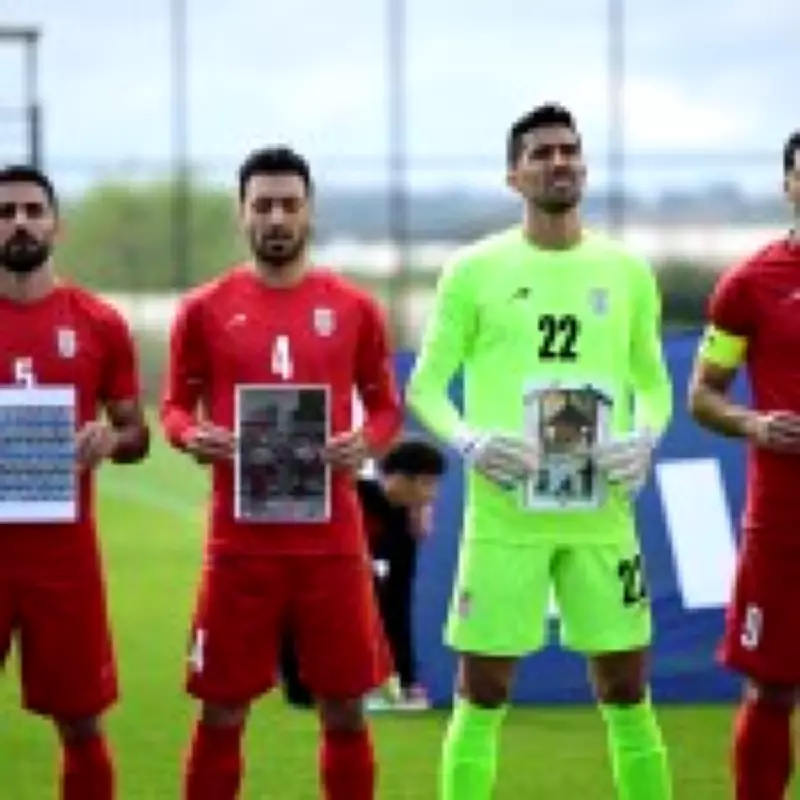
In a striking demonstration of political activism, Iran's men's national football team displayed photographs of children allegedly killed in US and Israeli airstrikes before their international friendly against Costa Rica. The entire squad and coaching staff participated in the solemn protest, with some players also showing images of damaged hospitals and historical buildings destroyed in the ongoing regional conflict.
Continuing Pattern of Memorial Protests
This protest follows similar scenes before Iran's previous friendly match against Nigeria on Friday, where players lined up with school backpacks to honor victims of the same airstrikes. The attacks reportedly killed at least 170 people from a school in Minab, a southern Iranian city, highlighting the devastating human cost of the military operations.
The latest demonstration occurred in the presence of FIFA President Gianni Infantino, who traveled to Turkey amid ongoing uncertainty about Iran's participation in this summer's World Cup tournament. The geopolitical tensions have escalated to the point where former US President Donald Trump recently suggested Iran should not travel to the World Cup "for their own life and safety," given that Iran is scheduled to play all three group-stage matches in the United States.

FIFA's Firm Stance on World Cup Participation
Despite the political tensions and security concerns, Infantino firmly stated that Iran will compete in the World Cup as planned. "Iran will be at the World Cup," he told AFP news agency. "We're delighted because they're a very, very strong team, I'm very happy. The matches will be played where they are supposed to be, according to the draw. I've seen the team, I've spoken to the players and the coach, so everything is fine."
This declaration comes after Iran had previously indicated they were negotiating to move their group fixtures outside of the United States. Mexico's President Claudia Sheinbaum had insisted her country would accommodate Iran's matches if necessary, while Iran's Minister of Sports and Youth Ahmad Donyamali had hinted the nation might not participate in the tournament at all.
Iranian Football Federation's Position
Following Iran's 5-0 victory over Costa Rica in the friendly match, Mehdi Mohammad Nabi, vice president of the Iranian Football Federation, provided the clearest indication yet that Iran will not boycott the World Cup. "For us, what matters most are FIFA's rules and regulations. We will comply with whatever FIFA decides," Nabi stated. "Every host country has made commitments to FIFA and must honor them."
Regarding Infantino's presence at the match in Antalya, Turkey, Nabi added: "Having learned that we were organizing friendly matches here, he came to see us in person, and we had a fruitful discussion. Given our history in this competition, it is only natural that FIFA should support the Iranian team. Mr. Infantino is providing the necessary support to our national team and has given our players a great boost."
The protest and subsequent statements highlight the complex intersection of international sports, politics, and humanitarian concerns as the World Cup approaches. With Iran determined to compete despite geopolitical tensions, the tournament promises to be as much about diplomatic navigation as athletic competition.