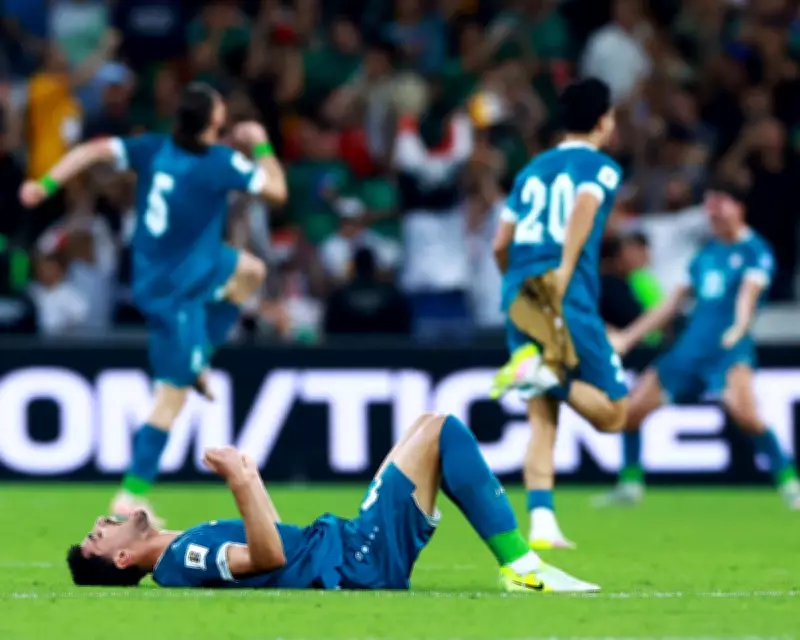
Iraq's Triumphant Return to World Cup Stage After Four Decades
In a moment of pure footballing ecstasy, Iraq's national team has secured its place at the 2026 World Cup, ending a 40-year absence from the global tournament. The historic achievement came on Tuesday with a dramatic 2-1 victory over Bolivia in an intercontinental playoff match held in Monterrey, Mexico.
The Heroic Journey of Aymen Hussein
If any player embodies the resilience of Iraqi football, it is striker Aymen Hussein. Born in the conflict-affected region of Kirkuk, Hussein has overcome unimaginable personal tragedy, including the loss of his father in a 2008 al-Qaeda attack and the disappearance of his brother six years later. Football provided his escape from turmoil, and now he has delivered his nation one of its most joyous sporting moments in recent history.
Hussein scored the decisive goal just eight minutes into the second half against Bolivia, sweeping home what proved to be the match-winner. At age 21, he had vowed to lead Iraq to the World Cup. Nine years later, he has fulfilled that promise in spectacular fashion.

A Grueling 21-Game Qualification Campaign
The road to World Cup qualification has been nothing short of epic for the Lions of Mesopotamia. Iraq played an astonishing 21 matches throughout their qualification journey, beginning in the second round where they topped their initial group. They then faced 10 fixtures in the third round, narrowly missing automatic qualification before entering the playoff system.
The expanded World Cup format certainly helped Iraq's cause, as Asia received more qualification spots than in previous tournaments. However, the team's success cannot be attributed solely to format changes. Playing home matches in Basra before 60,000 passionate supporters created both advantage and pressure for a squad desperate to end their World Cup drought.
Graham Arnold's Transformative Influence
In May 2025, veteran Australian coach Graham Arnold took charge of the Iraqi national team, bringing with him experience from leading Australia to the knockout stages of the 2022 World Cup. Arnold, named best coach of that tournament by French publication L'Équipe, was specifically hired to navigate Iraq through the challenging playoff system.
"I've got to give so much thanks to the players," Arnold said after being lifted into the air by celebrating players. "Their work ethic, they showed the real Iraqi mentality and putting their bodies on the line, that's why we won the game. I say to them: I am so happy that we've made 46 million people happy. Especially with what's going on in the Middle East at the moment, I am so happy for them."
Overcoming Historical Shadows
Iraq's only previous World Cup appearance in 1986 remains overshadowed by the brutal regime of Uday Hussein, son of Saddam Hussein, who terrorized players while controlling the national team. Despite this oppression, Iraq performed respectably in 1986, losing all three group stage matches by just one goal each against Belgium, Paraguay, and Mexico.
Since the 2003 US-led invasion, Iraq has more often made headlines for conflict and instability than sporting achievement, making their 2007 Asian Cup victory particularly remarkable. However, that continental success never translated into World Cup qualification until now, with inconsistency, misfortune, and the inability to host home matches contributing to repeated failures.
A New Generation Ready for Global Stage
The current Iraqi squad represents a blend of experience and emerging talent. Alongside veteran stars like Aymen Hussein and goalkeeper Jalal Hassan, young prospects including Ali Jasim, Zidane Iqbal, and Aimar Sher will now have the opportunity to showcase their abilities on football's biggest stage.
Iraq faces a challenging Group I at the 2026 World Cup, opening against Norway on June 16 in Boston before matches against France and African champions Senegal. Yet after the hardships endured by both the nation and its footballing heroes, this formidable challenge represents a welcome opportunity rather than a daunting obstacle.

Celebrations Across Iraq and Beyond
As dawn broke over Baghdad on Wednesday morning, streets filled with jubilant supporters waving flags, dancing, and singing in celebration. The scenes contrasted sharply with the disappointment in European capitals like Rome, Copenhagen, and Warsaw, where other nations had seen their World Cup dreams end.
Across Asia, football fans have embraced Iraq's success, recognizing the significance of this achievement for a nation that has endured so much turmoil. The victory represents not just sporting triumph but a moment of national unity and joy that transcends football.