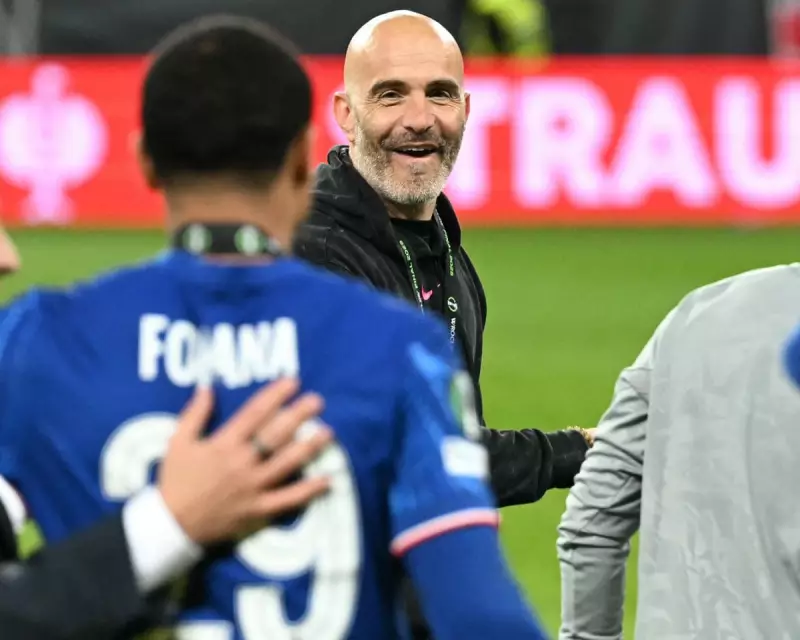
Chelsea head coach Enzo Maresca has plunged his future at Stamford Bridge into serious doubt following a series of provocative public statements that have baffled and irritated the club's ownership and sporting directors.
A Grenade Thrown into the Mix
The situation escalated dramatically after Chelsea's unimpressive 1-0 win against Everton last Saturday. In his post-match press conference, Maresca made the startling claim that the 48 hours preceding the game were the worst he had experienced since joining the club. He suggested he was not being fully supported, a comment that sources say shocked even those close to the Italian manager.
Club insiders initially tried to dismiss the outburst as an emotional reaction to a tense victory. However, Maresca has since refused to clarify or retract his remarks, instead doubling down in a manner that suggests a deliberate confrontation. When asked on Friday to explain the source of his discontent, Maresca was evasive, stating: "It's a question for them, not for me. I said what I said. Full stop."

Power Play and Manchester City Links
The timing of Maresca's comments has fuelled intense speculation about his motives. Rumours emerged this week that Manchester City have identified Maresca as a potential successor to Pep Guardiola, for whom he worked as an assistant during the 2022-23 treble-winning season.
While Maresca publicly played down these links, he pointedly noted it was "important to understand the reason why this news" had surfaced, hinting at a possible strategic leak. His recent change of agent to powerful super-agent Jorge Mendes, who has close ties to City's sporting director Hugo Viana, has added further intrigue. The theory gaining traction is that Maresca is using the City speculation to gain more influence within Chelsea's rigid hierarchy, a structure specifically designed to limit a manager's unilateral power.
Chelsea's ownership, led by Todd Boehly and Clearlake Capital, and sporting directors Laurence Stewart and Paul Winstanley, are understood to be deeply unimpressed. They operate a collaborative model where Stewart and Winstanley provide regular tactical feedback, a process believed to have sparked friction after recent criticism of Maresca's substitutions in the defeat to Atalanta.
A Dangerous Game with High Stakes
Maresca is now playing a perilous game. Chelsea's model prioritises stability and long-term planning, evidenced by their policy of handing lengthy contracts to young players. Drama is actively discouraged. Senior figures have noted that Maresca was content with this structure last season during a successful campaign, making his recent behaviour all the more puzzling and aggravating.
His promise to still be at Chelsea next season now rings hollow. The club's plan to review his position at the end of the campaign remains, but this public rift will undoubtedly count heavily against him. Although a mid-season change is not desired, the board's hand may be forced if the atmosphere turns toxic or results deteriorate.
When asked how he would respond if offered a new contract, Maresca was noncommittal, deflecting the question back to the club. Given the current climate, the answer seems increasingly obvious. For a manager who walked into one of football's biggest jobs from the Championship, this public stand-off represents a colossal risk with no guaranteed safety net.