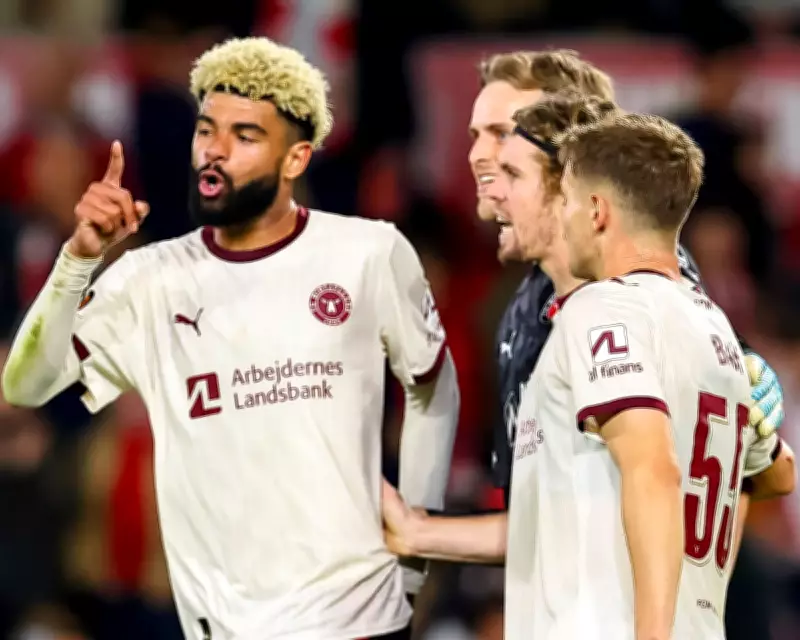
Midtjylland's Innovators Aim to Extend Forest's European Woes
Nottingham Forest must overcome a one-goal deficit when they visit the MCH Arena on Thursday for the Europa League last-16 second leg. This Danish opponent, FC Midtjylland, has already defeated Forest in the group stage this season and represents a formidable challenge built on cutting-edge football philosophy.
A Club Built on Chaos and Structure
"I like a bit of chaos and structure both on and off the pitch," declares Kristian Kjær, Midtjylland's technical director. "Getting the right mix is most important." This delicate balance has propelled the relatively young club, founded in 1999, to unprecedented European success, marking their deepest continental run to date.
Kjær reflects on the club's remarkable journey: "It must have been insane to be starting the club just over 25 years ago and then see where we are today. What a ride." That ride includes four Danish Superliga titles in the past eleven years and a current Europa League campaign that saw them finish above established European names like Real Betis, Porto, and Roma during the group stage.

The Family Club Philosophy
Midtjylland's squad represents seventeen nations across four continents, deliberately assembled to play direct, cohesive football. Building unity within this diverse group is paramount. The club organized a team bonding camp in Scotland and encourages players to suggest national dishes for the communal canteen, fostering cultural exchange.
"It takes one bad apple to ruin a good culture," warns Kjær, emphasizing the club's core principle. "One of the secrets in Midtjylland is that we are trying to bring in good people with the right mindset. We like to be a family club. We take care of each other, not only on the pitch but off it, too."
This family atmosphere extends beyond the professional sphere. Players share their canteen with children from the adjacent school, with midfielder Philip Billing known to engage in snowball fights with them. "I don't think you see that in the Premier League," Kjær notes with a smile, highlighting how these interactions keep players grounded and connected to their roots.
Data-Driven Innovation and Recruitment
Midtjylland has long been at the forefront of football analytics, being early champions of maximizing set-piece opportunities. "When we started with the focus on set pieces, we were criticised nationally and internationally," recalls Kjær. "Now it seems like Arsenal can win the Premier League by putting a bit of attention to the set pieces."
The club continues to innovate, exploring how artificial intelligence can "find the next percentage" of competitive advantage. This data-centric approach originated under previous owner Matthew Benham and continues under current majority shareholder Anders Holch Povlsen.
Their recruitment strategy focuses on identifying undervalued talents who view Midtjylland as a stepping stone to Europe's top leagues. The club has developed notable players like Atlético Madrid's Alexander Sørloth, Sporting's Ousmane Diomande, and Lazio's Gustav Isaksen. Academy graduates have accounted for 28.8% of available minutes in the Danish Superliga this season.
About twenty scouts attend every Midtjylland European fixture, monitoring emerging talents such as forward Franculino Djú, winger Darío Osorio, and defender Ousmane Diao. Osorio, a Chile international, chose Midtjylland over interest from Milan and RB Leipzig, attracted by the club's clear development pathway and Premier League-standard training facilities opened in 2023.
Blending Youth with Experience
To transform potential into financial assets, Midtjylland combines promising youngsters with seasoned professionals. The summer signing of 29-year-old Philip Billing, returning to Denmark after twelve years in England with Huddersfield and Bournemouth, raised the squad's average age to just over 24.

"Midtjylland came in and with the project they're doing and how they saw me going into the club, I thought it just sounded refreshing," explains Billing, who had offers to remain in England. "It's a decision I'm happy I've made. I've got the love back for football, and am enjoying it again, almost like a kid."
Billing acknowledges that Premier League footballers often exist in a bubble, isolated from everyday realities. At Midtjylland, the family club ethos creates a different environment. "Everybody is working towards one goal," he observes. "It's making not only good footballers, but also making good human beings, making sure that wherever you go in life, you have a good foundation."
Forest's Uphill Battle
As Nottingham Forest prepare for their crucial European encounter, they face more than just a skilled football team. They confront an organization built on innovative data analysis, global scouting networks, and a deeply ingrained cultural philosophy that values both professional excellence and personal development.
Midtjylland's chairman Claus Steinlein "dreams big," according to Billing, who recalls their first meeting: "He talked through some things, like winning the Europa League." For Forest to advance, they must overcome not just a one-goal deficit, but a club whose entire structure is designed to create European success through unique blend of chaos, structure, and family values.