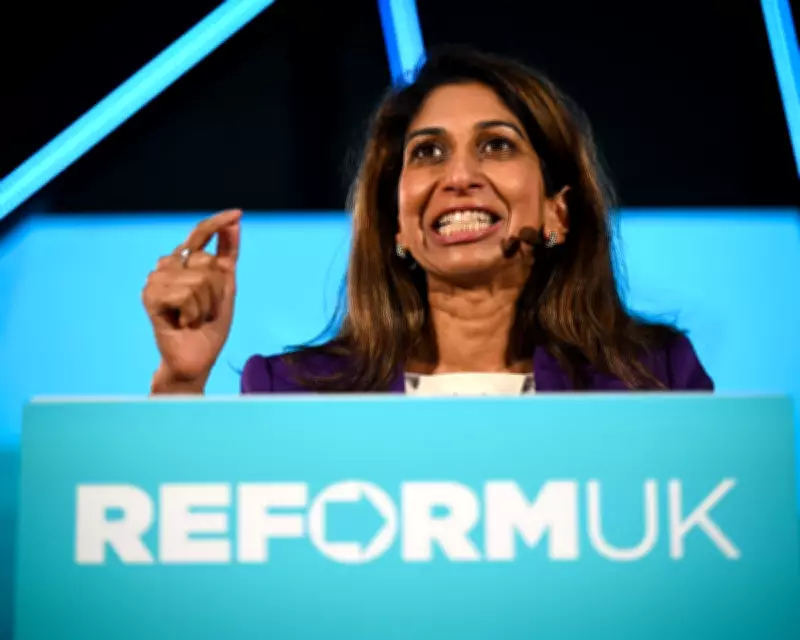
Reform UK Accused of Bringing 'Toxic Politics' into Football Over Diversity Row
Reform UK has been sharply criticized for attempting to introduce what opponents describe as "toxic politics" into English football. The controversy erupted after the party's equalities spokesperson, Suella Braverman, publicly demanded that the Football Association (FA) abandon its diversity and inclusion initiatives.
Braverman's Scathing Letter to FA Leadership
In a strongly-worded letter addressed to FA chief executive Mark Bullingham on Tuesday, Braverman condemned the governing body's Equality, Diversity and Inclusion (EDI) strategy for 2024–2028 as "utter woke nonsense." The former home secretary, who recently defected from the Conservatives to Reform UK, specifically targeted the FA's goal of ensuring that 30% of England men's coaching staff come from ethnically diverse backgrounds by 2028.
"This approach is fundamentally flawed, inherently racist and bad for the game," Braverman wrote in her correspondence. She argued that while she fully supports efforts to eliminate racism from football, the current diversity strategy "divides rather than unites" by focusing on specific demographic groups.

Political Backlash and Defense of FA Policies
Culture Secretary Lisa Nandy responded forcefully to Reform's intervention, stating: "Reform should keep their toxic politics out of our national game. Sport belongs to everyone in our country. It unites us and brings us together, which is exactly why Reform has such a problem with it."
The FA's diversity approach found additional support from Dame Tracey Crouch, a former Conservative sports minister and qualified FA coach. She emphasized that "sport has long been a vehicle to drive inclusion and community cohesion" and praised the FA for identifying gaps in representation and creating pathways for underrepresented groups.
Broader Context of Football Diversity Efforts
The FA launched its current EDI strategy following recommendations to create a more diverse candidate pool for the England head coach position. Recent data from the Black Footballers Partnership revealed a significant disparity: while 43% of Premier League players are black, far fewer occupy senior coaching roles.
In her letter, Braverman raised concerns about white working-class boys, describing them as "the most disadvantaged in the country" and "the lifeblood of our game." She questioned why this group appeared absent from the FA's strategy, suggesting the policies would "increase resentment" and should be abandoned.
FA's Firm Defense and Simultaneous Controversy
The FA issued a robust defense of its strategy on Tuesday night, stating that "football has the unique ability to break down barriers and bring communities together." A spokesperson explained that the EDI approach aims to ensure the game reflects national diversity by creating opportunities for people from all backgrounds, including historically underrepresented groups.
"While we will always take a meritocratic approach by appointing the best people for roles, we also recognise the importance of having a broader range of participants across the sport," the FA statement continued.
The diversity controversy coincided with another Reform-related football incident. Ipswich Town fans expressed outrage after party leader Nigel Farage staged a photo opportunity at Portman Road without an official invitation. Supporters described the incident as "PR suicide for a family club" and "a slap in the face to supporters and players." The club quickly clarified that it "remains apolitical and does not support or endorse any individual or party."
Historical Commitment to Inclusion
This isn't the FA's first targeted diversity initiative. Last year, the association launched its inaugural strategy for supporting south Asian participation in English football, specifically addressing what it described as "overt racism, often in mainstream places" that discourages potential players.

Mark Bullingham had previously emphasized that tackling discrimination represents one of the FA's "core ambitions," noting: "We have seen how the power of football can bring communities together and celebrate diversity, and we want to continue to use our influence to deliver positive and lasting change."
The clash between Reform UK and football authorities highlights growing political tensions around diversity initiatives in British institutions, with football becoming an unexpected battleground for competing visions of inclusion and meritocracy in national sports.