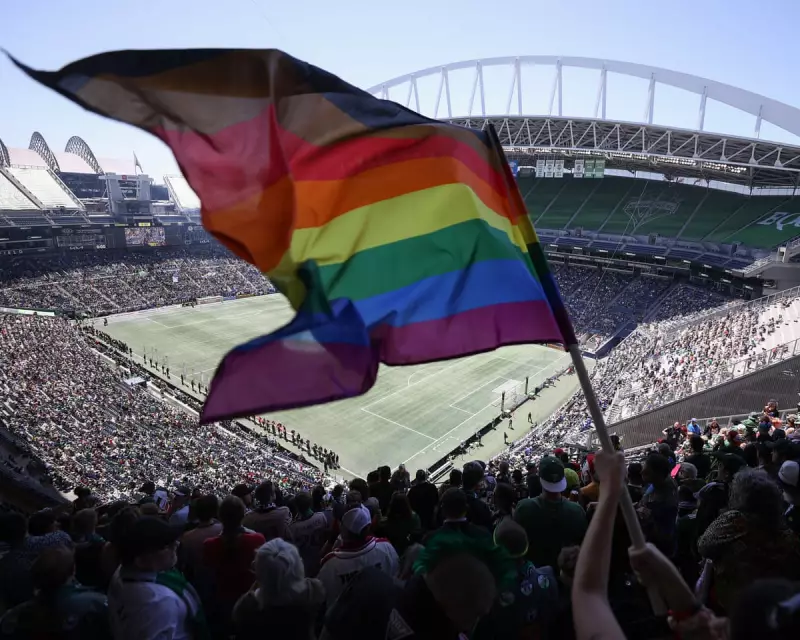
As the 2026 FIFA World Cup approaches, a significant stand for inclusivity is unfolding in one of the tournament's host cities. Seattle's local organising committee has firmly committed to holding a designated 'Pride Match' during the event, a decision that has sparked international controversy but underscores the tournament's potential to reflect local values.
A Clash of Values on the Global Stage
The point of contention arose after the World Cup draw assigned a match between Egypt and Iran to be played at Seattle's Lumen Field on 26 June 2026. This date coincides with the city's LGBTQ+ Pride weekend celebrations. Both nations, where homosexuality is severely persecuted and in Iran's case punishable by death, formally protested the planned Pride events.
In a letter to FIFA, Egyptian officials cited statutes demanding neutrality in political and social matters during FIFA competitions. This appeal came shortly after FIFA awarded its inaugural peace prize to former US President Donald Trump, a move widely seen as politically motivated.

The Seattle organisers' response was unequivocal. They rejected the protests, affirming that Pride celebrations, including the display of rainbow flags inside and outside the stadium, would proceed as planned. This stance highlights a stark contrast to the 2022 Qatar World Cup, where FIFA banned rainbow captain's armbands citing local customs. In the Pacific Northwest, the local custom is one of tolerance and inclusion.
The True Spirit of the World Cup
This confrontation speaks to a deeper tension within modern mega-events. Is the World Cup a homogenised product, or is it a template that host nations can adapt to showcase their unique character? The author, drawing on experiences from three previous tournaments, argues powerfully for the latter.
Memories that endure are not of corporate pomp but of human connection: the joyful people of South Africa in 2010, the shared frustrations of street vendors locked out by FIFA's exclusivity, the cultural mishaps in Brazil, and the spontaneous fan celebrations in Qatar's metro. The football itself—Landon Donovan's last-gasp goal, Tim Howard's heroics, Robin van Persie's flying header—forms the brilliant backbone, but the soul of the event is found in these interstitial, human moments.
Redemption for an Exclusive Tournament
The 2026 World Cup, spread across North America, is predicted to be the most inaccessible and commercialised edition yet. However, incidents like Seattle's steadfast defence of its Pride Match offer a path to redemption. The tournament can succeed by allowing host cities to express their identities, by welcoming fans freely, and by prioritising the authentic experience over sterile, corporate control.
The message from Seattle is clear: the World Cup belongs as much to the communities that host it as it does to the global governing body. By protecting events like the Pride Match, the 2026 competition can become a true celebration of humanity, in spite of FIFA's frequent missteps. The resolve shown in the Pacific Northwest is exactly what this global festival of football should be for.