Raheem Sterling's Feyenoord Form Remains Elusive After Early Substitution Against Ajax
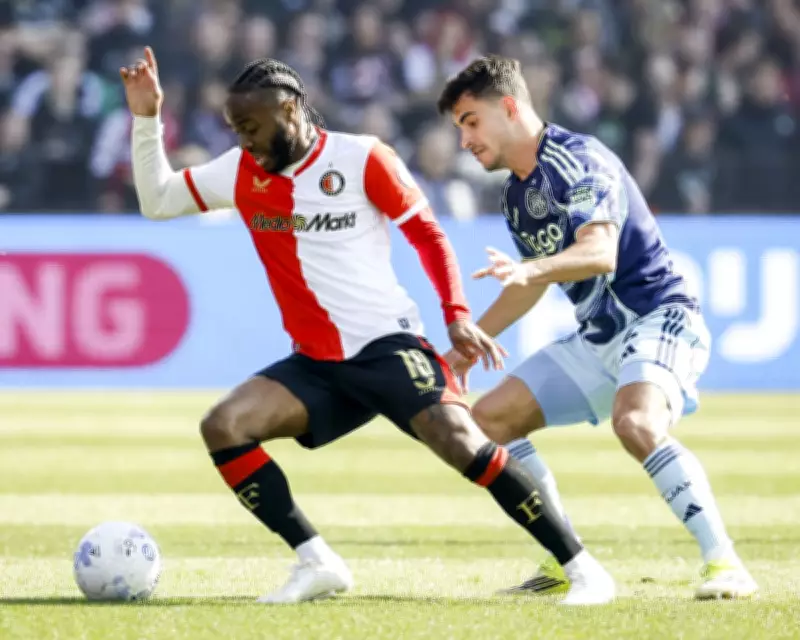
When the crucial moment arrived during De Klassieker, Raheem Sterling found himself with nowhere to go. The former England international finally secured a few yards of space against Ajax right-back Lucas Rosa, with the roaring De Kuip crowd anticipating a trademark burst of acceleration. Sterling's intentions were clear: dart around the outside, race along the byline, and deliver the kind of decisive play that has characterized his illustrious career. For a fleeting moment, his muscle memory seemed sufficient, but Rosa positioned himself perfectly, leaving Sterling unable to compensate. Just as he had done in a similar situation before halftime, Sterling could only guide the ball out of play.
Premature Exit From the Showpiece Match
Merely four minutes later, Sterling's afternoon concluded prematurely. Feyenoord had fallen behind to a functional Ajax side in this crucial Eredivisie encounter, and the unfortunate reality pointed squarely at one player. The home team's limited opportunities had primarily emerged from the right flank, resulting in a decent chance for Ayase Ueda. Perhaps 20-year-old Slovakian winger Leo Sauer, who replaced Sterling as he trudged toward the bench, could provide some much-needed spark on the opposite side. Only 55 minutes of the league's marquee fixture had elapsed.
Jakub Moder's late penalty salvaged a point for Feyenoord, temporarily pushing Sterling's ongoing struggles down the priority list. One month since his debut, this represents a challenging situation for both Sterling and a club that expects significantly more from its marquee signing.

High Stakes for Feyenoord's Season
Feyenoord have virtually no chance of catching runaway leaders PSV Eindhoven, and there's a growing sense they've somewhat stumbled into second place, which would still guarantee direct Champions League qualification. Securing that position might also preserve the job of under-pressure head coach Robin van Persie.
Perhaps the expectations are simply too high for a player still regaining match fitness after half a season without regular football, while simultaneously being expected to carry the team through critical moments.
"Those two worlds need to align sooner rather than later," Van Persie acknowledged post-match. "We are working on that, where the most important thing is winning matches during this period of Raheem getting fitter and fitter. So I do respect and acknowledge where he is coming from, but at the same time we have to deliver as a club. We have to end up second, as simple as that. I believe that he's making steps in terms of fitness, in terms of what he delivers. At the same time, I want to see more impact off the ball, more impact on the ball."
Limited Impact in Tense Encounter
Sterling displayed minimal influence in either aspect during the match, though to some extent he could be excused for sinking to the level of a tense, scrappy affair that only opened up when Feyenoord equalized and pursued victory.
His few notable contributions included an early burst of pace to recover an overhit pass and win a throw-in, one intelligent first-time pass that eventually earned a dangerous free-kick, and some diligent tracking back near the halfway line to maintain pressure. However, there was neither an appropriate platform for Sterling's talents nor any indication he could transcend the overall mediocrity.
European Football's Contrasting Realities
Heavy metal covers provided the soundtrack during warm-ups, while an electrifying atmosphere reverberated through De Kuip's iconic curved stands as the teams emerged. A banner featuring a bulldog urged Feyenoord to embody similar fighting spirit. While European football outside the Premier League has diminished in certain respects, as the match's quality occasionally demonstrated, it remains elevated in numerous other ways.

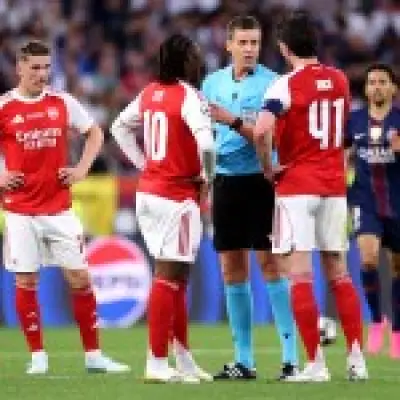
For sentimental observers, there was the poignant timing of this fixture occurring shortly before two of Sterling's former clubs competed in the Carabao Cup final at Wembley's more polished surroundings. This alone doesn't signify a unique decline; no 31-year-old forwards featured in that cup final. At the same age, Van Persie was preparing to conclude his Manchester United career and transition to Fenerbahce. Sterling deserves credit for choosing to revive his career at Feyenoord, embracing an environment rich with history and significance, competing for tangible objectives, and facing the direct, demanding Dutch scrutiny that has already been unforgiving across just five appearances.
The Path Forward for Sterling and Feyenoord
Nevertheless, this doesn't alleviate the regret surrounding his unproductive years since joining Chelsea, nor the sense that he must adapt to survive even this level of intensity if his former explosiveness has permanently diminished. "Over the rest of the season we will see the best of him, I'm sure," said Moder, perhaps with excessive optimism.
Perhaps Feyenoord will indeed sharpen Sterling's abilities just in time for his potential departure. "We both agreed that the intentions are really clear," Van Persie explained. "That it is a deal until the end of the season, that we are both really open for the future and that we see how it goes."
During the match, Sterling shared the pitch with Wout Weghorst, Takehiro Tomiyasu, and Davy Klaassen, all of whom appeared some distance from Premier League standard while representing an Ajax side barely resembling its traditional self. Only an excellent finish by 18-year-old midfielder Sean Steur, occurring just before Sterling's substitution, offered any glimpse of a promising future.
There remains time for Feyenoord to become the setting where Sterling resolves his current predicament. "He's training every single session, even on his day off he's in to work and get his fitness up," revealed Van Persie, who appreciates Sterling's early influence on younger teammates. Whether justified or not, time is increasingly pressing for the experienced forward to demonstrate his enduring quality.