VAR Has Failed the Premier League – It’s Time to Cut Our Losses to Save Our Game
I was once a believer. Tired of endless debates over blatant offside calls and refereeing mistakes visible from the stands, I welcomed the Premier League's exploration of VAR in 2018. Before its debut in the 2019-20 season, I spent an afternoon with other broadcasters testing the system at Stockley Park, where we overturned on-field decisions using video evidence in a strangely quiet environment. The referees were earnest, the task challenging, and it all seemed like a logical step forward. When VAR made its first Premier League appearance on August 9, 2019, I was fully on board. Now, I am not.
The Tipping Point of Frustration
I cannot pinpoint the exact moment my faith shattered, but as a partial football fan, bad decisions against Tottenham Hotspur stand out vividly in my memory. Last weekend, Brian Brobbey's aggressive and cynical push on Cristian Romero went unpunished with no second yellow card, let alone a red, and I erupted. This followed a missed potential red for an elbow on Pedro Porro, leaving me questioning the entire point of VAR. Fortunately, I was not at the stadium or even in the country, so I could vent my frustrations over a Greek Mamos beer and WhatsApp. However, to truly grasp VAR's failure, you must be in the ground, where only the sighing is guaranteed.
The Stadium Experience: A Game Disconnected
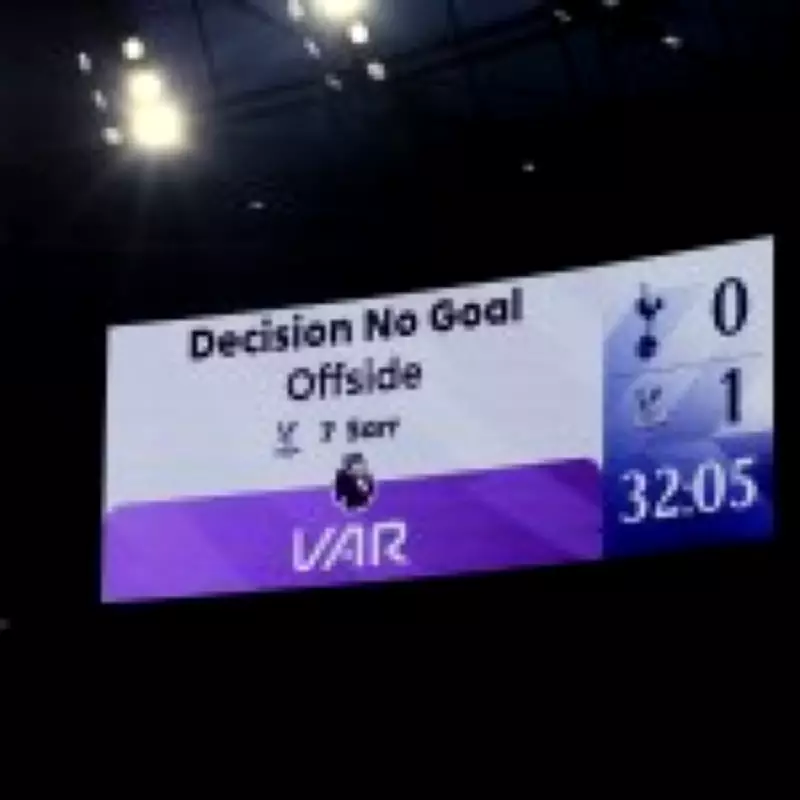
Recall Tottenham's defeat to Crystal Palace last month? That might have been when I gave up on VAR. In the stadium, we sat in our seats, asking neighbors, waiting, and railing as the game felt distant—until we learned Ismaila Sarr's nose was offside. Adding to the chaos, the on-field referee's communication with VAR failed, wasting precious minutes. Referees are human and make mistakes, but VAR was meant to provide an extra pair of eyes. Instead, it has doubled errors and increased time-wasting, disrupting the flow of the beautiful game.

Football's Essence: Protecting the Goal
No week passes without a grandee proposing radical changes to football, like Napoli owner Aurelio De Laurentiis suggesting 25-minute halves to retain youth focus. While such ideas are fun to debate, football, as the world's biggest sports success story and a cultural phenomenon, does not need excessive tinkering. The core of football is the goal—the breath before and after the shot, the chaos of shifting fortunes, the net's swish, the wide eyes, and impudent celebrations. This must be protected at all costs, and VAR threatens it by interrupting these moments.
A Better Approach: Automated Solutions
Previously, I favored a captain's review system, similar to tennis or cricket, where participants could challenge decisions once per game for theatrical effect. However, this still disrupts gameplay. Instead, we should focus on automated or semi-automated technologies for yes/no decisions. Goalline technology is effective and should stay, while semi-automated offside must be faster. Offside is an absolute—like pregnancy, you either are or aren't—so if toenail margins are disliked, set a clearer threshold. Football has many fixable issues, such as corruption, mismanagement, sexism, racism, and abuse, but the game itself is perfect. Let's address these problems by removing VAR and letting the sport speak for itself.