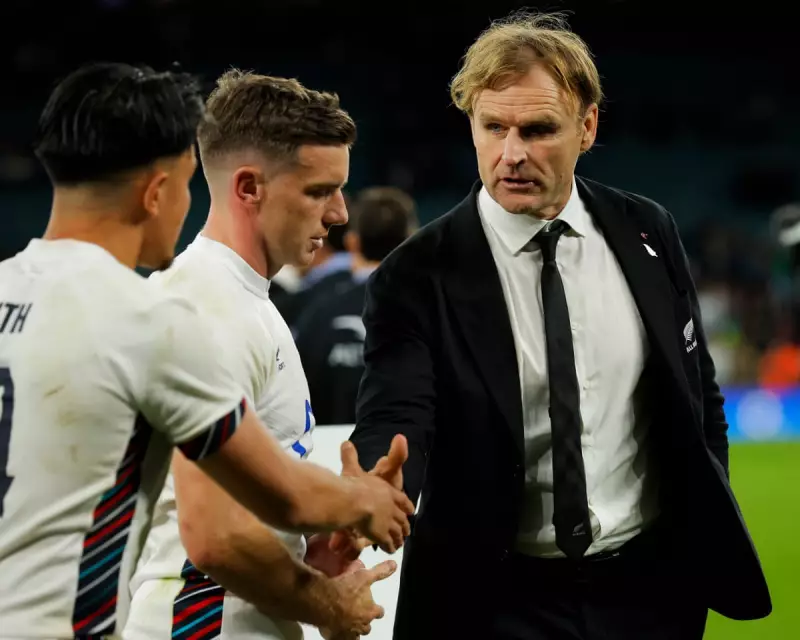
In a dramatic and swift move, Scott Robertson has been removed from his position as head coach of the New Zealand All Blacks. The decision, coming just two years into his tenure, follows an internal review into a problematic year that included historic defeats and reported player dissatisfaction.
A promising tenure cut short
Known affectionately as 'Razor', Robertson was hailed as the fresh start New Zealand rugby needed. His incredible domestic record, guiding the Crusaders to seven consecutive Super Rugby titles, and his modern, empathetic approach promised to reconnect the famed team with a new generation. However, his international reign has been abruptly terminated after only 27 Tests in charge.
Despite a win rate of 74%, which was statistically better than his predecessor Ian Foster's 69.6%, the underlying issues within the squad proved fatal. New Zealand Rugby chair David Kirk acknowledged the team's trajectory was not meeting expectations, stating, "We were falling a bit short of the excellence that we’re looking for."

What went wrong for Razor's All Blacks?
The review was triggered by a series of alarming results that shook the rugby world. The most chastening was a record 43-10 defeat at home to South Africa, the heaviest in the All Blacks' 120-year history. This was compounded by a first-ever loss to Argentina and a disjointed performance in a 33-19 defeat to England at Twickenham in November.
Observers noted a distinct lack of the famous All Blacks' aura and cohesion, particularly in the backline. Reports of player unrest, including a suggestion that star forward Ardie Savea considered his future under Robertson, added to the pressure. While Kirk downplayed the specifics, the union's rapid response indicated player feedback was a significant factor.
"When an All Black backline looks so visibly short of rhythm, there is trouble at mill," as one analysis put it. The perceived issues within the team's culture, something Robertson was specifically hired to fix, ultimately led to his downfall.
The road to the 2027 World Cup
The dismissal raises urgent questions about New Zealand's preparation for the 2027 Rugby World Cup in Australia. Kirk admitted the team is currently not on the required track. The challenge for the next coach is immense: rebuilding an international squad while key players like Beauden Barrett, Codie Taylor, and Ardie Savea are all in their early-to-mid thirties.
Attention now turns to potential successors. The early frontrunner is former All Black flanker Jamie Joseph, who coached Japan to historic heights and is now with the Highlanders. Other experienced New Zealand coaches like Dave Rennie, Joe Schmidt, and Warren Gatland will also be in the conversation.
Despite the turmoil, the All Blacks remain ranked second in the world. History shows that a mid-cycle shock can sometimes refocus a team, as South Africa has demonstrated. The task is to rediscover the sharp edge that was conspicuously absent during Robertson's final months, and to restore the fear factor that once defined the silver fern.
As for Robertson, a move to club rugby seems likely, with teams in the UK such as Harlequins potentially offering a fresh start. For New Zealand, the search for a saviour begins anew, with the clock ticking towards 2027.