The World's Only Olympic Curling Stone Factory
In the heart of East Ayrshire, a small Scottish factory with a monumental global responsibility operates quietly. Kays Scotland, employing just fifteen dedicated staff members, stands as the exclusive worldwide supplier of curling stones for the prestigious Winter Olympic Games. This family-owned business, established in 1851, has maintained this unique partnership since the inaugural Winter Olympics in Chamonix back in 1924.
A Legacy of Handcrafted Excellence
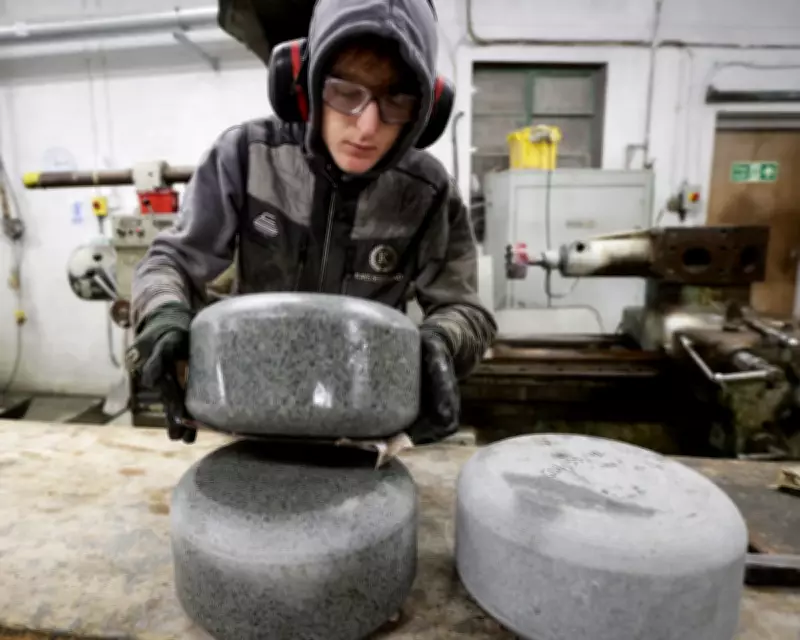
"It takes sixty million years and about six hours to make a curling stone," declares Ricky English, the operations manager at Kays, raising his voice above the persistent hum of industrial lathes. He emphasizes that this is not a process dominated by automation. Each stone represents a blend of handcrafted tradition, historical significance, and meticulous attention to detail. For the recent Winter Games in Cortina, Italy, the factory meticulously produced and shipped 132 individual stones, each weighing approximately eighteen kilograms.
English watches the competitions with a sense of pride, noting, "They do look quite good coming down the ice." The stones are central to the dramatic moments unfolding on the Olympic stage, where Great Britain's men's and women's teams have showcased their skills.

The Secret Lies in Ancient Granite
The unparalleled quality of these Olympic stones originates from a singular, extraordinary source: Ailsa Craig. This tiny volcanic island, situated in the Firth of Clyde and once poetically described by John Keats as a "craggy ocean pyramid," is the only location on Earth that yields the specific granite required.
Each curling stone is a masterpiece of geological engineering. The main body is fashioned from a single piece of resilient common green granite, chosen for its elastic properties that allow it to act like a spring during collisions. The critical running band, the sole part of the stone that contacts the ice, is an insert made from blue hone granite. "It's essentially a waterproof granite, making it absolutely perfect for gliding across ice," explains English. The combination of these two exceptionally hard-wearing materials creates what he describes as "the perfect curling stone."
From Raw Boulder to Olympic Artifact
The transformation within the Mauchline factory is a spectacle of precision. Rough granite rounds journey through a series of specialized machines, each performing a crucial step: shaping the stone, integrating the two distinct granites, and drilling the central hole for the handle. The final stage involves polishing the stones to a brilliant, liquid shine using pumice and diamond pads, sending sparks flying across the workshop floor.
Beyond the full-sized Olympic stones, the factory's craftsmanship extends to miniature curling stones, elegant drink cubes, and stylish coasters. A significant recent development is a contract to produce official Winter Olympics giftware, a major commercial boost that also presents complex logistical challenges. Gift boxes are stacked high in the office, awaiting shipment worldwide, with a notable surge in orders from the United States—a trend English humorously speculates might be linked to rapper Snoop Dogg's newfound public interest in the sport.
A Sport Steeped in Scottish History
Curling is intrinsically Scottish, recognized as one of the world's oldest team sports. The earliest known curling stone dates back to 1511, with the game originally played on frozen lochs before being spread globally by Scottish immigrants. The establishment of the Royal Caledonian Curling Club in 1838 helped standardize the rules, especially as milder winters necessitated the sport's evolution from outdoor ponds to indoor ice rinks.
Global Reach and Lasting Legacy
The finished stones, each carrying a price tag of £750, are packed onto pallets destined for curling clubs across the planet. Major markets include Canada and China, with the most remote order last year astonishingly originating from Antarctica. The factory aims to complete forty-eight stones per week, with each one bearing a unique traceable number linked directly to its original boulder.

Granite is harvested from Ailsa Craig only once every six or seven years, and with an estimated 680 million tonnes remaining, supply concerns are nonexistent. The stones are renowned for their durability, often returned to the factory for refurbishment even after two decades of use. "I believe this is the only product in the world where you can come back after twenty years," English states with pride. "It's all about reliability, peak performance, and being trusted on the grandest sporting stage in the world."