Six Unlikely Winter Olympic Heroes Who Captured Hearts Worldwide
The Winter Olympics have long been a stage for athletic excellence, where gold medals and record-breaking performances dominate headlines. Yet, some of the most enduring memories come from athletes whose achievements defy conventional success, embodying the spirit of perseverance, surprise, and human connection. Here, we celebrate six such improbable stars whose stories resonated far beyond the podium.
Eddie the Eagle Soars into Olympic Lore
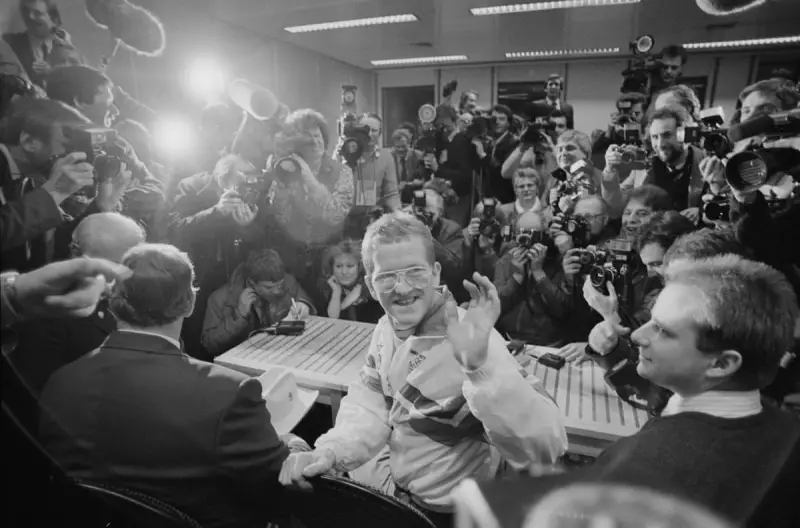
Michael "Eddie the Eagle" Edwards became an instant cult hero at the 1988 Calgary Games as Great Britain's first Olympic ski jumper. With a weight of 82kg, poor eyesight, and entirely self-funded training, he was the antithesis of a typical elite athlete. Eddie finished last in both the normal hill and large hill events, scoring just 69.2 points compared to winner Matti Nykänen's 229.1. Despite his 67th-place finish at the 1987 world championships, he hit the qualifying standard for Calgary, where his enthusiastic underdog spirit captivated global media. His legacy includes the "Eddie the Eagle Rule," introduced to tighten Olympic entry requirements and prevent similar "Olympic tourists."
Ester Ledecka's Stunning Double Gold Feat
In a remarkable upset at the 2018 Pyeongchang Games, Czech athlete Ester Ledecka made history by becoming the first to win gold in two different sports at the same Winter Olympics. Primarily a snowboarder, she entered the Super-G Alpine skiing event with a late bib number and snatched victory by a mere 0.01 seconds over defending champion Anna Veith, despite her previous best World Cup finish being 19th. A week later, Ledecka returned to her primary sport to comfortably claim gold in the parallel giant slalom snowboarding, cementing her status as a versatile sporting phenomenon.

Nigeria's Pioneering Bobsleigh Team Breaks Barriers
The 2018 Pyeongchang Olympics witnessed a historic moment as Nigeria fielded its first Winter Olympics delegation, led by four trailblazing women. The two-woman bobsleigh squad of Seun Adigun, Ngozi Onwumere, and Akuoma Omeoga finished 19th out of 20 sleds, while skeleton racer Simidele Adeagbo placed 20th in her event. Former track and field athletes, the bobsledders crowdfunded their journey and trained with a makeshift wooden sled built in Texas. Their participation marked the first time any African country had been represented in bobsleigh at the Winter Games, inspiring a new generation of athletes.
Shiva Keshavan's Two-Decade Olympic Odyssey
Indian luger Shiva Keshavan embarked on an extraordinary Olympic journey, debuting at Nagano 1998 as the youngest luger in Winter Games history at age 16. Over six consecutive Olympics, he persevered despite a lack of infrastructure in India, often training on dangerous makeshift tracks in the Himalayas and self-funding his costs. In 2002, he refused an offer to compete for Italy and hitched a ride to the Salt Lake City Games from Montreal. While his best finish was 25th in Turin 2006, Keshavan set an Asian speed record of 134.3km/h and won two Asian Luge Cup gold medals before retiring after Pyeongchang 2018.
Steven Bradbury's Golden Fluke Becomes Legend
Australian short-track speed skater Steven Bradbury secured one of the most improbable gold medals in Olympic history at the 2002 Salt Lake City Games. In the chaotic five-man final of the men's 1000m, Bradbury strategically stayed back and watched as all four leading skaters collided on the last bend. As they slid across the ice, he glided over the finish line with a time of 1:29.109, claiming Australia's first Winter Olympic gold. The 28-year-old instantly became an icon and meme, now working as a motivational speaker who emphasises the virtues of persistence and resilience.

Philip Boit's Heartwarming Finish Line Embrace
At the Nagano 1998 Games, Philip Boit made history as Kenya's first Winter Olympian in the 10km classical cross-country skiing event. A former middle-distance runner who had switched to skiing only two years prior, he finished 92nd and last, nearly eight minutes behind the second-to-last finisher and double the time of winner Bjorn Dæhlie. Despite the performance gap, Dæhlie waited at the finish line to greet Boit with a heartfelt embrace, a gesture that moved Boit so deeply he later named his first son Dæhlie Boit in honour of the champion. This moment highlighted the Olympic spirit of camaraderie and respect.
These six stories remind us that the Winter Olympics are not solely about medals, but about the human experiences of determination, surprise, and connection that capture the world's imagination.