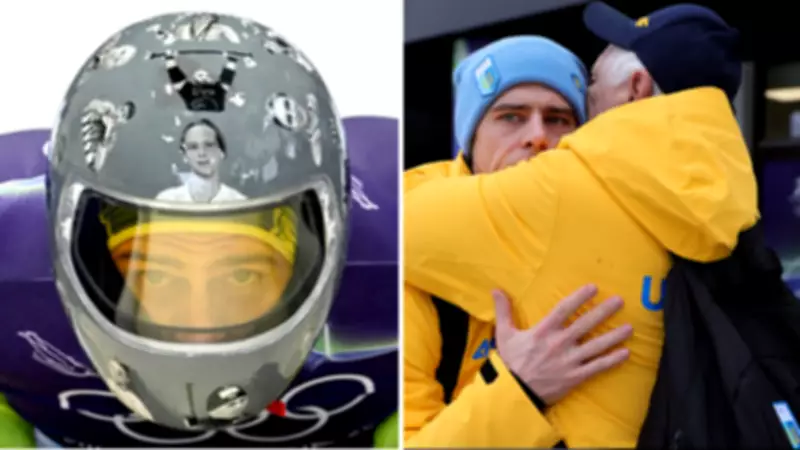
Ukrainian Olympian Banned from Competition Over Helmet Honoring War Dead
The International Olympic Committee has officially banned Ukrainian skeleton racer Vladyslav Heraskevych from competing at the Winter Olympics after he insisted on wearing a helmet depicting athletes killed since Russia's invasion of Ukraine. The 27-year-old athlete, who also serves as team flagbearer, now faces disqualification for violating rules prohibiting political statements during competition.
Defiant Athlete Vows to Appeal Ban
Heraskevych expressed profound disappointment following the decision, telling reporters he would appeal to the Court of Arbitration for Sport. "It's hard to say or put into words. It's emptiness," he stated in response to the ban. The Ukrainian Olympic Committee has firmly backed their athlete, who previously displayed a "No War in Ukraine" sign at the Beijing 2022 Olympics just days before Russia's invasion.
The IOC had pleaded with Heraskevych to adhere to competition guidelines and avoid potential disqualification, arguing his "helmet of remembrance" violated established regulations. The helmet features 24 images of deceased Ukrainian athletes, creating what officials described as a political statement during competition.

IOC Attempts at Compromise Fail
Despite efforts to find middle ground, a Wednesday afternoon meeting between the two sides failed to break the impasse. The IOC had permitted Heraskevych to wear a black armband while competing and display his memorial helmet before and after Thursday's men's skeleton race. However, the athlete remained defiant, refusing to compete without the symbolic headgear.
IOC President Kirsty Coventry spoke with Heraskevych on Thursday morning before the race but was unable to change his position. Visibly emotional after their conversation, Coventry acknowledged the power of his message while emphasizing regulatory constraints. "I really wanted to see him race. It's been an emotional morning," she said. "It's literally about the rules and regulations... we have to be able to keep a safe environment for everyone."
Practical and Philosophical Challenges
Heraskevych explained that even if he wanted to comply, practical constraints would prevent him from obtaining a suitable replacement helmet in time for competition. "For us and the athletes, the field of play is sacrosanct. These people have dedicated their whole lives for this moment," stated IOC spokesperson Mark Adams during a Wednesday news conference, highlighting the committee's difficult position.
In an official statement released Thursday, the IOC emphasized its desire to see Heraskevych compete while maintaining competition neutrality. "This is why the IOC sat down with him to look for the most respectful way to address his desire to remember his fellow athletes who have lost their lives following Russia's invasion of Ukraine," the statement read.
The controversy underscores ongoing tensions between athlete expression and Olympic regulations, particularly concerning conflicts that have international political dimensions. Heraskevych's case represents one of the most prominent confrontations between personal memorialization and competition rules in recent Olympic history.