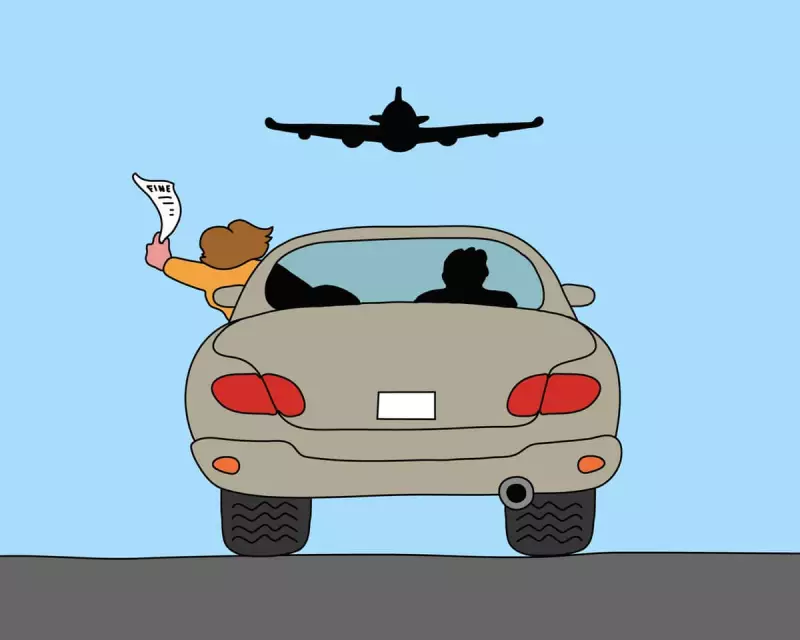
A family dispute has erupted over who is responsible for a parking fine incurred during a seemingly simple favour: a trip to the airport. The conflict pits mother Margaret against her 32-year-old daughter, Georgia, with both women holding firm to their version of events.
The Airport Run That Led to a Fine
The saga began when Georgia stayed at her mother's house, which is near the airport, before a holiday. Margaret's partner, Bill, offered to drive Georgia to the terminal the next day. To accommodate all the luggage, they used Georgia's car for the journey.
Three weeks later, after returning from her trip, Georgia contacted her mother with unwelcome news. A parking charge notice had arrived at her home. The fine was issued because the mandatory airport drop-off fee was not paid when Bill drove her car into the designated zone.

Clashing Perspectives on Responsibility
Margaret's position is clear. She believes the fine is Georgia's responsibility. "I said: 'Oh, that's terrible, but you should have paid the fee,'" Margaret recounted. She feels aggrieved that after doing her daughter a favour, and even cleaning her car while she was away, Georgia is now asking for money to cover the fine.
Margaret has offered to pay half, but Georgia has rejected this compromise. "I understand that, but we didn't really have to drop her in the first place," Margaret argued, suggesting the favour itself should absolve her of further financial responsibility.
Georgia, however, sees it very differently. She argues that if someone offers to do a favour, they should complete it properly. "She didn't follow through with everything and forgot to pay the drop-off fee. How is that my fault?" Georgia stated.
Crucially, Georgia claims she had no knowledge of the drop-off charge, as she had never driven to the airport herself. She points out that her mother and Bill, who have driven there many times in their own car, are familiar with the rules and simply forgot on this occasion.
The Stalemate and the Court of Public Opinion
The matter is currently at an impasse while Georgia appeals the fine on the grounds that the car park cannot prove who was driving. She has said she will accept half the money from her mother if the appeal fails, but maintains that, ideally, the person who made the error should bear the full cost.
Guardian readers, acting as a jury, were divided on the issue. Some, like Henry, 29, sided with Georgia: "Margaret and Bill made a mistake, and it's unfair to pin that on Georgia." Others, like Tania, 37, felt Georgia should be less petty: "At 32, she should stop the pettiness, pay half or all of it, and move on." Ian, 81, suggested Georgia take a taxi next time, while Kate, 63, argued the "buck stops with Georgia as it's her car."
The case highlights how everyday interactions and well-intentioned favours can quickly sour when unexpected costs and unclear responsibilities come into play, leaving a family waiting for a verdict—both from an appeals process and from their own sense of fairness.