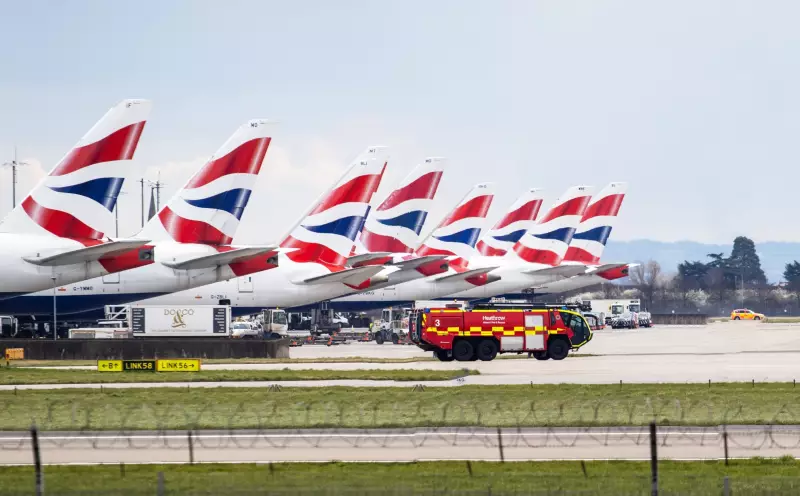
London Heathrow Airport has solidified its status as a global aviation powerhouse, having been officially ranked as the world's second-busiest international airport for the year 2025. This prestigious position was confirmed by a comprehensive new analysis of global flight schedules.
A Year of Record-Breaking Connectivity
The accolade follows closely on the heels of Heathrow being named the world's most connected airport, offering flights to a staggering 226 destinations across 80 countries. The latest data, compiled by aviation analytics firm OAG, scrutinised flight schedules from January through December 2025. It revealed that Heathrow provided a mammoth 49 million scheduled international seats last year. This figure represents a one percent increase from 2024 and a notable four percent rise compared to pre-pandemic levels in 2019.
Heathrow's Place in Global and European Rankings
When considering total capacity—which includes both international and domestic flights—Heathrow's significance is further underscored. With 52.1 million scheduled seats in 2025, the west London hub emerged as Europe's busiest airport overall and the fourth busiest in the world. The global top three spots were claimed by Atlanta Hartsfield-Jackson International Airport in first place, followed by Dubai International Airport and Tokyo Haneda Airport.

The report's findings on seat capacity align with the airport's own passenger traffic announcements. Just days before the OAG data was published, Heathrow revealed it handled a record 84.5 million passengers in 2025. This equates to an average of over 231,000 people arriving and departing daily. The airport also experienced its busiest December on record, with 7.2 million passengers passing through its terminals.
Future Growth and a Major Expansion Plan
It is important to note a key distinction between scheduled seat capacity and actual passenger numbers. Scheduled capacity is often lower, as airlines adjust their plans in response to market conditions. Furthermore, the methodology for counting connecting passengers can vary. Nevertheless, the consistent upward trend is clear.
To accommodate this growing demand, Heathrow is pursuing a monumental £49 billion expansion project, currently awaiting approval. Described as a 'once-in-a-generation redesign,' the plans are ambitious. They include the construction of a third runway, a new terminal, and a new junction on the M25 motorway. If approved, this development aims to boost the airport's annual capacity to an astonishing 150 million passengers, securing its competitive future on the world stage.