Drivers hit with private parking tickets at UK airports may have a powerful legal defence to avoid paying, according to a leading complaints expert. While a similar loophole for railway station car parks was closed in late 2025, the technicality remains valid for airport land.
The Legal Basis of the Airport Parking Loophole
The key legislation is the Protection of Freedoms Act 2012 (POFA). This law allows private parking operators in England and Wales to pursue the registered keeper of a vehicle for unpaid parking charges, using details obtained from the DVLA. However, this "keeper liability" only applies on what the Act defines as "relevant land".
Historically, land governed by specific bylaws – such as that belonging to railways and airports – has been classified as "statutory land" and is therefore not "relevant land" under POFA. This distinction is crucial. On statutory land, the parking operator can only legally pursue the driver of the vehicle at the time of the alleged breach, not the registered keeper.

As complaints expert Scott Dixon, who writes for The Money Blog, explains: "The parking operator only knows who was driving the vehicle if you tell them. You are not obliged to do this." He warns that operators often rely on keepers inadvertently identifying the driver in their appeal correspondence by using phrases like "I parked".
How the Law Changed for Railway Stations
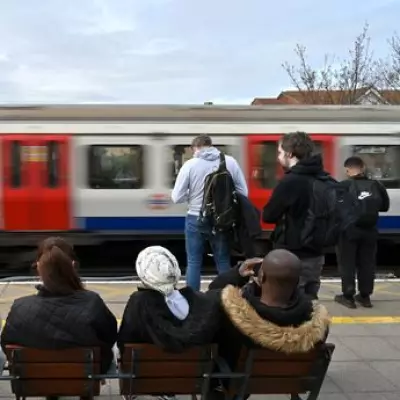
The landscape shifted slightly on 26 December 2025, when updated legislation came into force. This change specifically reclassified railway station car parks as "relevant land", effectively closing the POFA loophole for station parking. This means private operators at stations can now hold the vehicle's keeper liable.
Critically, however, this update did not include airports. Therefore, the original defence based on the statutory land classification remains fully applicable for parking charges incurred on airport property, including drop-off zones.
How to Use the Loophole: A Step-by-Step Guide
If you receive a Parking Charge Notice (PCN) from a private operator at an airport, follow this process. First, verify the car park is on airport land and check signs or your ticket for any mention of airport bylaws. This confirms it's statutory land.
You must then appeal as the keeper only, and crucially, never name the driver. Use a clear, formal appeal template. Scott Dixon provides the following example:
Subject: Appeal against PCN Ref: [Your Reference]
Dear Sir/Madam, I am the registered keeper of vehicle [Registration] and dispute your parking charge. The land is governed by bylaws and is not "relevant land" under Schedule 4 of the Protection of Freedoms Act 2012. There is no keeper liability. You are unable to pursue me as keeper and have failed to identify the driver. I will not be naming the driver. You must cancel the charge. If refused, provide a POPLA code. I will complain to the DVLA and your trade association if you pursue this. I expect written confirmation of cancellation. Yours faithfully, [Name].
If your initial appeal is rejected, escalate it to the operator's trade association – either the British Parking Association (BPA) or the International Parking Community (IPC). The independent appeals service POPLA routinely cancels charges on this basis. Include photos of signs mentioning bylaws as evidence.
What to Do If Your Appeal is Unsuccessful
Do not be intimidated into paying. Trade associations and third-party debt collectors have no legal power to force you to pay a disputed charge. Ignore their letters. The only correspondence that requires a response is an official Letter of Claim or Letter Before Claim, which signals the operator may be considering court action. You must respond to this within 30 days.
If you receive actual court papers, you must submit a defence. Ignoring a court claim will result in a default County Court Judgment (CCJ), which can exceed £300. Defending a claim costs nothing to file.

Scott Dixon's quick checklist for drivers is: Private ticket at an airport? Check signs for bylaws? Appeal as keeper only (do not name driver). Cite that Schedule 4 POFA 2012 does not apply to statutory land. Include evidence. If rejected, escalate to the second-stage appeal.
This guidance, current as of Wednesday 14 January 2026, offers a legitimate legal argument for motorists facing what are technically invoices from private companies on airport land, not fines from official authorities.