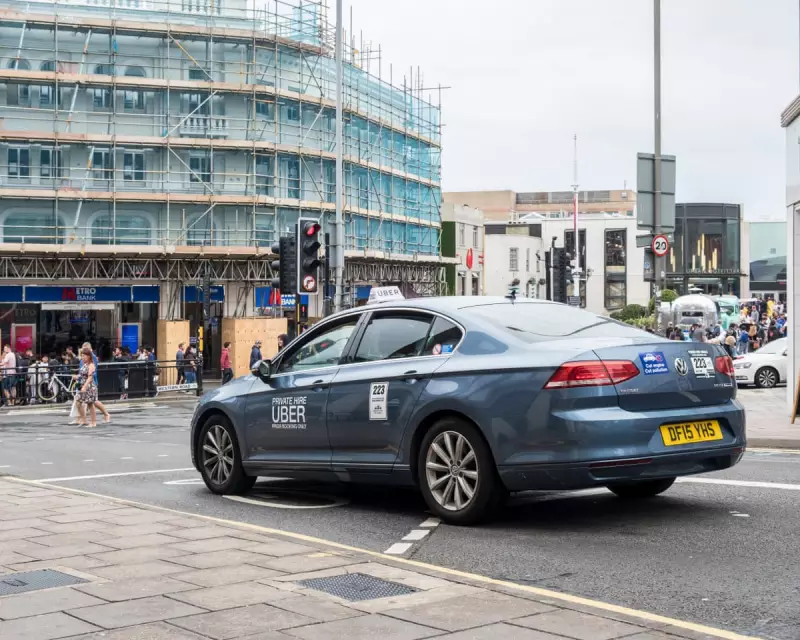
Uber has successfully avoided a multi-million pound tax bill linked to the UK government's new 'taxi tax' by fundamentally rewriting its contracts with drivers across the country. The strategic move comes as new VAT rules announced in the November 2024 budget by Chancellor Rachel Reeves came into effect, designed to close a tax loophole used by ride-hailing apps.
The Agency Model: A Legal Sidestep
From January 2026, Uber's updated terms will see the company act as an agent for its drivers outside of London, rather than as the direct supplier of transport services. This crucial legal distinction shifts the contractual responsibility. Under this model, the driver enters into a contract directly with the passenger, making the driver liable for charging any VAT due on the full fare. Uber will only apply VAT to its service commission.
Since the vast majority of drivers are unlikely to exceed the £90,000 annual VAT registration threshold, most fares outside the capital will not be subject to the 20% sales tax. This effectively means Uber passengers in regions outside London will avoid the price hikes that the new policy was expected to cause.

London Stands Alone: A Two-Tier Tax System
The contract changes explicitly do not apply within London, where Transport for London (TfL) regulations prohibit the agency model. Consequently, Uber users in the capital will see VAT added to their entire fare, creating a stark postcode lottery. This outcome was predicted by Uber's UK chief, Andrew Brem, who warned the policy would create an "absurd situation" with trips in London taxed differently to those elsewhere in the UK.
The Treasury had estimated that ending the previous VAT arrangement would protect around £700 million in annual tax revenue. A spokesperson defended the policy, stating it would "benefit everyday cabbies with a fairer tax system" and raise funds for public priorities. However, the Treasury did not clarify whether Uber's contractual manoeuvre would affect its original revenue projection.
Implications and Industry Reaction
This pre-emptive restructuring by Uber highlights the ongoing tension between digital platform giants and evolving national tax legislation. While the change may shield riders outside London from immediate fare increases, it raises significant questions about the long-term effectiveness of the government's tax policy and the consistency of its application across the country. The move also places the VAT collection burden onto individual drivers who surpass the threshold, rather than on the multinational platform itself.