TfL Announces Revised April Deadline for A12 Gallows Corner Reopening
Transport for London has officially confirmed the completion date for the extensive works at A12 Gallows Corner, revealing the busy junction will reopen by the end of April this year. This announcement comes a full five months after the structure was originally scheduled to reopen, marking a significant delay that has caused widespread disruption across East London and Essex.
Extended Closure Due to Unforeseen Infrastructure Challenges
The critical flyover in Romford has been completely shut down since June 23 last year to allow for essential strengthening and refurbishment operations. Initially, TfL authorities projected a reopening timeline of September, but severe complications forced multiple postponements. Engineers encountered unexpected obstacles including a severely deteriorated water main and problematic pockets of shale beneath the structure.
These discoveries necessitated substantial additional work, with Essex and Suffolk Water being brought in to completely replace the aging water pipeline. Furthermore, alternative strengthening methods had to be developed when horizontal directional drilling proved unfeasible for the bridge reinforcement project.

Community Frustration Mounts as Closure Extends to Ten Months
Local residents and business operators throughout the Havering borough have expressed mounting frustration as what was originally planned as a three-month closure has stretched into nearly a full year of disruption. The confirmation of an April reopening provides little consolation to those who have endured traffic chaos and economic impacts throughout this prolonged period.
Councillor Ray Morgon, leader of Havering Council, acknowledged the community's hardship while welcoming the clarified timeline. "This confirmation of an end date is welcome and is the direct result of the Council's unrelenting pressure on TfL and Essex & Suffolk Water to finally provide clarity and be held to account," Morgon stated.
Detailed Timeline for Final Completion Phases
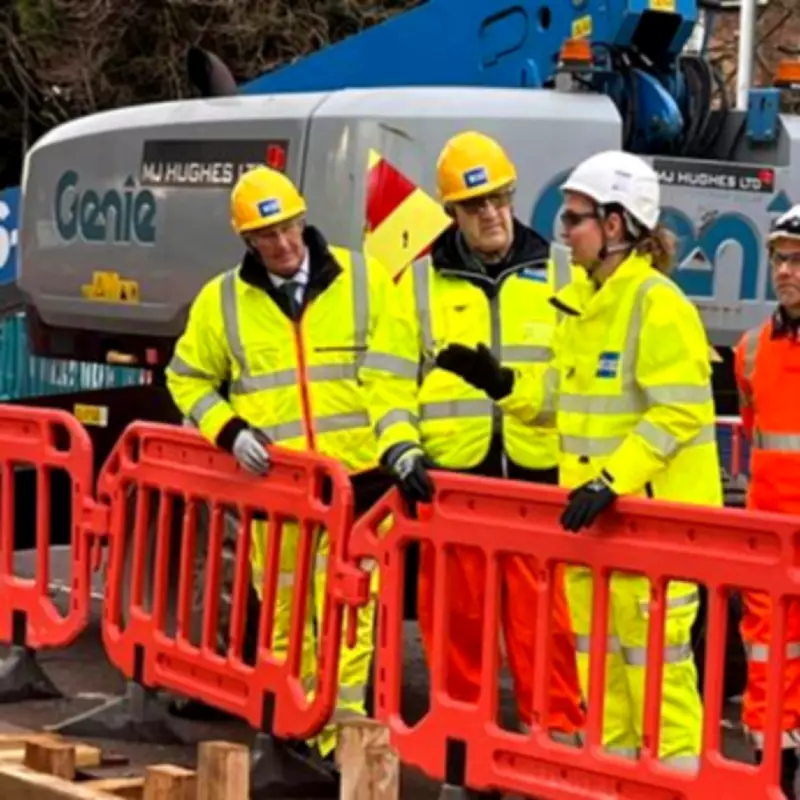
TfL has outlined specific milestones for the remaining work at the crucial junction. Over the coming weeks, crews will apply waterproofing materials and fresh tarmac to the flyover surface while completing outstanding tasks on the roundabout and adjacent roadways.
The schedule includes two critical connections to the new water main that must be completed before February concludes. Following this, reinforced anchor blocks will be constructed to protect the pipeline by mid-March. Throughout March and April, the entire water system will undergo rigorous pressure testing, disinfection procedures, and water quality verification to ensure it meets drinking water standards.
Broader Context of London's Infrastructure Challenges
The delayed reopening of Gallows Corner represents just one example of ongoing infrastructure problems affecting London commuters. Both Hammersmith Bridge and Broadmead Road Bridge remain closed to vehicular traffic with no definitive reopening dates established. Additionally, West London experienced further disruption last week when Albert Bridge in Chelsea was abruptly closed after inspectors discovered concerning cracks in the structure.
Councillor Morgon emphasized the long-term benefits of the flyover project while acknowledging the community's daily struggles. "We recognise the long-term benefits the flyover project will bring for our road network, but we will not forget the real frustration and impact people have faced every day because of these delays," he affirmed. The council continues to explore potential compensation mechanisms for affected residents and businesses.
The water main replacement, while contributing to the delay, represents critical infrastructure investment for the region. "This is critical to future proof Havering's water supply and to prevent potentially hundreds of thousands of households being disrupted or cut off," Morgon explained. Havering Council has committed to maintaining close oversight of both TfL and Essex & Suffolk Water throughout the final phases of the project.