London Tube Fares: Interactive Chart Reveals Real-Term Changes Over 20 Years
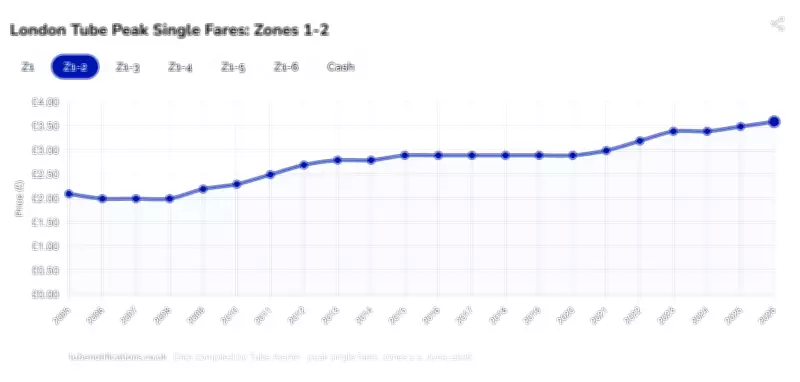
This weekend, the cost of riding the London Underground is set to increase, sparking widespread concern among commuters. However, a new interactive chart created by Tube Alerter provides a deeper perspective, showing how London tube fares have evolved in real terms between 2005 and 2026. When adjusted for inflation, central London tube fares are remarkably similar to what they were two decades ago, and daily caps are actually cheaper now than when first introduced.
Analyzing Two Decades of Fare Data
Researchers at Tube Alerter meticulously analyzed 21 years of Mayoral Decision documents and Transport for London press releases to track fare changes. The data covers every tube zone from 2005, when Oyster daily capping was introduced, to 2026. For instance, a Zone 1 peak single fare has increased by 82 percent, from £1.70 to £3.10. While this seems staggering, inflation adjustments reveal that these prices are roughly the same in real terms, with similar trends for Zone 1 to Zone 2 and Zone 1 to Zone 3 fares.
Daily Caps and Outer Zone Travel Trends
Daily caps have also risen numerically, such as the Zone 1 to Zone 2 cap going from £5.20 in 2005 to £8.90 in 2026. However, when adjusted for inflation, the 2005 cap equates to £9.67 in today's money, making the current cap cheaper. In contrast, Zone 1 to Zone 6 peak single fares show a significant gap in real terms. Today, this journey costs £5.60, compared to £2.10 in 2005, which adjusts to £3.83 with inflation. This means traveling to London's outer zones is 54 percent more expensive in real terms today than two decades ago.

Historical Context and Affordability Insights
The charts indicate that tube fares are currently cheaper in real terms than during Boris Johnson's tenure as mayor. Fares for Zone 1 to Zone 2 travel were least expensive relative to inflation between 2013 and 2015, when a peak single cost £4 in today's money. According to Tube Alerter, 2015 marked peak unaffordability, with the £2.90 Zone 1-2 fare equivalent to £4.38 when rebased to today's median salary, 22 percent more than the £3.60 paid today.
This analysis highlights the complex dynamics of fare pricing, showing that while some costs have surged, inflation adjustments reveal a more nuanced picture of affordability over time.