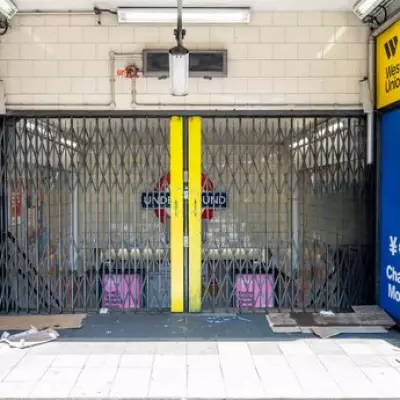
London Underground Drivers Announce Series of Strikes Over Four-Day Week Dispute
London Underground drivers have declared a series of industrial actions scheduled across March, April and May, creating significant uncertainty for commuters and businesses throughout the capital. At first glance, the dispute appears perplexing: the central argument revolves around implementing a four-day working week, a concept typically welcomed by workers across various industries. However, the conflict has emerged because different stakeholder groups fundamentally disagree about what this four-day week should entail, and whether the proposed modifications could potentially compromise safety standards, increase workload intensity, and negatively impact overall working conditions for transport staff.
TfL's Proposed Four-Day Week Structure
Transport for London has put forward a comprehensive plan to reorganize how tube drivers manage their working hours. Under the current system, drivers typically complete five separate shifts each week. TfL's innovative proposal would compress those same working hours into four longer shifts, meaning drivers would work fewer days overall but with extended hours during their scheduled shifts.
The specific details of TfL's proposal include:

- Drivers would maintain their current 35-hour weekly commitment
- These hours would be distributed across four shifts rather than five
- Meal breaks would become paid for the first time in driver contracts
- The changes would initially undergo testing exclusively on the Bakerloo line
- The scheme would remain entirely voluntary, allowing drivers to choose between the new arrangement and the existing five-day rotation
TfL officials emphasize that their plan would enable the organization to operate the underground network more efficiently while simultaneously providing drivers with the valuable option of securing an additional day off each week. This represents a significant potential shift in how London's critical transport infrastructure manages its workforce.
RMT Union's Opposition and Safety Concerns
The Rail, Maritime and Transport Union, which represents a substantial portion of London Underground workers, has raised serious objections to TfL's proposal. Union leadership argues that while the working week would technically become shorter in terms of days worked, the longer individual shifts could substantially increase driver fatigue and make their roles more physically and mentally demanding.
RMT officials have expressed specific concerns that the proposed changes might enable management to:
- Extend maximum permitted driving time beyond current limits
- Require drivers to begin shifts earlier or finish later than existing schedules
- Implement shift changes with as little as one day's advance notice
- Reduce flexibility for drivers seeking to transfer between different depots
RMT General Secretary Eddie Dempsey stated that the union maintains "serious concerns around fatigue, safety and work-life balance" regarding TfL's proposal. The union has clarified that it would support a genuine four-day week only if total working hours were reduced further, specifically proposing a 32-hour week instead of the current 35-hour commitment.
Union Division Complicates Negotiations
The dispute has become particularly complex because London Underground drivers are represented by two competing unions with differing perspectives. The RMT represents a broad spectrum of London Underground staff and has historically adopted a more militant approach to industrial relations. Meanwhile, Aslef focuses exclusively on train drivers and maintains slightly greater membership among this specific workforce segment.
Aslef has enthusiastically welcomed TfL's proposal, characterizing the four-day week as a "once-in-a-generation opportunity" for drivers to gain regular additional time off. However, RMT members rejected the proposal through a formal ballot process, directly leading to the announced strike action. This fundamental disagreement between the two major unions means that some drivers may continue working during strike days, potentially limiting disruption compared to previous industrial actions.

Strike Schedule and Potential Impact
The RMT has strategically scheduled six separate 24-hour strikes across twelve calendar days, spanning from March through May. This staggered approach is designed to maximize operational disruption while minimizing the number of days individual drivers need to participate in industrial action.
The planned walkouts will occur on the following dates:
- March 24-25
- March 26-27
- April 21-22
- April 23-24
- May 19-20
- May 21-22
Each strike will commence at midday and continue until 11:59am the following day, creating extended periods of potential service disruption.
The overall impact may prove less severe than previous Underground strikes for several reasons:
- Only RMT-affiliated drivers are participating in the industrial action
- Station staff and other operational roles remain unaffected
- Aslef members may continue operating services during strike periods
- Alternative rail options in London have expanded significantly, including the Elizabeth line and London Overground networks
Nevertheless, business leaders warn that repeated strikes could still substantially affect commuters, tourists, and critical economic sectors including hospitality and retail. TfL continues discussions with unions regarding implementation of the four-day week, beginning with the Bakerloo line pilot program.
Official Responses and Negotiation Prospects
Union representatives emphasize that sufficient time remains to reach a negotiated agreement before all scheduled strike dates take effect. A TfL spokesperson provided this official statement: "We shared our proposal for a four-day working week with our trade unions last year. Since then, we have been engaging with them on how best to implement the new working pattern. We have started talking with our unions about how to implement a four-day working week for train drivers on the Bakerloo line only. The changes will be voluntary, there will be no reduction in contractual hours, and those who wish to continue a five-day working week pattern will be able to do so. These changes will help us to improve reliability, improve our ability to flexibly deploy our drivers and enable us to offer a modern and efficient service while creating no additional cost."
Responding to the RMT's announcement of further Tube strikes across March, April and May, Muniya Barua, Deputy Chief Executive at BusinessLDN, commented: "The prospect of further strikes over the coming months will be very frustrating for Londoners and visitors that rely on the Tube to get around the city. It will be particularly concerning for business that rely on people visiting in person, particularly sectors such as hospitality, retail and culture. We urge both sides to reach an agreement urgently and avoid these damaging strikes."