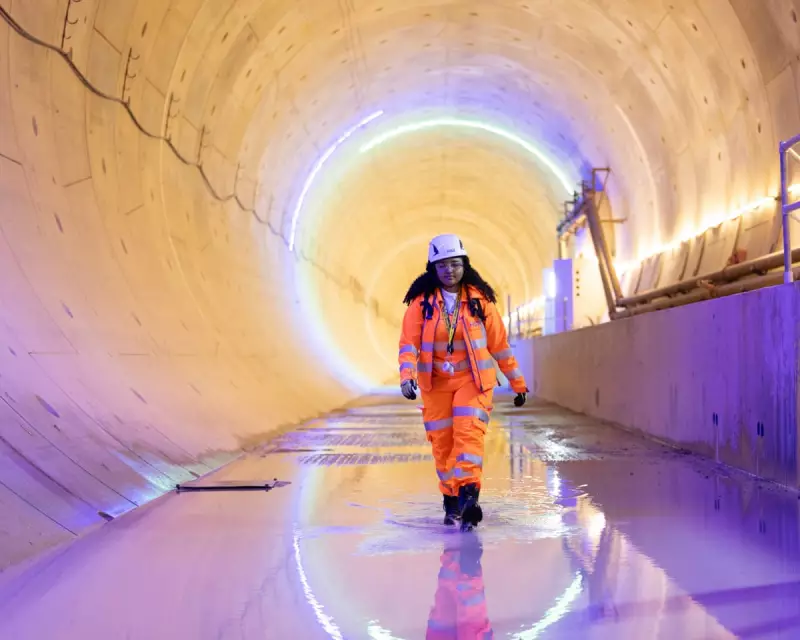
Seventy metres below the rolling hills of the Chilterns, a gleaming, pristine piece of Britain's transport future lies in wait. Two 10-mile-long tunnels, constructed for the HS2 high-speed railway, stand fully formed and spectacular in their concrete grandeur – a stark contrast to the stalled worksites and political turmoil that have come to define the project above ground.
A Rare Triumph of Engineering
While the ballooning cost of HS2, now expected to exceed £80bn at current prices from an original £32.7bn budget, has provoked national soul-searching, the completed Chiltern tunnels offer a glimmer of hope. They demonstrate what civil engineers can achieve with a clear remit. Main tunnelling here was finished last year, with the final ventilation shafts now completing the construction phase.
Ironically, this area was one of the first to cause major dispute. Uproar from local communities, including in Conservative marginal constituencies, led to the decision for extended tunnelling to protect the Area of Outstanding Natural Beauty long before the HS2 bill became law.

Construction began in earnest at the start of the pandemic. The main works contractor for this section, Align JV – a joint venture between Bouygues, Sir Robert McAlpine and VolkerFitzpatrick – saw its workforce swell to around 1,800 at its peak. From a vast compound, teams also built the stunning 2.2-mile Colne Valley viaduct and manufactured 112,000 concrete segments for the tunnels themselves.
Innovation and Mitigation Beneath the Countryside
Two giant tunnelling machines, imported from Germany, worked around the clock for 33 months from their first launch in 2021. Mark Clapp, HS2 Ltd’s head of civil engineering for the tunnel, stated that the team should feel their hard work "will stand the test of time".
Acknowledging local opposition, Clapp highlighted extensive mitigation measures. These included rerouting construction traffic and installing an on-site slurry treatment plant for millions of tonnes of excavated chalk, which was then reused to landscape the area and create rare calcareous grassland.
The ventilation shafts, disguised as small agricultural buildings near Chalfont St Peter, hide cavernous basements for machinery. Their design minimised excavation and lorry movements. "The more you excavate, the more you bring out – and double the amount of spoil means double the amount of lorries on the road," explained Mark Howard, chief engineer for HS2.
Further innovation is found at the tunnel portals, where 200m-long perforated concrete funnels were built. These were designed after lab tests involving miniature trains shot through tubes on elastic bands. Their purpose is to prevent the sonic boom high-speed trains can produce when entering tunnels at 200mph – a solution chosen over the elongated noses of Japanese bullet trains, which were deemed impractical for the UK's older rail infrastructure.
A Long Wait for Trains and a Project in Reset
Despite the tunnels' completion, the three-minute train journey through them may not begin for another decade. The next phases involve installing mechanical, electrical, and plumbing systems, followed by tracks and overhead power lines, and then years of testing.
The progress here is an outlier. The wider HS2 project remains in a state of fundamental reset under CEO Mark Wild, who took over in December 2024. Wild, who successfully steered Crossrail to completion, has deemed the original 2033 opening target unachievable. His comprehensive review aims to rebuild the programme sequence, transform HS2 Ltd into a leaner organisation, and renegotiate supply chain contracts.
A spokesperson for HS2 Ltd said Wild is "committed to ending the project’s cycle of cost increases and delays." The leadership team has been revamped, including the appointment of ex-London Transport commissioner Mike Brown as chair, while hundreds of corporate roles have been cut in favour of frontline jobs.

Meanwhile, the political landscape remains uncertain. Ministers have stated that a line from Birmingham to Manchester to link with Northern Powerhouse Rail is still an "intention," but stressed it would not be part of HS2. For now, the Chiltern tunnels stand as a silent, spectacular testament to what is possible – and a reminder of the immense challenge still facing Britain's most contentious infrastructure project.