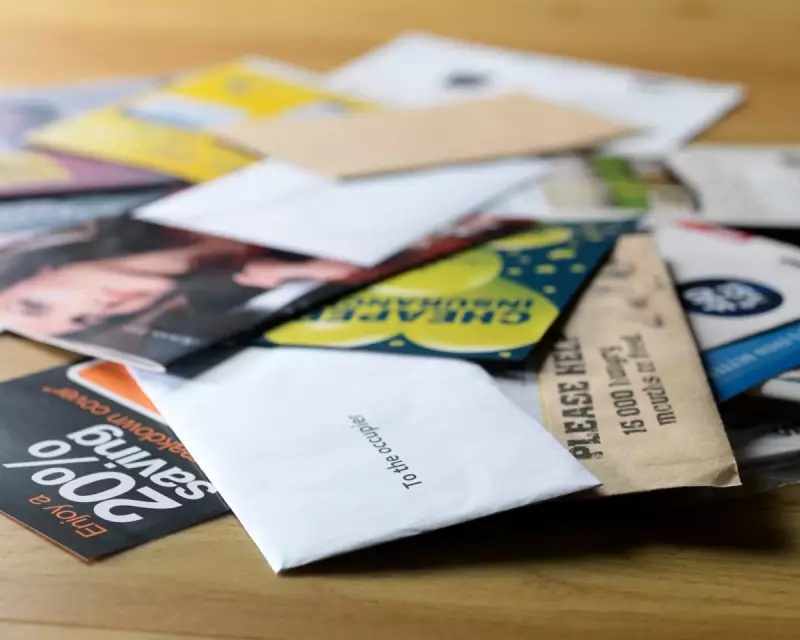
The UK government has announced a decisive move to tackle the deluge of unwanted advertising that lands on doormats across the country. From 2026, a new law will come into force, granting households the legal right to stop businesses from sending them unaddressed promotional mail.
The End of Unwanted 'Door-Drops'
This landmark legislation, confirmed by the Department for Business and Trade, specifically targets what is known in the industry as 'door-drop' advertising. These are the leaflets, catalogues, and pizza menus addressed simply to "The Occupier" or "The Resident" that are delivered by Royal Mail and other operators. The core of the new policy is a universal opt-out service, which will be managed by the Royal Mail.
Once a household registers its preference to stop this mail, it will become illegal for any company to send unaddressed advertising to that address. This represents a significant shift from the current, largely ineffective voluntary schemes. The government's stance is clear: the public has voiced its frustration, and this measure is a direct response to that demand.

A Long-Awaited Solution to a Persistent Problem
The move follows years of campaigning by consumer groups and MPs who have argued that the existing systems are inadequate. While services like the Royal Mail's Door-to-Door Opt-Out exist, they only cover mail delivered by Royal Mail itself, leaving households exposed to material from other delivery firms. Furthermore, awareness of these options has been low.
The new law will create a single, legally enforceable point of control for consumers. Business Secretary Jonathan Reynolds stated the policy is driven by a simple principle: "Nobody wants this." He emphasised that while advertising mail can be useful for some, it should not be an unavoidable burden for those who do not want it. The government estimates that the average UK household receives over 300 items of unaddressed mail each year, much of which is discarded unread.
Implications for Businesses and the Direct Mail Industry
The change will have profound implications for the direct marketing industry, which relies heavily on door-drop campaigns to reach new customers. Industry bodies have expressed concern, warning that the ban could harm small businesses and charities that depend on affordable, local advertising to attract customers and donors.
They argue that targeted leafleting is a vital tool for high street shops, tradespeople, and community events. However, the government has countered that the new system will encourage more responsible and targeted marketing practices, potentially improving engagement rates for businesses by focusing on genuinely interested consumers.
The legislation is part of a broader package of consumer protection measures and is expected to receive cross-party support in Parliament. Officials are now working with Royal Mail and other stakeholders on the technical implementation of the national opt-out register, ensuring it is robust and easy for the public to use.
For millions of Britons, the promise of a quieter, less cluttered doormat is now on the horizon. The message from Westminster is unequivocal: the era of unchecked advertising mail is coming to an end.