

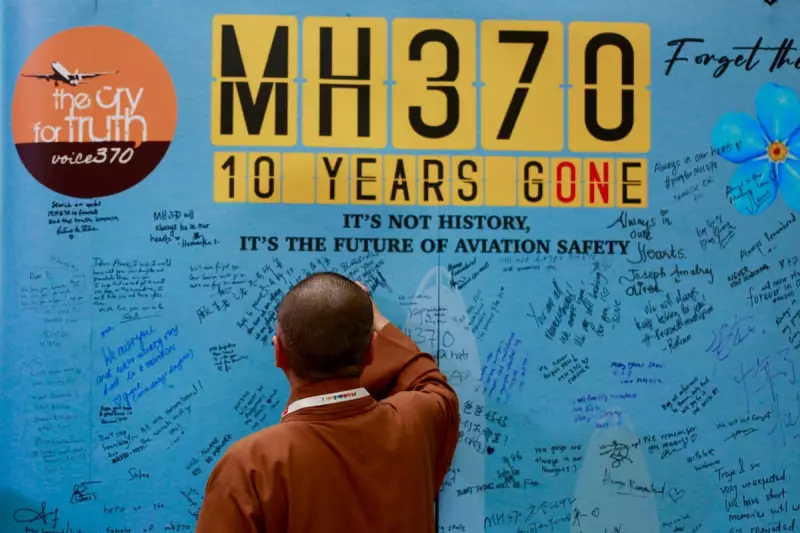
After more than a decade of unanswered questions, a renewed underwater search for Malaysia Airlines flight MH370 is scheduled to commence on 30 December 2024. The operation, led by the marine robotics firm Ocean Infinity, represents a final, determined effort to locate the aircraft that vanished with 239 people onboard in one of history's most profound aviation mysteries.
The New Search Operation
The Malaysian transport ministry has confirmed that the seabed search will be conducted intermittently over a period of 55 days. This latest mission follows a previous attempt by Ocean Infinity earlier this year, which was halted in April due to adverse weather conditions. Under a unique "no find, no fee" agreement with the Malaysian government, the company will scour a new, targeted area of approximately 15,000 square kilometres (5,800 sq miles) in the ocean. Ocean Infinity will receive a payment of $70 million only if wreckage from the plane is successfully discovered.
The precise location of the new search zone has not been publicly disclosed. Officials have stated only that it is a "targeted area assessed to have the highest probability of locating the aircraft", based on advanced drift-pattern analysis of debris that washed ashore in the years following the disappearance.

A Decade of Mystery and Investigation
Flight MH370 disappeared from air traffic radar on 8 March 2014 during a routine flight from Kuala Lumpur to Beijing. On board were 12 Malaysian crew members and 227 passengers from 14 nations, the majority of whom were Chinese citizens. The incident triggered the largest and most costly underwater search in aviation history, led by Australia, Malaysia, and China. That initial search covered over 46,000 square miles of the remote southern Indian Ocean before concluding in January 2017 without success.
In 2018, an official Malaysian investigation report concluded that the aircraft's change of course was the result of manual intervention, though it dismissed theories of pilot suicide. It stated that "unlawful interference by a third party" could not be ruled out, while also eliminating mechanical failure as a cause. A subsequent three-month search by Ocean Infinity that same year also proved fruitless.
The Families' Long Wait for Closure
For the relatives of the 239 passengers and crew, the last ten years have been defined by agonising uncertainty. They have consistently campaigned for continued search efforts, arguing that answers are essential to prevent future tragedies. Danica Weeks, whose Australian husband Paul was on the flight, recently voiced the collective hope of the families.
"I truly hope this next phase gives us the clarity and peace we’ve been so desperately longing for, for us and our loved ones, since March 8th 2014," she said. The resumption of the search offers a fragile but significant beacon of hope for those who have never stopped seeking resolution.
As the world watches, the coming weeks will determine whether advanced marine robotics can finally solve a mystery that has baffled experts and haunted families for a generation.






