

More than ten years after its baffling disappearance, the hunt for Malaysia Airlines Flight MH370 is set to resume with a high-tech, multi-million pound deep-sea search operation. The Malaysian government has commissioned the marine robotics firm Ocean Infinity to scour a remote part of the Indian Ocean on a "no find, no fee" basis, with a potential reward of $70 million (£56 million).
The Enduring Mystery of Flight MH370
On 8 March 2014, Flight MH370 vanished from radar while en route from Kuala Lumpur to Beijing with 239 people on board. After diverting west from its planned path, the Boeing 777's final satellite signals placed it somewhere in a vast 120,000 sq km area of the southern Indian Ocean, where it is believed to have crashed after running out of fuel.
Despite one of the most extensive searches in aviation history, the main wreckage has never been found. Numerous pieces of debris, confirmed to be from the aircraft, have washed ashore around the Indian Ocean, but the location of the fuselage remains one of aviation's greatest secrets.

The High-Tech Hunt: Robots in the Abyss
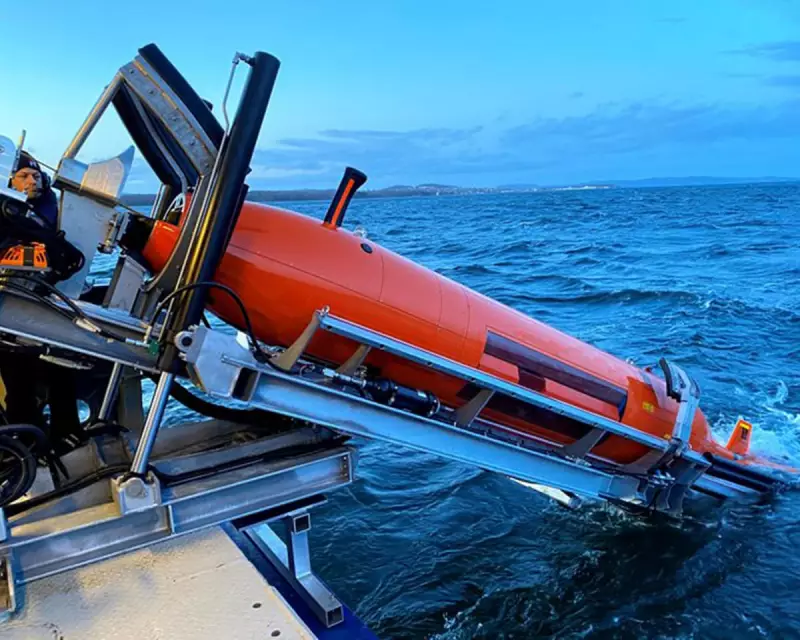
Leading the new charge is UK and US-based Ocean Infinity, a company famed for locating Sir Ernest Shackleton's ship, Endurance, in 2022. Their primary tools are a fleet of Hugin 6000 Autonomous Underwater Vehicles (AUVs), each valued at over $8 million.
These sophisticated robots are engineered to operate at depths of up to 6,000 metres, using a suite of sensors including multibeam echo sounders, high-resolution cameras, lasers, and side-scan sonar to create detailed 3D maps of the seabed. Crucially, they are equipped with magnetometers capable of detecting metal buried under layers of sediment.
"You can say: make me a map of that area and come back when you're done," explains Professor Simon Maskell, an autonomous systems expert and former scientific adviser to Ocean Infinity.
Navigating a Monstrous and Hostile Environment
The search will focus on a priority area of 15,000 sq km, a fraction of the original search zone but still a daunting task. The seabed here is notoriously treacherous, featuring underwater canyons, sheer cliffs, and active volcanoes.
An initial 22-day mission in early 2024 was halted by severe weather. Operations are scheduled to restart on 30 December for 55 days. Independent aviation investigator Richard Godfrey estimates the company has already covered nearly 10,000 sq km and may extend the search further.
"The ocean floor is a very complicated environment," says Maskell. "It's not just flat. You've got huge mountains, ridges and chasms – and you've got to look everywhere." The team must also contend with the "ludicrously large waves" of the southern Indian Ocean while managing complex equipment around the clock.
If an AUV identifies a potential target, remote-operated vehicles (ROVs) with lights and robotic arms can be deployed for closer inspection and potential retrieval. The mission's greatest challenge, however, remains ensuring they are looking in the right place. As Professor Maskell notes, "You can have the greatest technology in the world, but if you look in the wrong place, it's not going to help you." For the families of the 239 lost souls, the world watches to see if this latest, technologically advanced effort will finally provide the answers they have sought for a decade.






