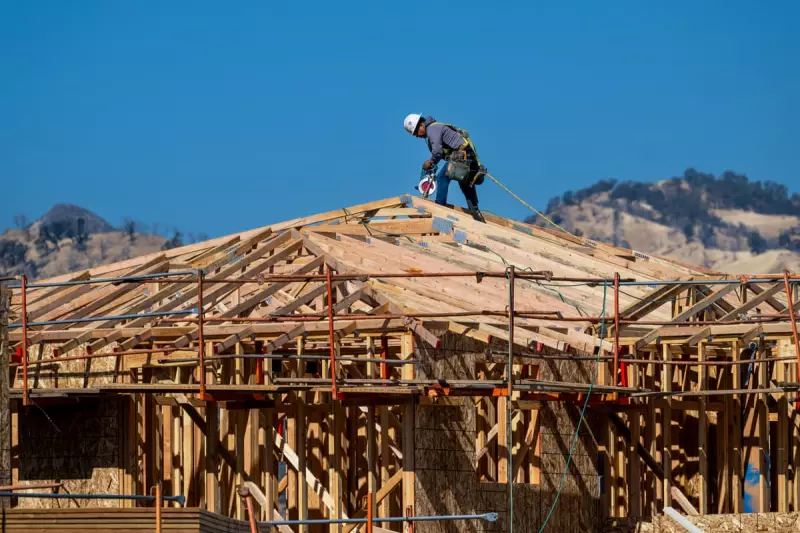
A profound shift is underway in the UK job market, where the rise of artificial intelligence is creating an unexpected beneficiary: the construction industry. As AI begins to automate swathes of entry-level and repetitive white-collar work, a new generation is looking towards skilled trades where human hands and expertise remain irreplaceable.
The Looming Crisis in Construction Labour
The construction sector is already grappling with a severe and well-documented skills shortage. This isn't just anecdotal; the data paints a stark picture. In the United States, the Associated General Contractors of America reported that 92% of firms struggled to fill positions in the past year, with 45% forced to delay projects due to a lack of workers. Industry forecasts are equally alarming. The Associated Builders and Contractors estimates a need for 499,000 new workers in 2026 to keep pace with demand, while the National Association of Homebuilders puts the annual requirement as high as 723,000.
Several factors have converged to create this deficit. For decades, younger generations have been steered towards university degrees and office careers, moving away from manual trades. Simultaneously, the existing workforce is ageing out, with the National Center for Construction Education and Research estimating that roughly 41% of current construction workers will retire by 2031. These pressures have created a vacuum of talent that the industry is struggling to fill.

AI's White-Collar Disruption Creates a New Opportunity
This labour crisis, however, is coinciding with a technological revolution that may provide an unexpected solution. The rapid advancement of AI is predicted to lead to what one commentator calls "an obliteration of entry-level jobs and meaningless white-collar work." While new, unforeseen roles will emerge, a significant number of displaced workers will need to find alternative career paths.
This is where the construction trades present a compelling future-proof option. AI cannot easily replicate the complex, on-site, physical work of building and construction. The sector offers not just job security, but increasingly competitive financial rewards. For instance, workers on booming data centre projects in the US have seen pay jumps of 25% to 30%, signalling the high value placed on these skills.
Following the Money: A Trend Already in Motion
Young people are not blind to this economic calculus. There is clear evidence that they are already "following the money" and pivoting towards vocational education. Enrollment in trade schools has risen significantly since the pandemic and is projected to grow by up to 7% annually through 2030, a rate that outpaces traditional higher education. One report noted a striking 23% increase in students studying construction trades in just the past year.
The cyclical nature of construction means demand will intensify. As interest rates eventually fall and new economic incentives take effect, a surge in demand from both homebuyers and businesses is anticipated. The industry's next peak will be high, and the need for skilled workers will be enormous. For those facing an uncertain future in AI-threatened office roles, a career in construction is becoming a strategically smart and financially rewarding investment.