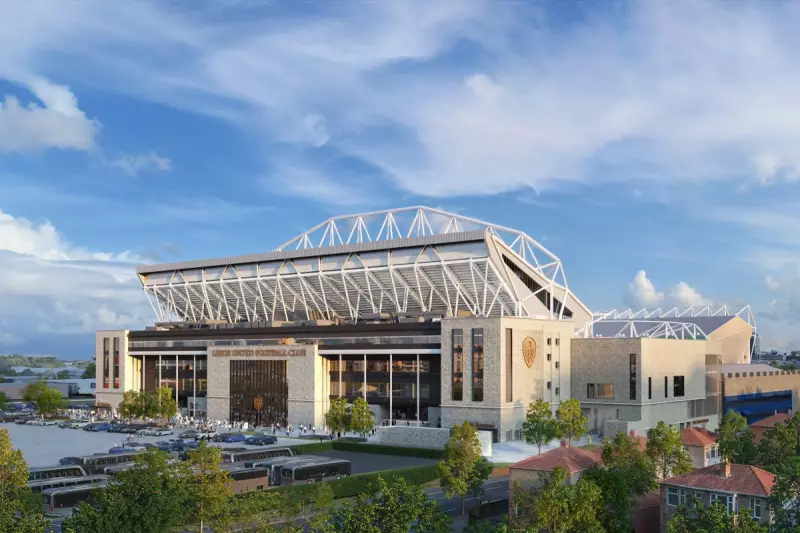
Leeds United's historic Elland Road stadium is poised for a transformative redevelopment after the club's plans received crucial planning approval. The decision, granted by Leeds City Council on Thursday, 8 January 2026, paves the way for a significant expansion that will dramatically increase the ground's capacity and stature.
Planning Permission Unlocks Major Redevelopment
The council's planning committee formally green-lit proposals to commence work on the stadium's West Stand. This initial phase is part of a broader masterplan that will eventually see the North Stand expanded as well. The club, now under the ownership of 49ers Enterprises – the investment arm of the NFL's San Francisco 49ers – submitted the ambitious plans last year following their promotion to the Premier League.
The project aims to boost the stadium's capacity from its current 37,645 to approximately 53,000 spectators. Upon completion, this will make Elland Road the 12th largest stadium in the UK and the seventh biggest in the Premier League, slotting in between Manchester City's Etihad Stadium and Everton's new Hill Dickinson Stadium at Bramley-Moore Dock.

Architects Envision a Full Matchday Experience
Leading the design is architectural firm BDP Pattern, which also worked on Everton's new waterfront arena. Nick Tyrer, an architect associate director at BDP Pattern, emphasised the modern fan's desire for a comprehensive experience. "A stadium development offers real, shared experiences, for creating memories, enjoying the atmosphere of a live game, and having more choice and flexibility before and after kick-off," he stated.
"Fans want a full matchday experience beyond the 90 minutes. Being cognisant of this and designing stadia with fans creates places brands want to be part of," Tyrer added. The firm's portfolio includes notable projects like the Terrace fan zone at Brighton and Hove Albion and the Lee Valley Velodrome.
Part of a Premier League-Wide Stadium Boom
This development at Elland Road is not an isolated project. It reflects a wider trend of stadium regeneration across English football's top flight. Reports indicate that over two-thirds of Premier League clubs have either recently finished, are currently undertaking, or are considering major stadium works.
Similar activity is also evident in the Championship, with clubs such as Millwall, Birmingham City, and Wrexham exploring their own redevelopment or expansion plans. For Leeds United, this approval marks a pivotal step in modernising its home and securing a venue fit for its long-term ambitions in the upper echelons of English football.