

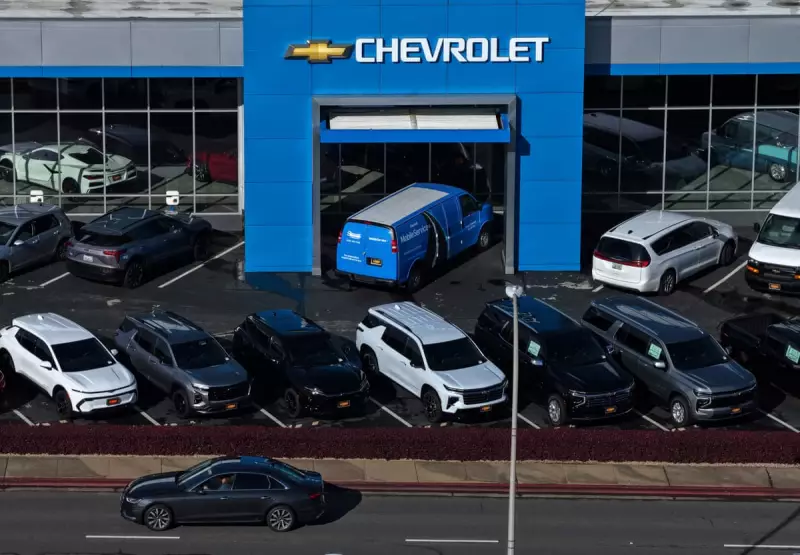
American automotive titan General Motors (GM) has announced a staggering one-time earnings charge of $7.1 billion, a direct consequence of its strategic retreat from electric vehicle (EV) investments in the face of shifting US government policy.
A Massive Charge Driven by Policy Reversal
The Detroit-based manufacturer disclosed in a securities filing on Thursday that its fourth-quarter results will be severely impacted. The colossal charge is primarily composed of $6 billion connected to the reversal of previous EV investments. A further $1.1 billion stems from restructuring its joint venture operations in China and an additional legal accrual.
This dramatic move follows a similar, though smaller, $1.6 billion write-down taken by GM in the third quarter. Both financial hits are linked to the company's pivot away from its aggressive EV strategy, a reaction to a sharp change in the American regulatory landscape following the election of Donald Trump.

Consumer Demand Cools as Incentives Vanish
In its official statement, GM explicitly linked its actions to a slowdown in the electric vehicle market. "With the termination of certain consumer tax incentives and the reduction in the stringency of emissions regulations, industry-wide consumer demand for EVs in North America began to slow in 2025," the company stated. "As a result, GM proactively reduced EV capacity."
This policy shift marks a stark reversal from the Biden administration's approach, which heavily championed electric vehicles as part of its climate agenda. President Trump, who has previously dismissed the climate crisis as a hoax, has moved swiftly to dismantle these initiatives since taking office.
Broader Industry Ripple Effects
GM is not alone in feeling the financial strain of this policy U-turn. Rival Ford Motor Company pre-empted GM's announcement, stating on 15 December that it would write off approximately $19.5 billion over several years due to the altered outlook.
The news casts a shadow over the ambitious goals set by GM's CEO, Mary Barra. Under her leadership, the company had invested aggressively during Biden's presidency, announcing in 2021 a target to make its entire fleet of cars and trucks emissions-free by 2035. While Barra maintains that electric vehicles remain a long-term priority for GM, the company is now demonstrably modifying its investments and timelines in response to what it sees as changing market realities.
The announcement underscores the profound impact government policy can have on high-stakes, capital-intensive industries like automotive manufacturing. As the global EV race continues—evidenced by China's BYD recently overtaking Tesla as the world's biggest electric car seller—American automakers are navigating an uncertain domestic path forward.






