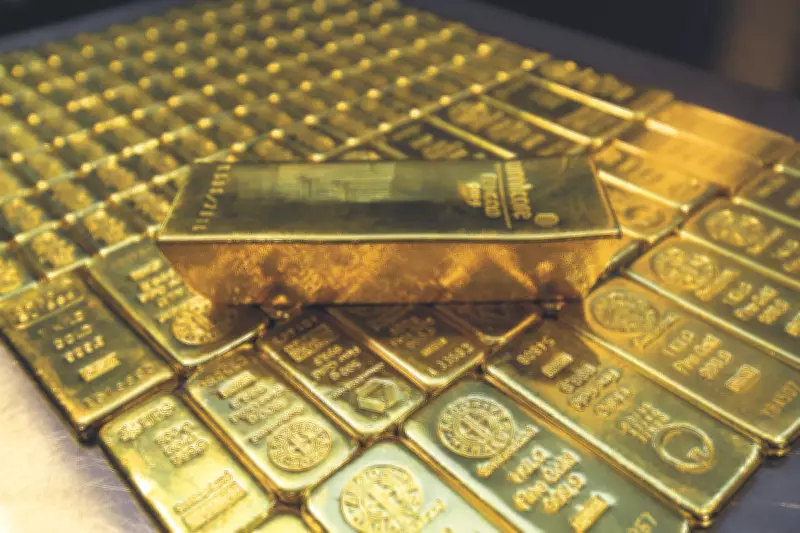
Geopolitical risks have upended gold's traditional demand dynamics, as rising prices amid the Iran war led investors to plough into a diversified range of assets. Total gold demand in the first financial quarter hit 1,231 tonnes, a modest two per cent year-on-year increase from 2025. However, the humble increase coupled with gold's staggering price rise generated a 74 per cent jump in value to a record $193bn (£142.9bn), according to the latest report from the World Gold Council.
The report credited the jump to the combination of price momentum and heightened geopolitical risk, leading investors to once more race to get their hands on the safe haven asset. Louise Street, senior market analyst at the World Gold Council, said: "If you've also got a strengthening of demand, then in value terms it goes up. It underlines that commitment that consumers have, they're prepared to spend it."
Central Bank Buying
Central bank buying also remained in high demand, with purchases up 17 per cent from the prior quarter to 244 tonnes, exceeding the five-year average. Poland was once again the largest purchaser, increasing its gold reserve by 31 tonnes over the quarter to 582 tonnes, while Uzbekistan lifted its gold holdings to 416 tonnes, representing 87 per cent of total reserves. But reported sales also increased, as central banks were forced to contend with uncertainty caused by the war in Iran, forcing some to sell off gold to deal with market volatility, including Turkey. However, the World Gold Council said this reinforces gold's position as a safe haven asset, with Turkey known for selling the asset in times of volatility to boost liquidity.

Street said: "We look at it from both sides… if that's the way central banks are using their gold, that just reinforces why they have it. It's an asset to be relied on in times of turbulence and needs, so it's doing its job. And when you look at the continued environment of geopolitical uncertainty… banks will continue to buy it for a strategic asset."
Investment Demand
Gold investment demand dipped from the prior quarter, falling five per cent year on year to 536 tonnes, after the rocketing demand in ETFs lost steam. While global demand for the product remained positive, with holdings increasing by 62 tonnes, primarily driven by ongoing strength across Asian-listed funds, sizeable outflows in March tempered the strong start to the year. Asia alone generated gains of 84 tonnes in ETFs, with China leading regional growth as investors scrambled away from falling equity markets and a weaker currency.
In contrast, the first quarter was a standout for bar and coin investment, with value of demand breaking all previous records to reach $74bn, with growth mainly pinned to a January rally and explosive growth in the Chinese market. The US saw net demand fall 20 per cent from the prior quarter, following a slowdown in buying in February and March, before picking up during a price correction later in the quarter. European quarterly demand matched that of the US, losing traction in the middle of the quarter. South Korea saw an uptick in demand, as rising gold prices squeezed domestic supply and pushed local prices to a premium, while Japanese interest remained elevated.
Street credited the rising demand in Asia over the course of the quarter to the region "feeling the effect more immediately from the energy shock" off the back of the Middle Eastern conflict and closure of the Strait of Hormuz.
Tech and Jewellery
Demand for the precious metal in the tech sector also held steady, with the use in industrial applications growing to 82 tonnes, as global AI infrastructure continues to expand, with gold being hailed as indispensable to the supply chains. In particular, electronics drove gains in the sector, with a three per cent year-on-year increase to 69 tonnes, the highest levels since 2024, bolstered by the performance of Taiwanese chipmaker TSMC, but noted that other areas saw drops off the back of the soaring gold price.
Annual mine production also saw a slight rise, driven by notable growth in Mali and Indonesia, but growth was stalled by declining production elsewhere, including Namibia and Mexico. Global jewellery demand also continued to shrink, reaching its lowest levels since 2020, but value of demand jumped to $47bn, with some consumers willing to pay higher prices.

Geopolitical factors are expected to keep overall demand elevated for the rest of the year and beyond, supported by central bank buying and bar and coin accumulation. The council predicts demand in Asia to maintain its status as key to overall investment strength, with China in particular expected to increase its investments into gold.