

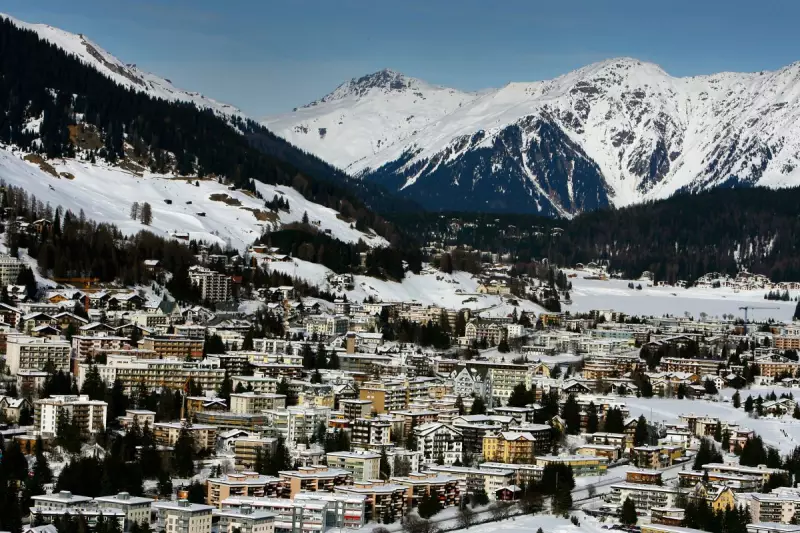
Ahead of the annual World Economic Forum in Davos, the charity Oxfam has released its customary report linking soaring billionaire wealth to persistent global poverty. However, a closer examination of the data reveals a more complex and ultimately more positive economic picture.
The Contradiction in the Data
Oxfam's report, published on Tuesday 20 January 2026, states that the world's roughly 3,000 billionaires saw their real-term wealth surge by over 80 per cent since 2020, reaching a collective $18.3 trillion. It simultaneously claims that almost half of humanity lives in poverty, citing World Bank statistics.
Yet, according to those very same World Bank figures, the proportion of people in poverty fell from 50.5% in 2020 to 45.5% in 2025. This significant five-percentage-point drop equates to several hundred million people escaping poverty over those five years.

A Historic Decline in Extreme Poverty
The trend is even more striking when examining extreme poverty. The World Bank reports a decline from 11.4% to 10.1% between 2020 and 2025. This decline was masked by a methodological change in mid-2025, where the international poverty line was raised by about 40%.
Under the new calculation, 831 million people were estimated to be in extreme poverty in 2025. Had the old method, adjusted only for inflation, been used, the figure would have been approximately 540 million, or just 6.5% of the global population—the lowest rate ever recorded.
This continues a centuries-long trend. Before capitalism, an estimated 90% lived in extreme poverty in 1820. Market-oriented reforms in nations like China and India, alongside the collapse of socialism in Eastern Europe, accelerated the decline from 37.9% in 1990 to an estimated 6.5% by 2025 on the old measure.
Economic Growth, Not a Zero-Sum Game
The central critique of Oxfam's narrative challenges the 'zero-sum' belief that the rich gain solely at the expense of the poor. Data reveals that from the year 2000, as extreme poverty rates plummeted from 29.3% to today's figures, the real wealth of billionaires increased by 840 per cent.
"Those who believe in zero-sum thinking cannot explain how both the number and the wealth of the rich can rise while the number of the poor declines at the same time," argues historian and author Rainer Zitelmann. The driving force behind both phenomena, he contends, is the same: broad-based economic growth.
Zitelmann, author of "How Nations Escape Poverty", accuses much of the media of uncritically repeating Oxfam's claims year after year, despite what he calls their lack of scientific foundation, a point he also made in his earlier work, "The Rich in Public Opinion".
The debate underscores a fundamental divide in economic perception: viewing the global economy as a fixed pie for redistribution versus seeing it as an expanding entity that can improve lives across the spectrum.






