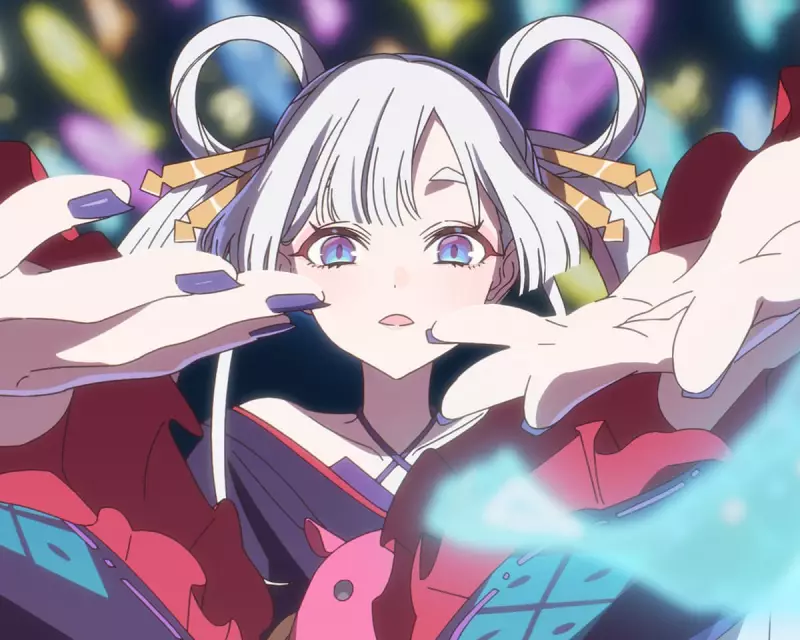
A classic Japanese folk story receives a frenetic, digital-age makeover in the new anime film Cosmic Princess Kaguya!, which launches globally on Netflix from 22 January. This hyperactive adaptation swaps serene, hand-painted artistry for a technicolour blast of virtual reality and exploding emojis, creating a viewing experience as disorienting as it is unique.
From Bamboo Stalk to Glowing Lamppost
The film reimagines the ancient tale of a moon princess found in a bamboo stalk. Here, a pragmatic 17-year-old high school student named Iroha (voiced by Dawn M. Bennett in the English dub) discovers a baby girl inside a futuristic, glowing lamppost. Iroha, a talented musician living independently, takes the infant home, only to witness a miraculous and rapid ageing process.
Within days, the baby transforms into a pre-teen with otherworldly beauty named Kaguya, who reveals herself as a runaway from the moon. Her arrival throws Iroha's orderly life into chaos, propelling them both into the neon-drenched, virtual pop world of Tsukuyomi.

A Dizzying Descent into Virtual Pop Culture
The narrative thrust sees the impulsive Kaguya push the reluctant Iroha to collaborate on music tracks. Their goal is to win a competition to perform alongside Iroha's idol, the AI musical megastar Yachiyo. The film's aesthetic is a defining feature, bombarding the screen with a constant stream of stickers and emojis, mimicking the sensory overload of modern social media and virtual spaces.
This approach marks a stark departure from Studio Ghibli's revered 2013 adaptation of the same story, which favoured a traditional, painterly style. Cosmic Princess Kaguya! is unapologetically of the moment, embedding its folklore heart within a framework of virtual reality and internet culture.
Who Is This Anime For?
The film's breakneck pace and maximalist visual style create a trippy and dizzying ride. The plot moves at such a hyperactive clip that it may challenge viewers accustomed to more conventional storytelling. The relentless energy and specific cultural references to platforms like TikTok suggest a primary appeal for a younger, digitally-native audience.
While the original folk tale has endured for centuries, this version's frenzied execution might leave some viewers, particularly those over a certain age, feeling disconnected. It stands as a bold, if overwhelming, experiment in translating ancient narrative into the language of contemporary anime and online pop culture.
Ultimately, Cosmic Princess Kaguya! is less a gentle fairy tale and more a sensory assault course. Its success will depend entirely on a viewer's appetite for its unique, chaotic, and emoji-splattered vision of a story born from the moon.