

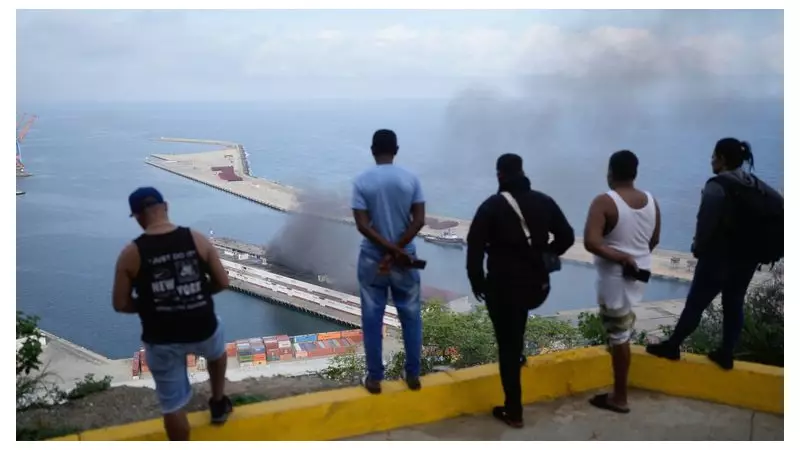
In the wake of an unprecedented military intervention that deposed Venezuelan leader Nicolás Maduro, former US President Donald Trump has declared that American companies are poised to invest billions to resuscitate the nation's crippled oil industry. The move, explicitly motivated by Venezuela's colossal hydrocarbon reserves, faces a monumental task in reversing a production decline measured in decades.
The Prize: The World's Largest Oil Reserves
Venezuela sits atop the planet's largest proven oil reserves, estimated at a staggering 300 billion barrels. This represents roughly 17% of global reserves, surpassing the holdings of Saudi Arabia, Iran, and Iraq combined, and is more than triple the reserves of the United States. The bulk of this resource lies in the Orinoco Belt, a vast region south of the Orinoco River spanning approximately 50,000 square kilometres, potentially the single largest hydrocarbon deposit on Earth.
The oil is not only abundant but also of a specific type: extra-heavy crude. This thick, viscous oil is a key feedstock for producing diesel, jet fuel, asphalt, and petrochemicals. While the US lacks large domestic reserves of this crude, it possesses the specialised refineries required to process it, creating a direct commercial incentive.

A Steep Decline from Historic Highs
Despite its subterranean wealth, Venezuela's current output is a shadow of its former self. Production peaked in the 1960s and 1970s at around 3.5 million barrels per day, accounting for 7% of worldwide supply, under the control of American and British firms. The nationalisation of the industry under Hugo Chávez began a long decline, which accelerated under Maduro and plummeted after the imposition of US sanctions in 2019.
Today, the country pumps out less than one million barrels per day. Most of this is exported to China, under an exemption to repay loans, and to the United States via a licence granted to oil major Chevron. Decades of under-investment and a mass exodus of technical expertise have left infrastructure in a dilapidated state.
The Long Road to Recovery
Donald Trump has stated that US firms will spend vast sums to reverse this decline, but analysts caution that changing course will be a protracted endeavour. Consultancy firm Wood Mackenzie estimates that every additional 500,000 barrels of daily output will require an investment of $15 billion to $20 billion.
A historical parallel can be drawn with Iraq following the US-led removal of Saddam Hussein in 2003. Iraqi production tripled from 1.5 million to 4.5 million barrels per day, but that process took 20 years and was accompanied by immense regional instability.
The immediate market impact of the regime change may be limited, given existing global oversupply and falling prices in 2025. A prospective peace deal between Russia and Ukraine is likely to have a more significant effect on prices than the distant promise of future Venezuelan crude.
The broader, unresolved question remains whether this American involvement will be perceived as a colonial-style resource grab or a development that could ultimately benefit the Venezuelan people. That judgement will take far longer to settle than any fluctuations in the weekly oil price.






