

Australia Grapples with Fuel Shortages Amid Global Conflict
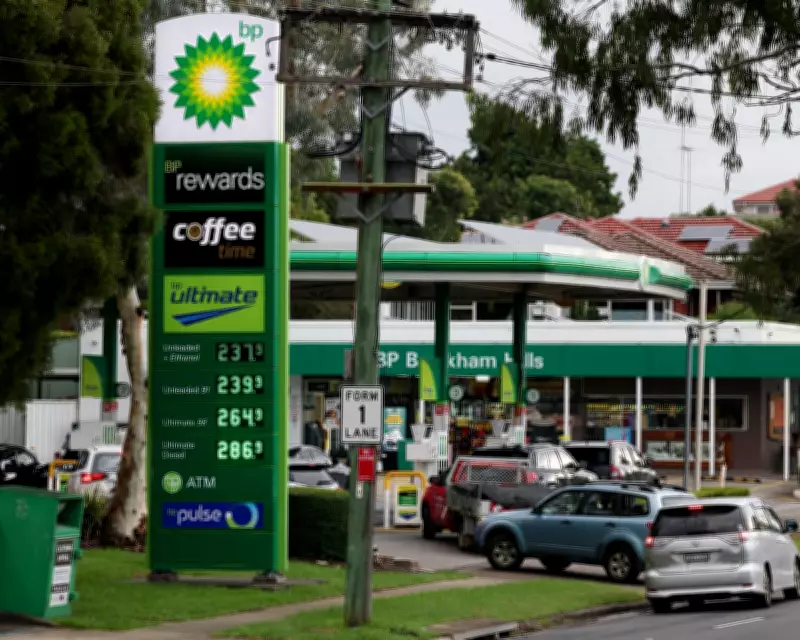
Long queues formed at petrol stations across Sydney on March 19 as Australia experienced a significant fuel crisis, directly linked to the ongoing war in Iran. Photographic evidence captured by Hollie Adams for Reuters shows vehicles lined up for fuel, highlighting the immediate impact on Australian consumers. The geopolitical tensions in the Middle East have created ripple effects that are now hitting Australian households hard, driving up inflation and straining household budgets.
The Economic Fallout from International Conflict
The Iran crisis has become more than just a distant geopolitical issue—it's now directly affecting Australian pocketbooks. With fuel prices soaring and supply chains disrupted, economists warn that the Australian economy could face long-term scarring from this new conflict that shows no signs of ending soon. The situation has reignited debates about energy policy and corporate taxation that first emerged during the Ukraine conflict four years earlier.
Prime Minister Anthony Albanese's department has acknowledged the problem in documents obtained by the ABC, stating clearly that "energy producers should not benefit from high international prices at the expense of domestic customers." This admission comes as fossil fuel companies are already reaping windfall profits while ordinary Australians struggle to afford basic transportation needs.

The Case for a Windfall Fossil Fuel Tax
Former ABC foreign correspondent and independent MP Zoe Daniel has been advocating for stronger action since 2022, when she suggested an "equalisation levy" on windfall profits during a Q+A appearance. Now, with the current crisis deepening, her proposal has gained renewed urgency. According to analysis, a flat 25% tax on export gas could yield up to $17 billion annually—a substantial sum that could fund renewable energy initiatives and provide targeted relief to struggling households.
The government's previous adjustments to the Petroleum Resource Rent Tax (PRRT) yielded only $2.4 billion over four years, a figure critics describe as inadequate given the scale of corporate profits. Between 2022 and 2024 alone, companies exporting LNG from Australia generated an estimated $100 billion in windfall profits as export prices doubled during the Ukraine conflict, yet Australians saw minimal benefit from these largely multinational corporations.
Broader Implications for Energy Policy
The fuel crisis has exposed deeper structural problems in Australia's energy landscape. Both Coalition and Labor governments have presided over the closure of domestic refineries despite years of warnings about inadequate onshore fuel supplies. While minimum stock levels imposed after the Ukraine war have improved reserves to 36 days of petrol and 32 days of diesel, experts argue this remains insufficient for prolonged disruptions.
Meanwhile, political culture wars have slowed the adoption of electric vehicles, with former Prime Minister Scott Morrison famously claiming they would "end the weekend." This rhetoric has had lasting consequences, delaying Australia's transition to more sustainable transportation options. With fuel prices now at crisis levels, buyer inquiries for electric vehicles have surged, presenting an opportunity to accelerate this transition.
Political Responses and Policy Considerations
Prime Minister Albanese has convened national cabinet meetings to address the fuel shortage, acknowledging that we now live in a "different world" that requires new approaches. However, the opposition has been accused of irresponsible rhetoric that could provoke panic buying, despite both major parties sharing responsibility for the current supply vulnerabilities.
Economist Alison Pennington has noted that interest rates are not the only tool available to manage inflation. Targeted price relief on essential items like fuel, energy, and childcare could reduce both household costs and broader inflationary pressures. The question of how to fund such initiatives brings the conversation back to the potential billions available from a windfall tax on fossil fuel companies.

As the Reserve Bank of Australia calls for restraint from consumers, many are asking why similar restraint isn't expected from corporations profiting from international conflicts. With the federal budget approaching, pressure mounts on the government to reconsider policies like the $10 billion annual diesel fuel rebate that critics argue entrenches dependence on artificially cheap fossil fuels.
The current crisis presents both challenge and opportunity—a chance to implement long-overdue reforms that could position Australia better for future energy shocks while addressing immediate cost-of-living pressures. Whether political leaders will "seize the moment," as commentators urge, remains to be seen as Australians continue to queue for fuel and worry about their economic future.





