

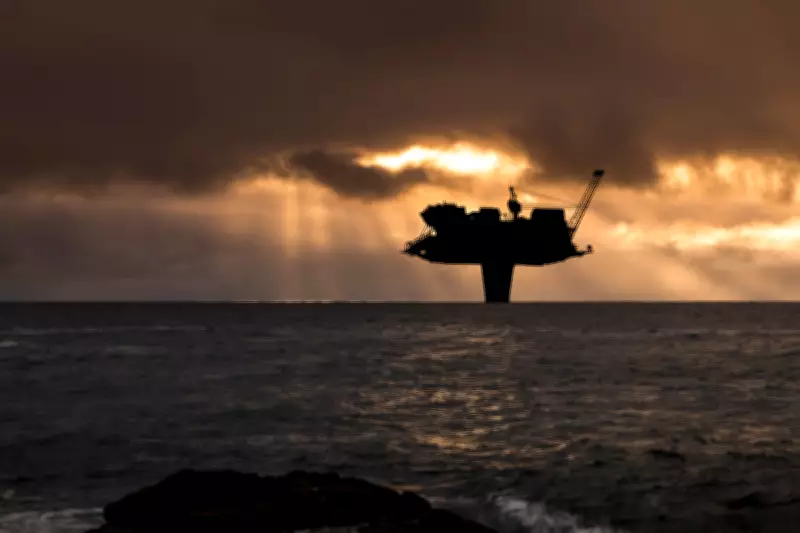
Energy Industry Issues Urgent Warning Over North Sea Drilling Ban
Britain's energy security faces severe jeopardy unless the government immediately reverses its moratorium on new North Sea oil and gas drilling projects, according to a stark industry assessment. Offshore Energies UK (OEUK), the leading trade body representing the offshore energy sector, has issued an urgent call for ministers to abandon restrictions on new licences for UK oil fields.
Growing Reliance on Volatile International Markets
The annual industry report reveals alarming projections about Britain's increasing dependence on imported energy. By 2035, approximately half of the UK's liquified natural gas (LNG) requirements will originate from international suppliers, a dramatic increase from last year's 14 per cent import level. This shift results from declining domestic production, attributed to prolonged windfall taxes and the prohibition on new drilling projects to replace expiring operations.
"We urgently need greater supplies of secure, domestically produced energy including oil and gas, which will remain a critical part of the UK energy system and economy for decades," emphasized David Whitehouse, chief executive of OEUK. "As demand rises and electricity use accelerates, weakening domestic supply would only increase our reliance on imported LNG, leaving consumers more exposed to global volatility and higher emissions."

Industry Heavyweights Join Growing Pressure Campaign
The intervention adds momentum to escalating demands from energy sector leaders for the government to reconsider its pre-election commitment to ban all new North Sea oil and gas developments. This policy review pressure has intensified following recent Middle East conflicts that have disrupted global energy markets.
Prominent industry figures including Octopus Energy founder Greg Jackson and Chris O'Shea, chief executive of British Gas-owner Centrica, have publicly urged ministers to reopen UK reserves to new drilling operations since hostilities erupted in Iran. Their collective concern centers on Britain's vulnerability to international market fluctuations when domestic production remains constrained.
Parliamentary Scrutiny and Market Intervention Considerations
Meanwhile, Chancellor Rachel Reeves faces mounting pressure to implement substantial market interventions aimed at stabilizing energy costs. Prime Minister Keir Starmer informed Members of Parliament that Reeves would provide updates following emergency Cobra meetings in Whitehall, where officials are evaluating "appropriate levers" to support households through potential energy price surges.
Although Britain's energy price cap currently forecasts reduced household bills over the next quarter, analysts warn that without significant market stabilization before July's price cap determination, families could confront substantially higher energy expenses absent government intervention.
Environmental and Economic Arguments for Domestic Production
The OEUK report presents a multifaceted case for renewed North Sea development, arguing that increased domestic fossil fuel production would not only stimulate local economies through high-value job creation but also potentially reduce Britain's overall carbon emissions. This counterintuitive environmental benefit stems from decreased reliance on energy-intensive imports that require extensive transportation to UK markets.
"Recent events have shown how quickly energy markets can tighten and how easily cargoes can be diverted away from the UK when other buyers bid higher," Whitehouse observed. "Energy security means backing homegrown oil and gas alongside renewables."
International Energy Agency Issues Grave Global Warning
Separately, International Energy Agency executive director Fatih Birol delivered a sobering assessment of global energy market disruptions stemming from Middle East conflicts. Birol cautioned that the current crisis could surpass the combined severity of 1970s energy shocks and Russia's invasion of Ukraine in terms of market impact.

The conflict has already damaged at least 40 energy facilities across nine regional countries, with both American and Iranian forces targeting energy infrastructure as strategic objectives. Beyond oil and gas, Birol highlighted critical disruptions to global trade in petrochemicals, fertilizers, sulfur, and helium—essential components he described as "vital arteries of the global economy."
Government Maintains Opposition to New Licences
A government spokesperson reiterated opposition to new drilling licences, stating: "Issuing new licences to explore new fields cannot give us energy security and will not take a penny off bills. Regardless of where it comes from, oil and gas is sold on international markets, which set the price for British billpayers—making us a price taker. The only way to truly protect ourselves from these price spikes is to get off the rollercoaster of fossil fuel markets."
This fundamental policy disagreement sets the stage for continued debate as Britain navigates competing priorities of energy security, economic stability, and environmental commitments amid increasingly volatile global conditions.





