Embarking on an ambitious, car-free odyssey from Essex to the rugged northern tip of Ireland, a traveller discovers the wild beauty of County Antrim's coastline is perfectly suited to sustainable exploration, even in the heart of winter. The journey, involving three trains, two buses, and a ferry, proves an adventure in itself, culminating in icy sea swims, whiskey-laced porridge, and landscapes of mythic drama.
The Journey and a Castle Base
The multi-stage trip begins with a rail journey from London to Liverpool, followed by a ferry from Birkenhead. As a foot passenger, one can watch the moonlit Mersey give way to the sunrise over Belfast Lough. By mid-morning, the destination is reached: the wild, green Antrim coast. The writer's base is the historic Ballygally Castle hotel, celebrating its 400th anniversary this year and arguably Northern Ireland's only 17th-century hotel.
It offers a perfect launchpad with its Sea Dips and Hot Sips package, complete with dry robes and hot-water bottles. The castle's ancient stone walls, built in 1625 and complete with musket holes, encase log fires, slow-cooked Irish beef, and hearty chowder. Breakfast features a cauldron of porridge accompanied by Waggle-Dance honey and the option of Bushmills whiskey.

Exploring Glens, Castles and Stormy Seas
A boggy hike leads to the windswept Sallagh Braes, a vast basalt amphitheatre adorned with rare mosses and offering panoramic views to Scotland. This dramatic terrain has featured in Game of Thrones and The Northman. A short bus ride on the 162 service brings one to Glenarm Castle, the ancestral seat of the earls of Antrim. Here, butler George Lynn, who intended to stay for two weeks 25 years ago, leads insightful tours.
Exploring the village reveals a path into ferny riverside woods, home to red squirrels and little waterfalls. The coast's power becomes evident on the return journey, when waves break directly onto the bus windscreen during a high-tide storm. Back at Ballygally, the castle's ghostly legend of Lady Isabella Shaw, imprisoned for failing to bear a son, adds another layer to its history.
The North Coast: Causeway, Ropes and Baskets
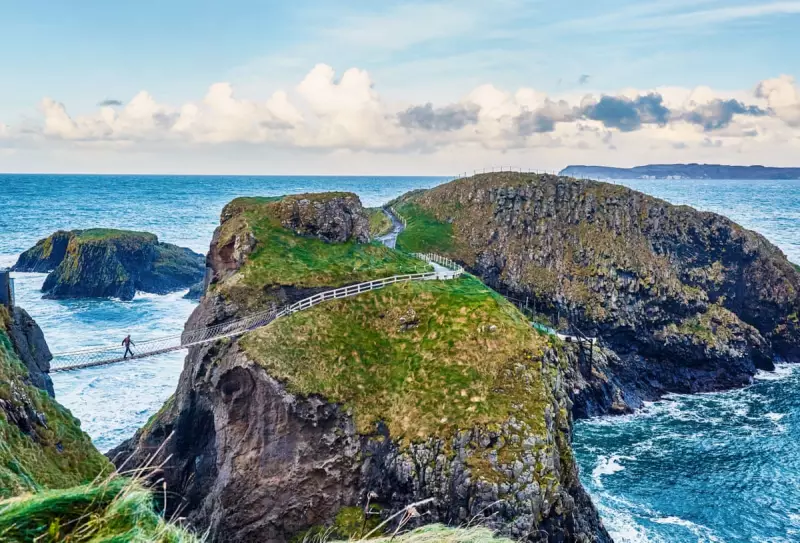
Travelling by train to Portrush, the writer checks into the newly refurbished Portrush Adelphi hotel, where rooms feature miniatures from the local Basalt gin distillery. The convenient bus 402 connects to major attractions like the Giant's Causeway and the Carrick-a-Rede rope bridge near Ballintoy. First strung by salmon fishers in the mid-18th century, the bridge was closed due to high winds during the visit, but the mile-long cliff path offered spectacular, solitary views.
A final five-mile coastal walk to Portstewart reveals a lilac sunrise, gannets diving at 60mph, and flocks of turnstones. The trip concludes with a visit to basket-weaver Louise McLean in her repurposed schoolhouse studio. She grows 15 types of willow, inspired by the coast's "undulating curves, waves, and weaves," and plans residential workshops on Rathlin Island.
The adventure proves that with planning, the majestic Antrim coast—with its wild swims, warm hospitality, and epic landscapes—is wonderfully accessible without a car, leaving the traveller filled with memories of wild weather and warm welcomes.