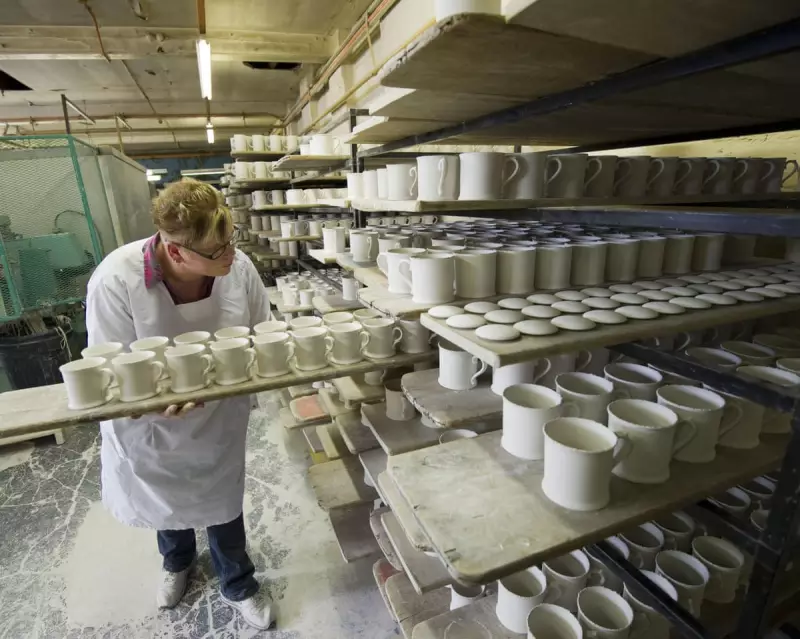
The UK government is being urged to intervene immediately to prevent the nation's centuries-old ceramics industry from collapsing, with unions warning that failure to act will mean losing a fundamental piece of British national identity.
A Sector on Its Knees
In a stark new report, the GMB union and the Green Alliance thinktank have laid out the severe pressures facing ceramics producers, notably the iconic potteries of Stoke-on-Trent in Staffordshire. The sector, which supports an estimated 20,000 jobs, is being crippled by a perfect storm of sky-high UK energy bills, the dumping of cheap imports, and chronic underinvestment.
Chris Hoofe of the GMB union stated that the future of tens of thousands of working-class jobs cannot be left to chance. "We need action on gas pricing and an end to unnecessary red tape, and we need it quick," he said, criticising the government's current response as insufficient.

Chronic Overlooked and Under-Supported
Paul Nowak, the Trades Union Congress (TUC) General Secretary, emphasised the strategic importance of the industry beyond its cultural value. "It’s a critical enabler of key strategic sectors – from energy to defence, medical technology and advanced manufacturing," he said. However, he argued that for too long, ceramics has been "chronically overlooked and under supported" compared to other energy-intensive industries like steel and aluminium, which have received more government assistance.
Cath Smith of the Green Alliance echoed that the sector is now at a "critical point." She called for the government to go further and faster than the measures outlined in the recent budget. "Paired with urgent support, decarbonisation offers a path to future-proofing the industry," Smith said, but this requires action to cut industrial energy costs, tackle unfair trading, and provide targeted capital for modernisation.
Government Response and Future Risks
A spokesperson for the Department for Business and Trade acknowledged the challenges, pointing to existing industrial strategy measures. These include the "supercharger" scheme aimed at slashing energy prices and a proposed British Industrial Competitiveness Scheme intended to reduce electricity bills for manufacturing sectors like ceramics by up to 25%.
Despite these proposals, the warning from industry advocates is clear: without more decisive and rapid intervention, the UK risks losing strategic industrial capabilities and a vital part of its heritage that it may never recover. The call is for immediate support to secure the sector's transition to a sustainable, competitive future.