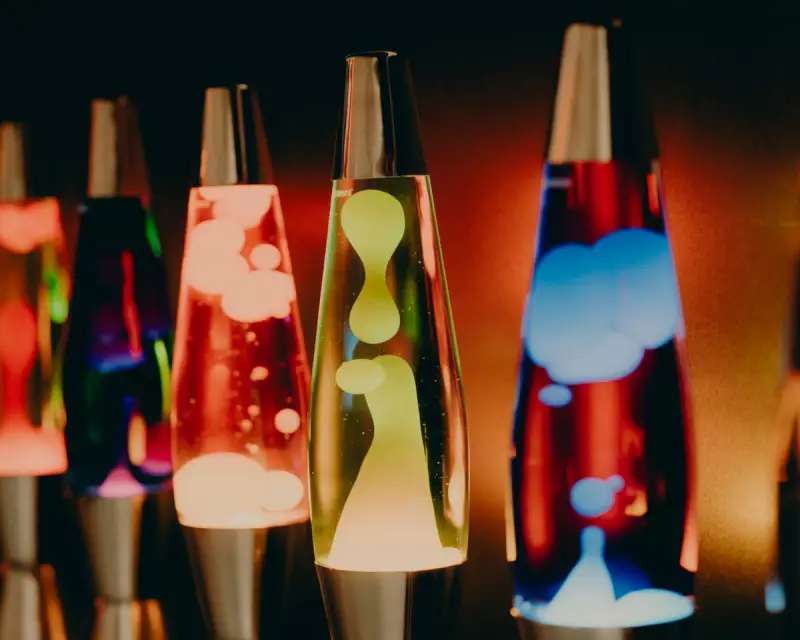
In a glowing testament to enduring retro appeal, the British lava lamp pioneer Mathmos has completely sold out of its stock in the crucial run-up to Christmas. The Dorset-based company reports a significant surge in sales, signalling a major comeback for the hypnotic lighting fixtures first invented in the 1960s.
The Nostalgic Glow of a Comeback
According to Mathmos managing director Cressida Granger, the lamps are enjoying a remarkable renaissance. Sales have been rising steadily in recent years, and 2025 is poised to be a huge festive season. The demand has been so intense that the company has oversold, leaving it short of stock for January.
Granger attributes this renewed popularity to a potent mix of nostalgia and a desire for calm. "They're sort of nostalgic, aren't they? So that's comforting when the world's changing," she explained. The lamps offer an analogue, soothing presence in a digital age, with Granger noting people use them for mindfulness and focus. "They take two hours to warm up. They don't demand anything of you," she said.

A British-Made Legacy in Poole
The heart of this resurgence beats in a factory in Poole, Dorset, where Mathmos has manufactured its lamps since the company's founding in 1963 by inventor Edward Craven Walker. The eccentric nudist, who was married four times, created the original Astro lamp, later named the lava lamp. After a sales collapse in the 1980s, Granger, a former vintage dealer, took over the business in 1989 and oversaw its revival.
Remarkably, the production process retains its artisanal roots. The secret recipe for the 'lava'—a coloured wax suspended in water—is still loosely based on Walker's designs, and the bottles are filled by hand. Alan Staton holds the unique role of being the only person outside China who spends his working day putting the lava into the lamps. Every Mathmos lamp sold in the last three decades has passed through his hands.
Granger emphasises the value of this authentic, British heritage. "People really like that we're the real thing and they've always been made here and we invented them," she stated, contrasting Mathmos with the multitude of copies made in China.
Collectors, Collaborations, and Lasting Appeal
The customer base is far from transient. Mathmos has cultivated an active collecting community, with some owners possessing hundreds of lamps. The company has also driven excitement through high-profile collaborations, which sell out in hours. A recent limited edition with The Rolling Stones, of which only 1,000 were made, caused a huge queue at the band's Carnaby Street store upon release in November.
While the classic Astro remains the bestseller, models like the 90s rocket-shaped Telstar and newer candle-lit versions are also popular. For Granger, the lamp's timeless ritual is key to its charm. "It's like a vinyl record, you have to take it out of its sleeve and there's a ceremony to it, which is kind of nice," she said.
Ultimately, after searching for a 'new' lava lamp, Granger had a revelation: "the new lava lamp was the lava lamp." As younger audiences seek the magic of the 1960s and the comforting nostalgia of the late 90s, the future for this British-made icon looks brighter—and groovier—than ever.