Sir James Dyson has issued a stark warning that his global consumer electronics empire risks being sold off and becoming "unrecognisable" due to the government's controversial inheritance tax reforms.
The Multi-Billion Pound Tax Threat
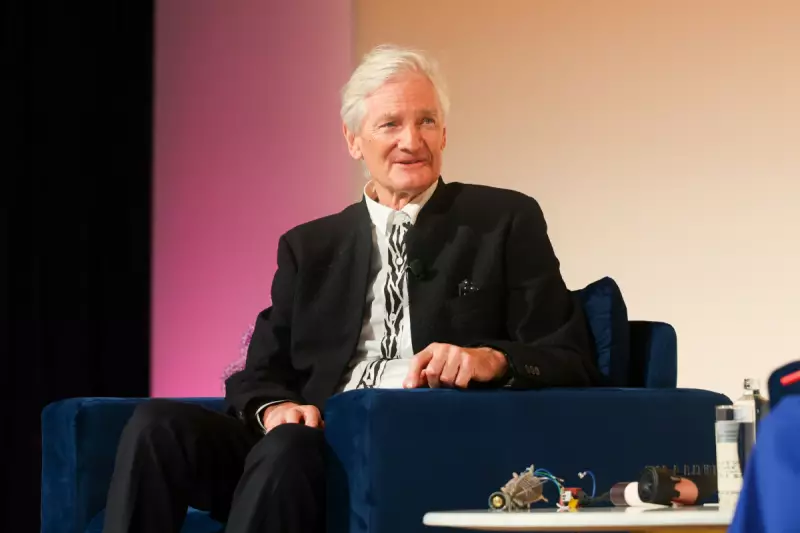
Speaking in a guest-edited segment on BBC Radio 4's Today programme, the founder of Dyson stated that his family would be unable to pay what he anticipates will be a multi-billion pound tax bill upon his death. The proposed changes would leave the company with no choice but to sell part or all of the business to settle the levy. "You cannot pay that tax," Sir James asserted, confirming that there was a real danger "that Dyson stops being Dyson" after he is gone.
He explained the fundamental issue: companies like his are valued on a multiple of their earnings, not physical assets. "Its value is a multiple of its profits. So it’s paper money. You simply don’t have [it]," he said. A 40% tax on that paper valuation would amount to billions, cash the business does not hold in reserve.

A Partial U-Turn That Falls Short
These comments come despite a recent partial government U-turn on the policy. In its maiden Budget last year, the government moved to end two long-standing inheritance tax reliefs: Agricultural Property Relief and Business Asset Disposal Relief. These had historically allowed farmland and family businesses to pass to the next generation free from inheritance tax.
The Chancellor's original crackdown restricted relief to the first £1 million of an estate's agricultural or commercial property, arguing the old rules were used for tax avoidance by the wealthy. Following protests, ministers this month raised that threshold to £2.5 million. However, for a business of Dyson's scale, this adjustment is insufficient to avert the crisis he describes.
A Broader Critique of UK Manufacturing
During the broadcast, Sir James also delivered a broader critique of the UK's approach to manufacturing. He warned that the nation has "lost our interest in engineering and manufacturing" and is no longer keen on "making things." He tied this directly to the country's economic health, stating, "We need to export goods... if you’re bringing in more than you’re shipping out, you’re in trouble and you’re going to decline."
He defended his company's much-criticised decision to move its headquarters and global manufacturing base from the UK to Singapore, a process that began in 2002 and was completed in 2019. He stated he "tried very hard to make things in England" but was hampered by prohibitive planning laws and a lack of local supply chains.
He cited a specific example where, after manufacturing 500,000 machines a year in a Wiltshire factory, his application for planning permission to expand was refused after a two-year wait. In contrast, moving to empty factories in Singapore allowed rapid scaling to 25 million machines a year – a fifty-fold increase he claims was impossible in the UK environment.
The entrepreneur, a prominent backer of Brexit, rejected accusations that he abandoned Britain after the referendum, framing the relocation as a pragmatic necessity for growth that the UK's infrastructure and policies could not support.