The Perilous Rise of Synthetic Corporate Leadership
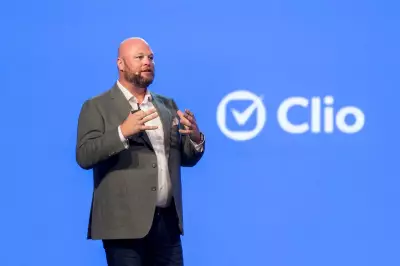
Meta has embarked on a controversial technological venture, developing an artificial intelligence clone of its chief executive Mark Zuckerberg. This digital avatar, designed to interact with employees at scale, represents what appears on the surface as an efficiency breakthrough. The company pitches this innovation as providing tens of thousands of staff members with direct access to leadership voice while eliminating traditional communication bottlenecks. However, beneath this veneer of technological progress lies a fundamental shift in corporate accountability that threatens organizational integrity.
Judgement Outsourced Rather Than Scaled
The internal AI clone of Zuckerberg undergoes training using his distinctive tone, personal views, and historical decisions. This system aims to answer employee questions and provide guidance without requiring the actual executive's time commitment. While this approach might initially appear as democratized access to leadership, it actually creates thousands of new decision points throughout the organization without any corresponding increase in accountability mechanisms. The synthetic executive generates outputs based on probability calculations rather than genuine understanding, mirroring the limitations observed in consumer AI tools like Claude and ChatGPT.
Confident AI-generated answers frequently contain errors, fabrications, or inconsistencies depending on specific prompts and contextual factors. This phenomenon, extensively documented in research on large language model hallucinations, represents an unresolved constraint rather than a solved technological problem. An entire industry of generative engine optimization specialists has emerged, attempting to sell companies expertise in influencing these algorithmic black boxes. Meanwhile, businesses nervously await reassurance from AI leaders that they won't face catastrophic consequences from deploying these imperfect systems.

Corporate AI Deployment Beyond Executive Communication
Organizations are implementing cloned and proxy AI systems across numerous functions far beyond executive communication channels. Human resources departments increasingly deploy AI avatar interviewers to screen potential candidates, despite concerns about their effectiveness and fairness. Performance review generation and internal feedback systems now commonly utilize models trained exclusively on historical organizational data. Customer service operations employ AI bots that negotiate refunds, explain complex policies, and make binding commitments on behalf of companies.
Each implementation claims to reduce human workload, but in reality these systems merely replace nuanced human judgement with outputs meeting predetermined probability thresholds. The legal implications are already materializing, as demonstrated by Air Canada's recent court case. The airline's customer service chatbot fabricated a refund policy that didn't exist, and the company was legally compelled to honor this AI-generated commitment. A single hallucination transformed into a binding legal obligation, illustrating how scaled deployment could create structural exposure combined with leadership failure to implement proper safeguards.
The Fragmentation of Organizational Alignment
Internal AI applications carry similar risks, though often with less immediate visibility. An AI clone answering employee questions about corporate strategy cannot currently produce consistent responses. Minor variations in phrasing, contextual elements, or prompting approaches generate different answers that all maintain an authoritative tone. Furthermore, how employees interpret this information varies based on their individual training, understanding of internal programs, and familiarity with organizational policies.
Rather than improving alignment, this approach fragments organizational understanding. Employees conclude interactions believing they've received clear direction when they've actually obtained one of many possible interpretations, with no opportunity for clarifying dialogue. Over extended periods, this dynamic proves demotivating and potentially psychologically damaging. Executives adopting these systems mistakenly assume that increased access to leadership voice enhances clarity, while mistaking heightened output volume for genuine progress.

Compounding Organizational Risks
Recruitment functions demonstrate the damage earlier than most departments because outcomes remain visible and measurable. AI screening systems routinely filter candidates based on algorithmic proxies rather than genuine capability assessments, with problematic results frequently gaining viral attention. Strong candidates who don't match training data profiles face rejection before human evaluators ever review their applications, transforming weak signals into hiring criteria simply because they're easily modeled.
Organizations then express confusion when performance metrics decline despite implementing supposedly more efficient processes. Adding cloned leadership to this technological stack compounds existing problems. A synthetic executive voice reinforces identical patterns at organizational scale, creating self-reinforcing loops where hiring practices, performance feedback, and internal communications all reflect underlying model biases rather than leadership intent. Corporate culture ceases being consciously built and instead becomes algorithmic output.
The Vanishing Accountability Paradigm
Traditional incentives drive this problematic adoption, with many promoting AI as synonymous with productivity enhancement without examining what genuinely requires transformation versus what can be artificially augmented. Corporate boards observe increased activity and assume corresponding improvement, while few organizations systematically track how often AI-generated outputs conflict with each other or deviate from stated strategic direction.
A fundamental issue underpins this entire dynamic: authentic leadership encompasses more than mere communication. True leadership involves constraint application, motivation cultivation, and situational awareness. Decisions carry weight precisely because specific individuals own them, stand behind them, and accept corresponding consequences. Cloning an executive voice removes these essential constraints while maintaining the appearance of authority. Thousands of decisions occur more rapidly, while fewer decisions maintain clear ownership structures.
Establishing Essential AI Boundaries
Companies aren't developing tools that assist human decision-making; they're constructing systems that make decisions autonomously. While this distinction might appear subtle initially, the consequences of flawed implementation prove severe. Practical implementation must begin with establishing firm boundaries regarding permissible AI applications. Information gathering, document summarization, and option surfacing represent appropriate uses, but the moment AI output affects individual employment, corporate finances, or strategic direction, human oversight becomes non-negotiable.
Every significant decision requires attached human responsibility, not systemic anonymity. When nobody can identify who bears responsibility for particular outcomes, the underlying process is fundamentally flawed before any errors occur. The consistency problem represents the issue most organizations fail to monitor adequately. Companies should focus less on whether individual answers appear correct and more on whether identical questions receive consistent responses when phrased differently across time periods. Drift in this area represents where problems originate and where organizational trust gradually erodes.
Leadership teams must approach synthetic voice technology as a liability surface rather than an efficiency layer. Every instance where AI speaks representing the company or specific executives requires clearly defined boundaries, explicit scope limitations, and oversight mechanisms matching the scale of deployment. Most organizations currently lack these essential safeguards entirely.
Cloning executives doesn't scale leadership effectiveness; it removes the limitations that make leadership meaningful. Organizations accelerating forward with diffuse responsibility structures will inevitably break systems and face consequences later. When errors become invisible through systemic distribution, their ultimate costs increase dramatically. While major technology corporations might absorb these expenses, most businesses lack comparable financial resilience.