

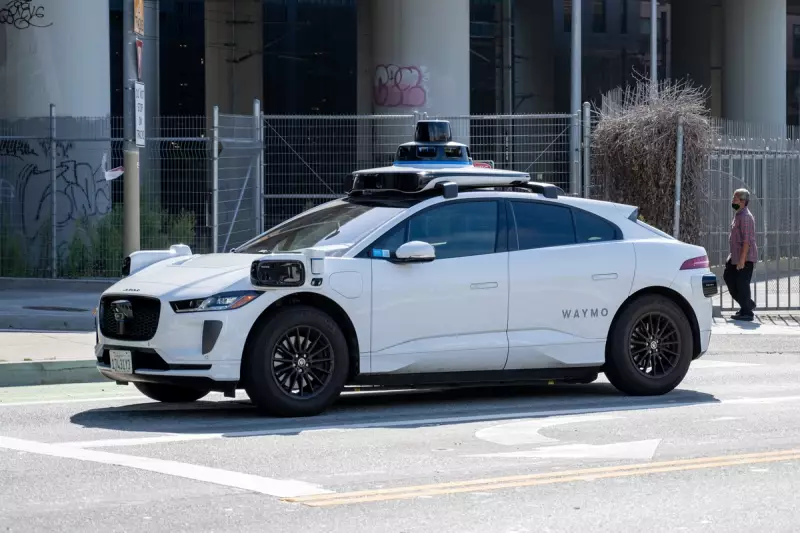
The year 2025 will be remembered as the moment artificial intelligence fundamentally changed the automotive landscape, not just in concept but in tangible reality on British roads. From accelerating electric vehicle adoption to laying the groundwork for driverless taxis in the capital, AI moved from the passenger seat to firmly take the wheel, steering the industry into a new and complex era.
Britain's Electric Surge Meets Global Competition
The UK car industry delivered a significant achievement in 2025 by meeting the government's Zero Emission Vehicle (ZEV) mandate. Analysis from the Energy and Climate Intelligence Unit revealed that by November, electric vehicles made up 22.7% of new car registrations, surpassing the effective requirement of 20.4%. This solid performance indicates a genuine shift in consumer choice towards electrification.
Colin Walker, head of transport at ECIU, highlighted the UK's global standing, noting: "British drivers are increasingly choosing to switch to electric, so much so that, of the world’s largest car markets, the UK is now second only to China in the proportion of drivers buying new EVs."

However, this transition faces substantial headwinds. The high cost of EVs remains a major barrier for private buyers, with the government's £3,750 grant limited to cars under £37,000. Simultaneously, the market is becoming fiercely competitive. Chinese manufacturers, led by brands like BYD, are aggressively expanding across Europe with competitively priced models, while Tesla's dominance on the continent shows signs of waning.
The Autonomous Future Edges Closer to London's Streets
While fully driverless cars are not yet commonplace, 2025 saw critical advances. Waymo, the US-based robotaxi leader, confirmed plans to launch a fully autonomous taxi service in London in 2026. In parallel, British AI startup Wayve, supported by investors like Uber and SoftBank, expanded testing of its camera-based systems in Germany and the US, honing its technology for intricate urban settings.
London, however, presents a unique challenge compared to cities like San Francisco. Its notorious congestion, unpredictable pedestrians, and complex street layout will test the limits of even the most sophisticated AI. Steve McNamara, general secretary of the Licensed Taxi Drivers Association, expressed deep scepticism, questioning how an autonomous vehicle would navigate iconic yet chaotic locations like Charing Cross Road late at night. Public concern mirrors this view, despite government predictions of tens of thousands of new jobs in the autonomous transport sector.
AI: The New Co-Pilot in Design and Development
The influence of AI extended far beyond the vehicles on the road, permeating the entire automotive ecosystem in 2025. In manufacturing, retail, and logistics, multi-agent AI systems optimised operations behind the scenes. The rise of "vibe coding"—where AI generates and refactors software—allowed human developers to concentrate on more complex, innovative tasks.
This rapid integration brings urgent ethical and security considerations to the fore. Steven Webb, UK Chief Technology Officer at Capgemini, warned of the risks posed by AI-driven systems without proper oversight. "With AI writing more of the codebase, trust again becomes a major concern," he stated. He emphasised the need for strong traceability, provenance controls, and automated assurance mechanisms to ensure long-term safety and security.
The picture from 2025 is not one of a finished, driverless utopia, but of a sector at a decisive crossroads. EV adoption is climbing steadily, autonomous mobility is inching from trial to reality, and AI is transforming both the cars we drive and the businesses that build them. The steering wheel may still be in human hands, but the direction of travel is increasingly plotted by algorithms. For the UK in 2026, the critical question is whether it will proactively shape this transition through investment in infrastructure, regulation, and skills, securing the economic benefits, or risk being left as a passive passenger in the global race.






