

The relentless surge in artificial intelligence has triggered an unprecedented wealth explosion among America's technology elite, new data reveals. A stock market frenzy around AI companies has injected more than half a trillion dollars into the combined fortunes of the nation's top tech founders and executives over the past year.
The AI Gold Rush Winners
According to the Bloomberg Billionaires Index, the collective net worth of the ten wealthiest US tech magnates ballooned to nearly $2.5 trillion by Christmas Eve, up sharply from $1.9 trillion a year earlier. The figures underscore how investor mania for artificial intelligence is reshaping the global economic landscape and concentrating vast wealth.
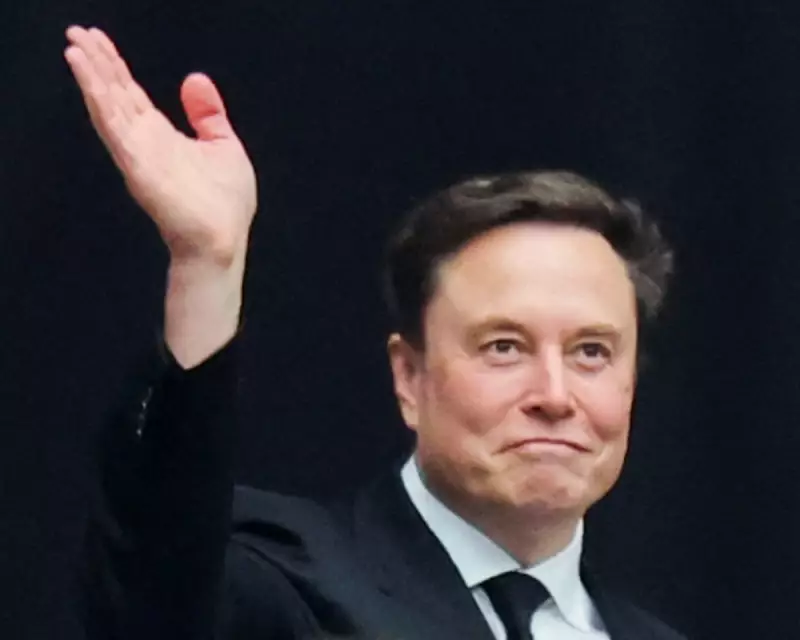
Leading the pack is Elon Musk, who solidified his position as the world's richest person. His fortune soared by almost 50% year-on-year to $645 billion. Musk, whose ventures include the AI firm xAI and electric car giant Tesla, made history in October by becoming the first individual to surpass a $500 billion net worth. Analysts suggest he could be on track to become the world's first trillionaire if Tesla meets its ambitious targets.

He sits comfortably ahead of Google co-founder Larry Page, estimated to be worth $270 billion, and Amazon founder Jeff Bezos, with a $255 billion fortune. The co-founders of Google, Page and Sergey Brin, saw their wealth swell by around $102 billion and $92 billion respectively, fueled by investor confidence in the company's AI advancements, including its proprietary Tensor Processing Unit chips.
Nvidia's Jensen Huang Cashes In
One of the most striking individual success stories is that of Jensen Huang, the chief executive of chipmaker Nvidia. His personal wealth surged by $41.8 billion, reaching a total of $159 billion. This remarkable gain, documented in a separate Financial Times report, places him ninth on the global billionaire index and eighth among US tech leaders.
Huang capitalised on Nvidia's stratospheric stock price, selling nearly $1 billion worth of shares this year. The company's advanced processors are a critical component for powering AI systems, propelling it to become the world's first $5 trillion company in October—a valuation exceeding the entire economic output of nations like Japan or India.
Warnings and Wider Economic Impact
This staggering concentration of wealth has reignited debates about economic inequality and the need for more effective wealth taxation. Meanwhile, financial regulators are growing wary of the market's exuberance.
The Bank of England issued a stark warning in October, cautioning that global markets face a potential "sudden correction" if the sky-high investor optimism around AI proves to be misplaced. Top policymakers noted that equity valuations, particularly for AI-focused tech firms, appear "stretched," leaving markets highly vulnerable to any downturn in sentiment.
While technology dominates the list of biggest wealth gainers, other industries also feature prominent names. Bernard Arnault, the French chairman of luxury conglomerate LVMH, saw his fortune rise by $28.5 billion, buoyed by strong spending from affluent North American consumers. Similarly, Amancio Ortega, founder of the Zara parent company Inditex, added $34.3 billion to his wealth, partly thanks to a record €3.1 billion dividend from the retail group.
The data paints a clear picture of a year defined by an AI-fuelled financial boom, creating historic fortunes for a select few while prompting serious questions about market stability and the distribution of new economic value.






