

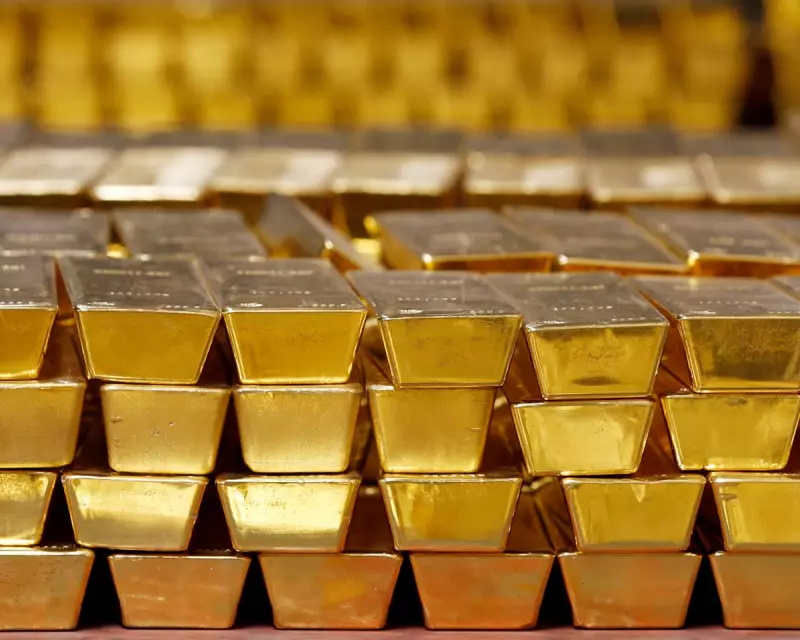
In a striking shift in global financial strategy, a new survey reveals that approximately half of the world's central banks are planning to increase their gold allocations. This move comes as institutions seek an insurance policy against geopolitical volatility and a perceived erosion of the US dollar's dominance as the world's primary reserve currency.
The Rush to Repatriate and the High-Stakes Logistics
The trend is not just about buying more bullion; it's also about where to keep it. Serbia's central bank governor, Jorgovanka Tabaković, recounted a tense moment when millions in gold bars were temporarily stranded on a Swiss airport runway, highlighting the complex logistics of moving the precious metal. This incident underscores a broader movement: two-thirds of the banks surveyed by asset manager Invesco also intend to relocate gold stockpiles held overseas back to domestic vaults for safekeeping.
The share of gold in central bank reserves has doubled over the past decade to more than a quarter, reaching its highest level in nearly 30 years. This surge is fuelling record prices, with gold hitting $4,643 (£3,463) an ounce this week, and analysts predicting it could break the $5,000 barrier this year.

Geopolitical Discord and the Search for a Safe Haven
Experts point to a fractured global order as the primary driver. "We have moved from Pax Americana to global discord," states Raphaël Gallardo, chief economist at Carmignac. He argues that investors, both private and sovereign, no longer believe their dollar-denominated reserves are safe from potential confiscation, citing the targeting of Russian reserves after the invasion of Ukraine.
The dollar's share of total central bank reserves has slipped from about 66% a decade ago to roughly 57%. While still dominant, its credibility is being challenged by erratic US policymaking, concerns over Federal Reserve independence, and the weaponisation of financial systems. In a significant milestone, gold overtook the euro in June last year to become the world's second-most important reserve asset.
Repatriation Waves and the London Vaults
The clamour to bring gold home has seen action from nations including India, Hungary, Turkey, and Poland, which recently retrieved hundreds of tonnes stored abroad since the Second World War. Germany was an early pioneer in the 2010s. This trend puts a spotlight on key storage hubs like the Bank of England, whose vaults under London hold about 400,000 gold bars worth over half a trillion dollars for around 70 official institutions.
The process isn't always smooth. Venezuela has $2bn in gold locked in the Bank of England, inaccessible due to the UK government's non-recognition of its regime. Meanwhile, the most prominent buyers are often those in geopolitically sensitive regions. Central bank purchases rose by 10% in the year to September, led by Poland, Kazakhstan, Azerbaijan, and China, which has amassed over 2,000 tonnes in a bid to rival US economic influence.
No Clear Challenger to the Dollar, But Gold Shines
Economists note that the dollar's decline is gradual because it lacks a clear alternative. Other fiat currencies like the euro, yen, or yuan do not yet have the requisite global scale and depth. "There is no one to replace the dollar. So gold is shining by default," concludes Gallardo. While some speculate about the future role of cryptocurrencies, central banks remain cautious of their volatility and nascent security frameworks.
Jonathan Fortun, an economist at the Institute of International Finance, offers a sobering perspective: the real concern would not merely be the dollar's dethronement, but the severe global instability that would necessitate a return to bartering with gold. For now, the world's oldest store of value is experiencing a very modern renaissance as the ultimate hedge in an uncertain age.






