

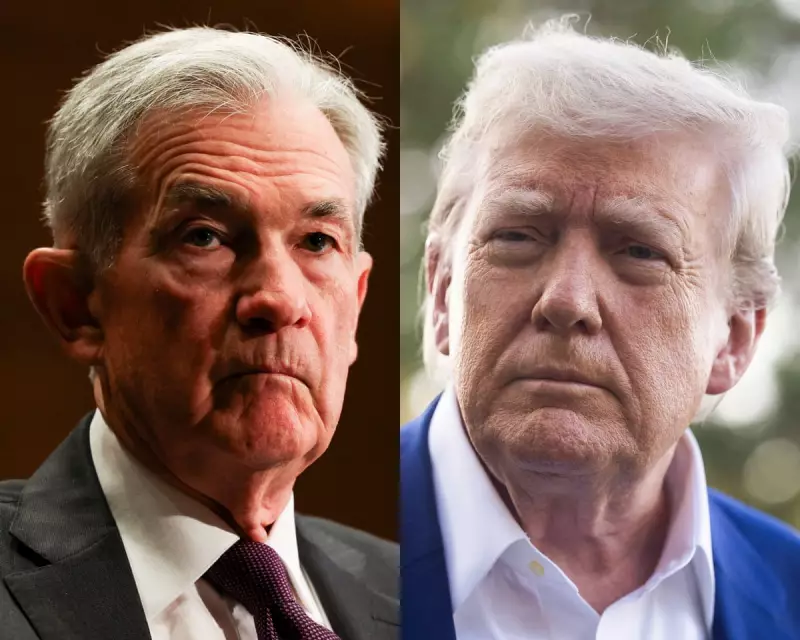
Former US President Donald Trump has launched a fierce attack on America's central bank, calling for a formal investigation into the Federal Reserve and its chair, Jerome Powell. The dramatic intervention, made in January 2026, accuses the independent institution of acting for political motives and threatens Powell's position should Trump return to the White House.
A Direct Challenge to Central Bank Independence
In a significant escalation of his long-running criticism, Trump publicly condemned the Federal Reserve's monetary policy decisions. He alleged that recent actions by the bank were designed to influence the political landscape, rather than being based on sound economic principles. This represents a direct challenge to the traditional independence of the Fed, a cornerstone of US financial stability for decades.
The former president stated he would ask the Republican-controlled Congress to initiate a probe into Powell's conduct and the bank's decision-making processes. Trump's rhetoric suggests he views the central bank's current leadership as adversaries, framing their policies as detrimental to the nation's economic health for partisan gain.

Jerome Powell in the Political Crosshairs
At the centre of the storm is Jerome Powell, whose current term as Federal Reserve Chair is set to expire in 2026. Trump originally appointed Powell to the role in 2018 but later turned sharply against him, a rift that has now widened considerably.
Trump made his intentions clear, signalling that if he wins the upcoming presidential election, he would not reappoint Powell when his term concludes. This threat places immense political pressure on the Fed chair and raises profound questions about the future path of interest rates and financial regulation. The prospect of a politically motivated removal could unsettle global markets that rely on the predictability of US monetary policy.
Potential Consequences for Global Markets
The implications of this confrontation extend far beyond Washington. Analysts warn that sustained political attacks on the Federal Reserve risk undermining its credibility. Investors and central banks worldwide watch the Fed's moves closely, and any perception of diminished independence could lead to increased market volatility.
The call for a congressional investigation introduces a new element of uncertainty. While the Fed has faced scrutiny before, a probe driven explicitly by allegations of political bias from a leading presidential candidate is unprecedented in modern times. It sets a potential precedent for future political interference in technocratic economic institutions.
This development marks a pivotal moment in the relationship between US political power and its key financial institutions. As the 2026 political cycle heats up, the independence of the Federal Reserve and the security of Jerome Powell's position have become central issues in a high-stakes debate over who controls the American economy.






