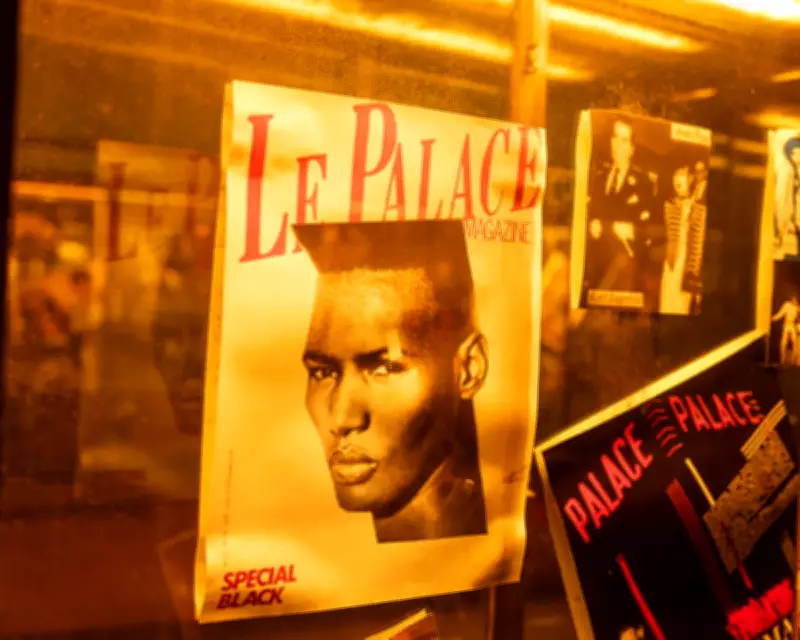
Paris's Legendary Le Palace Nightclub to Reopen After Decades of Neglect
In the heart of Paris's bustling theatre district, a legendary nightspot that once hosted the likes of Mick Jagger, Grace Jones, and Prince is preparing for a spectacular comeback. Le Palace, which opened its doors in 1978 and quickly became one of continental Europe's most famous nightclubs, is set to rise from the ashes with a planned reopening in early 2027.
A Star-Studded History
The opening night on March 1, 1978, set the tone for what would become an iconic venue. Grace Jones stunned VIP guests with her rendition of Edith Piaf's classic La Vie en Rose, establishing Le Palace as the place to see and be seen. Throughout its heyday, the club attracted an extraordinary array of international celebrities, including Serge Gainsbourg, Prince, Bob Marley, Andy Warhol, and Karl Lagerfeld, alongside politicians, designers, and models who flocked to drink and dance beneath its glittering lights.
As Donna Summer might have sung, it was indeed hot stuff. However, the disco era that defined Le Palace's early years began to fade, and by 1982, the club closed temporarily when owner Fabrice Emaer fell ill with terminal cancer. This marked the beginning of the end for the original Le Palace, though various attempts were made to revive it in subsequent decades.

From Ruin to Revival
Today, French producer Mickael Chétrit is leading the ambitious effort to restore Le Palace to its former glory. After purchasing the iconic building last year, Chétrit has been inundated with requests from artists worldwide eager to perform at the revived venue. "Everyone wants to come back and have a show here," he explained during a tour of the historic site. "Many French and foreign artists want to perform at Le Palace because they started here and want to return to where it all began for them."
The building's rich history extends beyond its nightclub years. Originally opening in 1912 as a cinema, it was later transformed into a concert hall where stars like Tino Rossi, Maurice Chevalier, and Joséphine Baker appeared. In the 1920s, an operetta featuring simulated sex caused a scandal that nearly led to its closure. After serving as a cinema again post-war, it closed in 1969 before Emaer reinvented it as Paris's answer to New York's Studio 54.
Preserving the Spirit of an Era
Chétrit emphasizes that the renovation aims to respect the venue's unique spirit and history. "The idea is to respect that spirit, the history and what people experienced here," he said. "I didn't want to change everything and create something completely new. It's about keeping the name and using the history of what it was to create what it will become."
The project faces significant challenges, including the need to restore listed architectural features under the supervision of official heritage architects. A large hand-painted fresco from 1912 depicting naked dancers must be preserved, and the entire renovation must adhere to strict conservation standards. "It costs a lot of money when things are listed," Chétrit noted, "but it's a way of respecting the architecture and the historical aspect of the place."
A New Chapter for a Parisian Icon
Interior designer Jacques Garcia, known for his work on luxury Paris hotels and the Gainsbourg museum, is overseeing the revamp. Reflecting on the club's legacy, Garcia told French media: "I spent my life here, with one party after another alongside some incredible people. We were crazy, without limits, but with a certain elegance. The name Le Palace is a setting in itself. It represents a myth for many people who experienced it."
When completed, the renovated Le Palace will feature a basement nightclub and a theatre-concert venue with capacity for up to 1,400 people. Video screens will display archival photographs and footage of famous patrons like Yves Saint Laurent, Tina Turner, and Jerry Hall, allowing new generations to experience the magic that once defined this extraordinary venue.

Chétrit remains optimistic about the project's potential: "There is no other venue of its kind in Paris with such a history. It's been neglected but we're going to restore it all." As renovations begin next month, Paris awaits the return of a cultural landmark that once defined an era of glamour, music, and uninhibited celebration.